
Close Menu
  • Home
  • Identity
  • Inventions
  • Future
  • Science
  • Startups
  • Spanish
What's Hot

ClawJacked flaw allows malicious sites to hijack local OpenClaw AI agents via WebSockets

OpenAI’s Sam Altman announces agreement with Department of Defense on ‘technical safeguards’

Xiaomi launches 17 Ultra smartphone, AirTag clone and ultra-slim power bank

Facebook X (Twitter) Instagram
  • Home
  • About Us
  • Advertise with Us
  • Contact Us
  • DMCA
  • Privacy Policy
  • Terms & Conditions
  • User-Submitted Posts
Facebook X (Twitter) Instagram
Fyself News
  • Home
  • Identity
  • Inventions
  • Future
  • Science
  • Startups
  • Spanish
Fyself News
Home » In the Roman Empire, babies were not to be mourned. These unusual liquid plaster burials prove otherwise.
Science

In the Roman Empire, babies were not to be mourned. These unusual liquid plaster burials prove otherwise.

userBy userFebruary 25, 2026No Comments4 Mins Read
Share Facebook Twitter Pinterest Telegram LinkedIn Tumblr Email Copy Link
Follow Us
Google News Flipboard
Share
Facebook Twitter LinkedIn Pinterest Email Copy Link

The Roman mystical burial ritual of pouring liquid plaster on the dead was not limited to elite adults, as previously thought. Researchers found that it was also performed on children, including infants as young as 1 month old.

According to two blog posts published by Seeing the Dead, a joint project between the University of York and York Museums Trust, this finding contradicts Roman legal sources that say infants under 12 months of age should not be memorialized at all. Their team is investigating the discovery of a child inside an unusual “gypsum burial” in York, northern England.

Liquid plaster burials have long puzzled researchers. This mysterious practice involved placing the deceased in a stone or lead sarcophagus and pouring liquid plaster over it. A substance like plaster of Paris hardened on their bodies, leaving traces of their noble clothing. But new research has found that even the youngest members of ancient societies were mourned.

you may like

“Infants were the most vulnerable in Roman society,” Maureen Carroll, a Roman archaeologist at the University of York, said in a Feb. 18 blog post, especially given the high infant mortality rate of around 30%. However, although historical records indicate that infants under one year of age were not to be memorialized because infant deaths were commonplace, Carroll found that these restrictions only applied to public memorialization.

“They had nothing to do with the feelings of sadness and loss that the surviving families personally felt and expressed,” she wrote.

Of the more than 70 plaster burial objects Carroll examined, at least seven belonged to children, including three infants under four months old. Liquid plaster burials seem to have been restricted to the Roman elite of York and were usually performed on adults. Infants were often buried in large pots called amphora. ceramic tile box. Or a small wooden coffin.
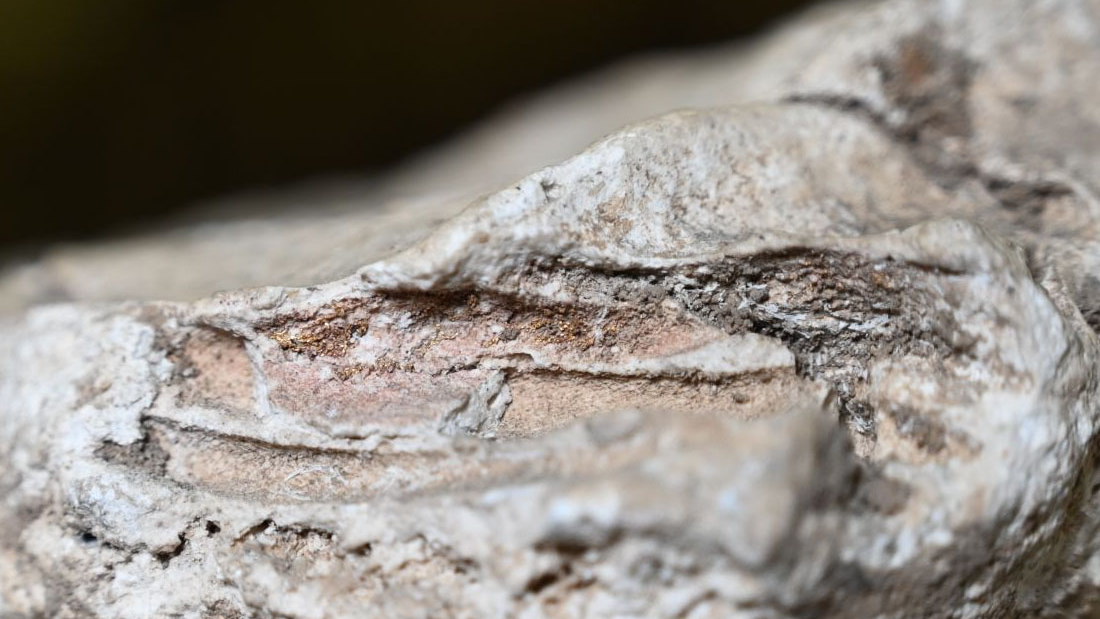
Fragment of plaster cast reveals pinkish sheen left on ancient purple fabric

Plaster casing of an infant burial in York. Pinkish-purple dye and gold threads can be seen. (Image credit: Seeing the Dead Project/University of York and York Museums Trust)

A remarkable infant burial was discovered in 1892 during the construction of the York Railway. The infant, one or two months old, was covered with a purple-dyed wool cloak decorated with gold thread and tassels, placed in a lead sarcophagus, and covered with liquid plaster.

Get the world’s most fascinating discoveries delivered straight to your inbox.

No bones of the infant remain today, but traces of his bright purple and gold cloak can still be seen. Sarah Hitchens, an archaeological textile expert at the University of York, said in a Feb. 23 blog post that this is the only plaster burial site with dyed fabric ever discovered.

“The purple fabric was likely made from animal fibers such as wool,” Hitchens wrote, adding that the cloak was likely draped over the infant’s body as a burial cloth.
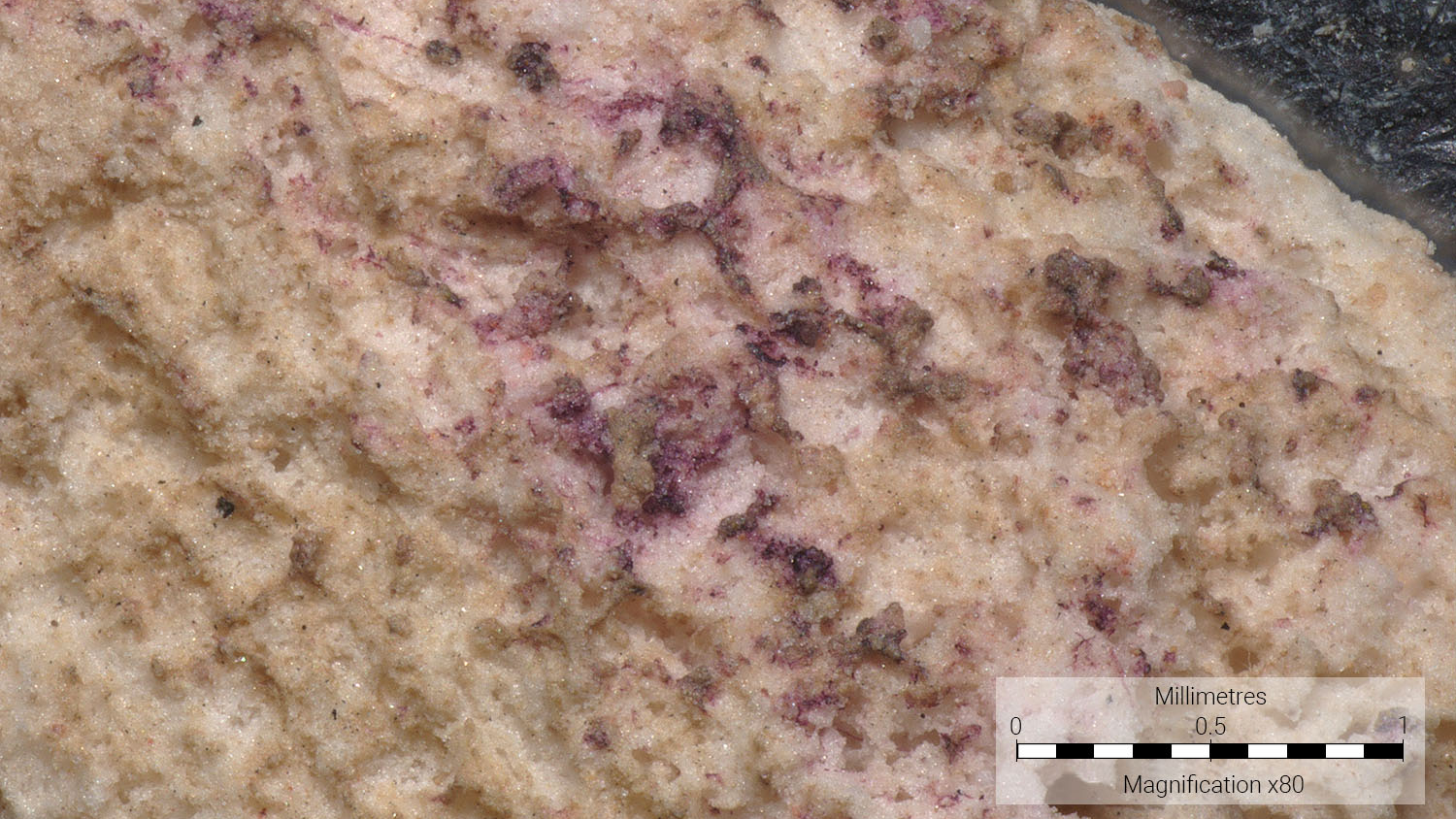
Ancient plaster fragments dotted with purple dye

Textile remains and purple dye are visible on the plaster casing. (Image credit: Seeing the Dead Project/University of York and York Museums Trust)

Chemists on the project team are currently analyzing the hardened plaster coverings to gather further information about Romano-British burial practices.

you may like

“We are testing the plaster casing for traces of aromatic substances such as frankincense, mastic, dried sap or resin,” Carroll told Live Science in an email. They also plan to test the purple dye to determine whether it comes from the murex, a type of snail from which the ancient Romans extracted a natural red-purple dye. The gold thread will also be analyzed, Carroll said.

Other liquid plaster burials found in York include a child around four months old who was found wrapped between the legs of two adults. Although it is unclear whether the three men constituted a family, “it is clear that they were closely related in life and death,” Carroll wrote.

In another case, a girl who was between 7 and 9 years old at the time of her death was buried with jewelry including gold, silver, copper, jet, glass and coral. Two pairs of boots and a pair of sandals were found at her feet, and the bones of what was probably a pet chicken were also found in the coffin.

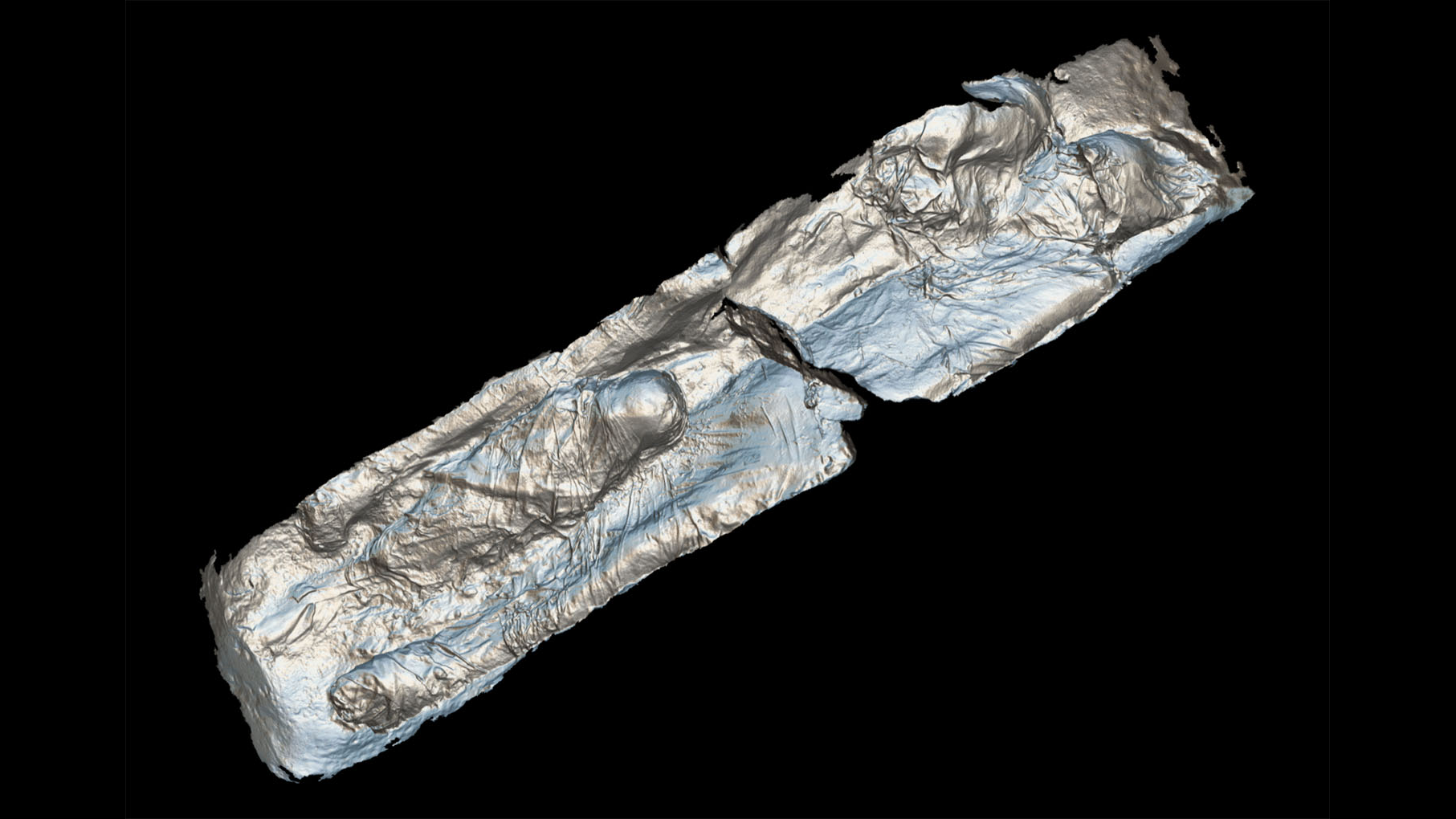
“3D scans of her body, visible under the shroud and sheets, reveal how frail and thin she was, possibly indicating a lingering illness before her death,” Carroll wrote.

These lavish burials of infants and children discovered in York demonstrate that Roman legal texts, written primarily by older men, did not reflect the reality of life and death in Roman Britain.

“All this definitely suggests that these young children were valued and cared for, contrary to the traditional idea that the Romans didn’t care if their infants died because they had a high infant mortality rate,” Carroll said. “Complete nonsense!”

Roman Britain Quiz: What do you know about the Empire’s conquest of the British Isles?


Source link

#Biotechnology #ClimateScience #Health #Science #ScientificAdvances #ScientificResearch
Follow on Google News Follow on Flipboard
Share. Facebook Twitter Pinterest LinkedIn Tumblr Email Copy Link
Previous ArticleThe White House wants AI companies to cover interest rate hikes. Most people have already said they would.
Next Article Nvidia posts another record quarter amid record capital spending
user
  • Website

Related Posts

This week’s science news: Spider webs on Mars, tigers returned to Kazakhstan, 2,000-year-old skull with permanently blackened teeth

February 28, 2026

Inherited diseases don’t work like we thought they did

February 27, 2026

“I’m not lying. So who are you?”: What happens when a DNA test shows that a woman is not the mother of the child she gave birth to?

February 27, 2026
Add A Comment
Leave A Reply Cancel Reply

Latest Posts

ClawJacked flaw allows malicious sites to hijack local OpenClaw AI agents via WebSockets

OpenAI’s Sam Altman announces agreement with Department of Defense on ‘technical safeguards’

Xiaomi launches 17 Ultra smartphone, AirTag clone and ultra-slim power bank

Why China’s humanoid robot industry is winning in the nascent market

Trending Posts

Subscribe to News

Subscribe to our newsletter and never miss our latest news

Please enable JavaScript in your browser to complete this form.
Loading

Welcome to Fyself News, your go-to platform for the latest in tech, startups, inventions, sustainability, and fintech! We are a passionate team of enthusiasts committed to bringing you timely, insightful, and accurate information on the most pressing developments across these industries. Whether you’re an entrepreneur, investor, or just someone curious about the future of technology and innovation, Fyself News has something for you.

Castilla-La Mancha Ignites Innovation: fiveclmsummit Redefines Tech Future

Local Power, Health Innovation: Alcolea de Calatrava Boosts FiveCLM PoC with Community Engagement

The Future of Digital Twins in Healthcare: From Virtual Replicas to Personalized Medical Models

Human Digital Twins: The Next Tech Frontier Set to Transform Healthcare and Beyond

Facebook X (Twitter) Instagram Pinterest YouTube
  • Home
  • About Us
  • Advertise with Us
  • Contact Us
  • DMCA
  • Privacy Policy
  • Terms & Conditions
  • User-Submitted Posts
© 2026 news.fyself. Designed by by fyself.

Type above and press Enter to search. Press Esc to cancel.