
Close Menu
  • Home
  • Identity
  • Inventions
  • Future
  • Science
  • Startups
  • Spanish
What's Hot

New York state lawmaker proposes three-year moratorium on new data centers

This week’s science news: Anomalies inside Earth, the Artemis II leak and how psychedelics can help treat PTSD

Warning of signal phishing targeting German government agencies, politicians, military personnel and journalists

Facebook X (Twitter) Instagram
  • Home
  • About Us
  • Advertise with Us
  • Contact Us
  • DMCA
  • Privacy Policy
  • Terms & Conditions
  • User-Submitted Posts
Facebook X (Twitter) Instagram
Fyself News
  • Home
  • Identity
  • Inventions
  • Future
  • Science
  • Startups
  • Spanish
Fyself News
Home » James Webb Telescope Creates First 3D Map of Alien’s Atmosphere – Also Discovers Torn Water
Science

James Webb Telescope Creates First 3D Map of Alien’s Atmosphere – Also Discovers Torn Water

userBy userNovember 5, 2025No Comments3 Mins Read
Share Facebook Twitter Pinterest Telegram LinkedIn Tumblr Email Copy Link
Follow Us
Google News Flipboard
Share
Facebook Twitter LinkedIn Pinterest Email Copy Link

Scientists have created the first three-dimensional map of a distant planet’s atmosphere.

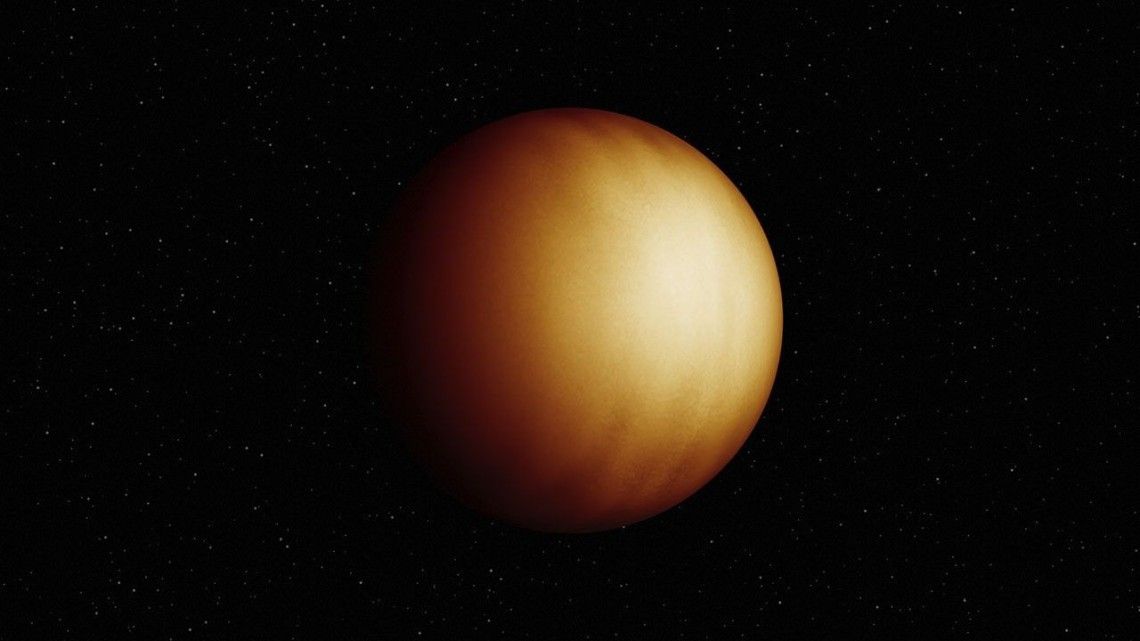
Using data from the James Webb Space Telescope (JWST) and a technique known as eclipse mapping, researchers discovered that there are different temperature zones in the atmosphere of exoplanet WASP-18b, a gas giant planet located about 400 light-years from Earth. The same process could soon help scientists map temperature changes and cloud structure on other distant planets, according to a study published Oct. 28 in the journal Nature Astronomy.

“Eclipse mapping allows us to image exoplanets whose host stars are too bright to see directly,” study co-author Ryan Challenor, a researcher at Cornell University who studies exoplanets, said in a statement. “With this telescope and this new technology, we can begin to understand exoplanets along the same lines as our solar system’s neighbors.”

you may like

WASP-18b has about 10 times the mass of Jupiter, and its year is only 23 hours long. Because it is tidally locked to the star, one side of the planet will always face the star, and the other side will always be dark.

As the planet begins to pass behind the star, the star blocks more and more of the light that the planet reflects, eventually obscuring the planet completely as seen from the solar system. Eclipse mapping takes advantage of this gradual change. By measuring how light from a planet changes as it disappears and emerges, scientists can determine the temperature of different regions and altitudes of the planet’s atmosphere.

“It’s very difficult because you have to look for changes where small parts of the Earth disappear and reappear in view,” Challenor said.

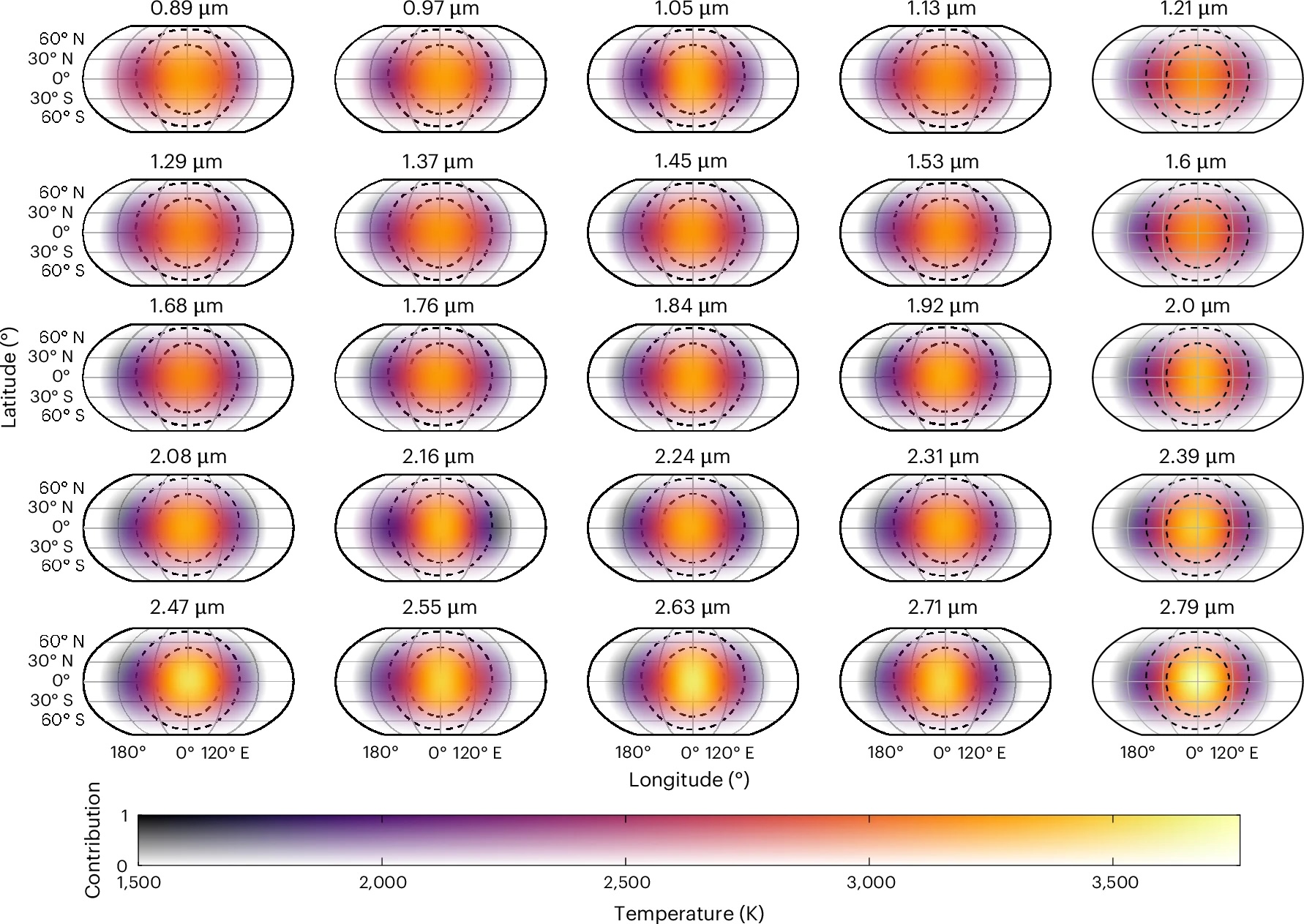
In the new study, scientists used different wavelengths of light to build a two-dimensional temperature map of the previous WASP-18b to create a more detailed 3D map of the atmosphere. For example, they used data on wavelengths absorbed by water to map the exoplanet’s moist upper atmosphere. Wavelengths that water did not absorb passed through to lower altitudes, allowing JWST to preferentially observe different levels of the planet’s atmosphere based on the wavelengths it was studying.
Get the world’s most fascinating discoveries delivered straight to your inbox.

A series of optical wavelength observations of WASP-18B

By stacking multiple JWST observations of different light wavelengths, the study authors were able to create a 3D model of WASP-18b’s atmosphere at different depths. (Image credit: Challenger et al. / Nature Astronomy)

The research team discovered that there are two distinct temperature regions on the dayside of WASP-18b. There is a circular “hotspot” in the area directly facing the star that receives the most sunlight. Beyond that, there is a cooler ring that extends to the visible edge of the planet. This suggests that atmospheric winds cannot completely redistribute heat from the star throughout the planet.

Scientists also observed that hotspots have less water than the global average. The researchers suggested that this could mean that the temperature in the hot spot is high enough to tear apart water molecules in the atmosphere.

“We think this is evidence that the planet in this region is getting so hot that the water is starting to break down,” Challenor said. “It was predicted in theory, but it’s really exciting to actually see this in real observations.”

Additional measurements by JWST could improve the resolution of WASP-18b’s atmospheric map, allowing scientists to study the atmospheres of other similar gas giants.

“This new technique could be applied to many other planets that can be observed with the James Webb Space Telescope,” Challenor said. “It’s really exciting because we can start to understand exoplanets as a group in 3D.”


Source link

#Biotechnology #ClimateScience #Health #Science #ScientificAdvances #ScientificResearch
Follow on Google News Follow on Flipboard
Share. Facebook Twitter Pinterest LinkedIn Tumblr Email Copy Link
Previous ArticleGiant 3,000-year-old Mayan ruins in Mexico depict the universe and ‘cosmic order’, research claims
Next Article Lucid Motors’ chief engineer retires after 10 years
user
  • Website

Related Posts

This week’s science news: Anomalies inside Earth, the Artemis II leak and how psychedelics can help treat PTSD

February 7, 2026

Psychedelics may rewire the brain to treat PTSD. Scientists are finally beginning to understand how.

February 6, 2026

All major galaxies except one are moving away from the Milky Way – and we finally know why

February 6, 2026
Add A Comment
Leave A Reply Cancel Reply

Latest Posts

New York state lawmaker proposes three-year moratorium on new data centers

This week’s science news: Anomalies inside Earth, the Artemis II leak and how psychedelics can help treat PTSD

Warning of signal phishing targeting German government agencies, politicians, military personnel and journalists

Benchmark raises $225 million in special funding to double Cerebras

Trending Posts

Subscribe to News

Subscribe to our newsletter and never miss our latest news

Please enable JavaScript in your browser to complete this form.
Loading

Welcome to Fyself News, your go-to platform for the latest in tech, startups, inventions, sustainability, and fintech! We are a passionate team of enthusiasts committed to bringing you timely, insightful, and accurate information on the most pressing developments across these industries. Whether you’re an entrepreneur, investor, or just someone curious about the future of technology and innovation, Fyself News has something for you.

Castilla-La Mancha Ignites Innovation: fiveclmsummit Redefines Tech Future

Local Power, Health Innovation: Alcolea de Calatrava Boosts FiveCLM PoC with Community Engagement

The Future of Digital Twins in Healthcare: From Virtual Replicas to Personalized Medical Models

Human Digital Twins: The Next Tech Frontier Set to Transform Healthcare and Beyond

Facebook X (Twitter) Instagram Pinterest YouTube
  • Home
  • About Us
  • Advertise with Us
  • Contact Us
  • DMCA
  • Privacy Policy
  • Terms & Conditions
  • User-Submitted Posts
© 2026 news.fyself. Designed by by fyself.

Type above and press Enter to search. Press Esc to cancel.