

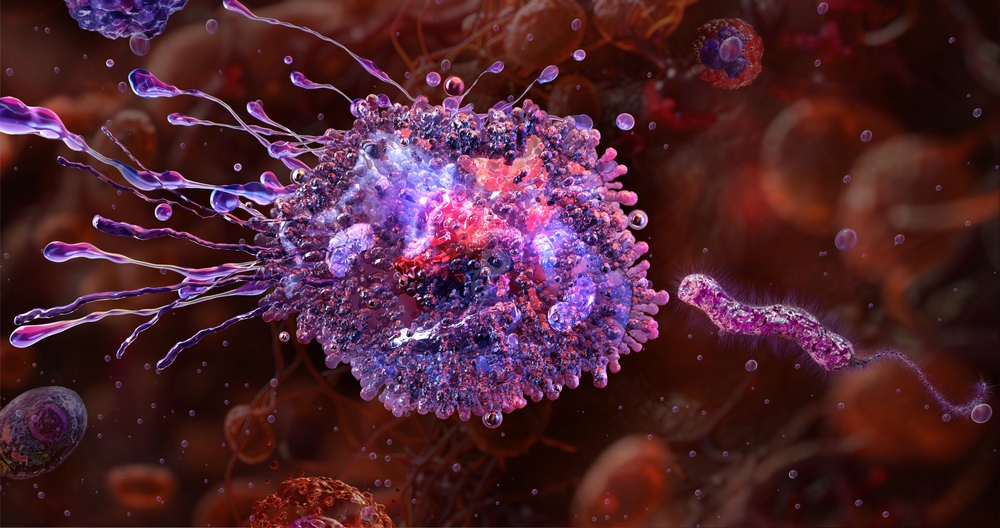
KAIST scientists have developed a breakthrough treatment that turns the body’s own immune cells (macrophages) into targeted cancer-fighting cells directly inside tumors.
This innovative approach has the potential to overcome long-standing challenges in the treatment of solid tumors, where dense tissue and immunosuppression have limited the effectiveness of traditional immunotherapies.
This therapy mobilizes the immune system from within by reprogramming macrophages already present around tumors, providing a faster, more efficient, and potentially more powerful method of attacking cancer.
Overcoming the barrier of solid cancer
Solid tumors, such as gastric, lung, and liver cancers, create a highly suppressive environment that prevents immune cell infiltration and effective function.
Macrophages naturally accumulate around tumors, but their ability to fight cancer is often blocked by the tumor itself.
Traditional CAR macrophage therapy requires immune cells to be extracted from a patient, modified in the lab, and reinfused, a process that is expensive, time-consuming, and difficult to scale for widespread patient use.
Direct in-vivo conversion to CAR macrophages
The KAIST research team has developed a way to circumvent these limitations by reprogramming macrophages in situ.
They designed lipid nanoparticles carrying mRNA encoding cancer recognition proteins along with immune-stimulating compounds.
When these nanoparticles are injected directly into tumors, they are absorbed by local macrophages and stimulate the production of CAR (chimeric antigen receptor) proteins.
At the same time, immune signaling pathways are activated, effectively converting the body’s macrophages into CAR macrophages that can attack cancer cells.
Unlike traditional methods, this approach generates potent anti-cancer cells without the need for cell extraction or lengthy laboratory procedures.
Newly formed CAR macrophages not only directly engulf cancer cells, but also stimulate nearby immune cells, amplifying the overall anti-cancer response.
Accelerating preclinical results
In animal models of melanoma, the most aggressive type of skin cancer, this treatment significantly inhibited tumor growth.
Of note, the immune response was not restricted to the treated tumor. It spreads throughout the body, suggesting that this therapy may also be useful in targeting metastatic cancer.
These results highlight the potential of reprogrammed macrophages to act as both local and systemic anticancer agents.
A new era of immunotherapy
This research represents a major advance in immune cell therapy. This approach addresses two critical limitations of traditional CAR macrophage therapy, namely low delivery efficiency and immunosuppressive tumor environment, by generating anticancer macrophages directly in the patient.
Harnessing the body’s existing immune cells eliminates the logistical and economic hurdles associated with in vitro cell modification, opening the door to more practical and scalable treatments for solid tumors.
If developed, this in-vivo macrophage conversion strategy could redefine cancer treatment and bring new hope to patients facing cancers that have long resisted conventional treatments.
Source link
