

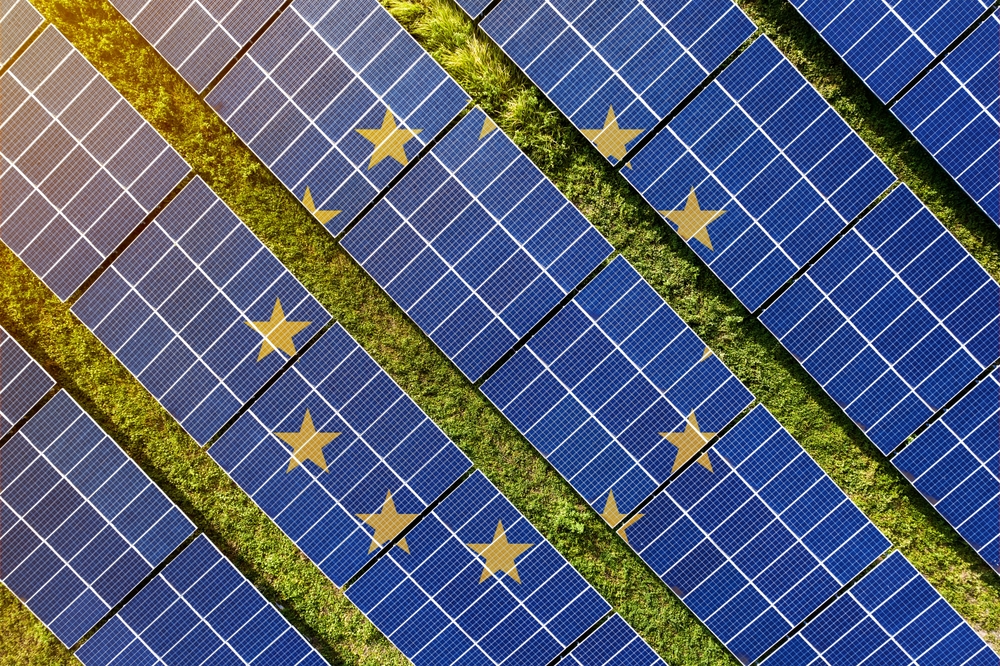
Niklavs Tamanis, Veronica Saletti, Marco Costa and Marina Fernández-Campoamor discuss how the EU’s citizen energy package can transform energy communities and local benefit sharing into a simple and fair way for citizens to participate in the clean energy transition.
Citizens are still struggling to participate in Europe’s clean energy transition. This article tests two practical approaches to turning hosts into partners. They are energy communities where citizens share and share electricity, and community benefits provisions that distribute value locally.
We, the Young Energy Ambassadors, demonstrate how interoperability between targeted one-stop shops (OSS), renewable energy sources (RES)-ID, and other solutions can make these mechanisms work more effectively, equitably, and at scale.
advanced questions
Across the EU, households continue to struggle to participate in energy markets. Awareness of tangible benefits is low and confidence in the protection measures taken by mining companies is limited. Although reliable mechanisms exist, their implementation remains complex, uneven, and difficult to access.
EU momentum, citizen energy packages and YEA inputs
The Citizens Energy Package builds on the 2025 Action Plan for Clean Energy Package and Affordable Energy and aims to empower consumers and enable energy sharing.
Our contribution to public consultation as Young Energy Ambassadors (YEA) focused on practical delivery through solutions such as the development of targeted OSS, the recognition of young people/renters as a vulnerable group, the creation of audience-specific advocacy, and the improvement of energy community and local benefits clauses, two important instruments for public participation in energy markets. This article focuses on the latter two.
Two practical levers
Energy Community (EComms)
Despite the EU’s clear direction for energy community initiatives, barriers still exist. The definition and implementation of RECs vary widely between member states. Consciousness is low. Recognition of the significant effort by practitioners involved in the REC creation process. Complex bureaucratic setup and operations. Limited benefits for students, young workers, and low-income renters. Expensive and non-interoperable instrumentation/platforms. and the risk of acquisition by large market entities.
Our EComms solution
To facilitate the initiation, participation, and management of energy communities (EComms), we propose a set of complementary solutions that address both organizational and technical barriers.
Primarily focused on the energy community, the One Stop Shop (OSS) acts as a single-entry hub where citizens, small and medium-sized enterprises (SMEs), and local governments can access ready-to-use documents (statutes, bylaws, communication templates), energy sharing assessments, clear guidance on data management and regulatory procedures, as well as information on how to make their homes more energy efficient.
Furthermore, young people, especially those renting apartments as students and early professionals, should be formally recognized as a vulnerable group within the country’s social framework. This will ensure that they have access to dedicated benefits and support schemes like other vulnerable groups, remove structural barriers to their participation and ensure that the energy community becomes an inclusive option rather than a niche one.
Additionally, a dedicated civil service course for energy communities will allow young professionals to gain first-hand experience while also supporting communities with day-to-day management and public engagement activities that would be costly to outsource entirely to outside experts. Building on emerging examples from France and Italy, these hubs connect communities with grants, soft loans and local financial partners, making investment more accessible and de-risking early-stage initiatives.
Finally, we propose the Renewable Energy System Identifier (RES-ID) to simplify participation from a technical and bureaucratic point of view. It is a standardized and recognized technical and administrative data set that can be entered once by citizens and SMEs and reused in various national portal procedures, such as permit applications, grid connection requests, EComms membership and incentive scheme requests. Such tools, similar to the Italian SPID and the Dutch DigID, personal digital ID systems, store the technical data of all renewable energy systems required by various national authorities and retrieve the data at each access point if necessary.
EComms case study
1) In Alto Vicentino (Italy), 16 municipalities established an energy community to add up to 650 kW of solar power to public buildings and provide state subsidies (up to 40% of the initial investment) available to residents and small and medium-sized businesses. A youth team is also promoting this and organizing purchasing clubs for energy retrofits in buildings.
Policy takeaways: Support clusters of neighboring municipalities to build from existing energy information points, continue to support the installation of solar power in public buildings as a way to “lead by example”, and encourage young professionals to actively engage with their communities through dedicated support grants, civil service-specific paths and learning opportunities.
2) The Hyperion Energy Community of Athens (Greece), founded in 2020, is mainly composed of families and NGOs and aims to evolve into an ESCO that supports the renovation of apartments in multifamily buildings. The project operates in several districts of the capital and aims to ensure gender balance and representation of diverse social groups among its 123 members.
Policy takeaway: Use the Citizen Energy Communities (CEC) regulatory framework to create new citizen-led business structures (ESCOs) to accelerate urban energy retrofits in multifamily housing and ensure broad social representation.
3) Energie Samen Livirenland (Netherlands): Founded in 1936 and led by citizens, the Livirenland neighborhood association is revitalizing old housing stock (60% built before 1950) through a co-design process for interventions. The project covers 133 homes, with a special focus on energy poverty and elderly residents.
Policy takeaway: Leverage existing neighborhood associations with a long history of community trust to facilitate the co-design of retrofit interventions with a particular focus on the most vulnerable groups.
4) Renoss (Italy): A network of one-stop shops dedicated to the renewable energy community, operated by a public regional energy agency supported by the Ministry of the Environment. This covers the national territory with at least one OSS per region, in line with the Energy Performance in Buildings Directive. Each agency supports the energy community with dedicated services ranging from information and grant applications to feasibility studies and member engagement campaigns.
Policy point: Support publicly-led OSS cluster organizations and provide a structured and homogeneous technical assistance approach across Europe.
community benefit clause
Although energy communities are a promising and innovative concept with clear environmental benefits, they do not always address social equity concerns associated with renewable energy projects, such as externalized siting costs. For this reason, the introduction of benefit-sharing mechanisms such as community funds and shared share ownership is also gaining momentum among Member States.
Still, progress has been spotty. Many plans are complex, opaque, and involve residents too slowly. Young people, renters, and other underrepresented groups are largely out of reach. Participation remains low and legitimacy suffers. Therefore, as Young Energy Ambassadors, we argue that a just transition must go beyond compensation to create shared value for communities, especially in areas where skills and alternative jobs are in short supply.
Our social contribution solutions
To make renewable energy projects more equitable and inclusive, governments can set simple rules to ensure that local communities share in the benefits.
For example, benefit criteria can be built directly into auction schemes, with clear guidance on eligible uses such as local energy relief and community facilities. OSS helps communities see who is eligible, access funding and rewards, and connect them to training and reskilling opportunities.
Additionally, governments could develop risk-sharing models that make it easier for low-income households to participate in projects without incurring financial losses. Finally, an EU-adapted model that takes into account both income and housing conditions can be used to raise awareness through targeted communication through youth groups, schools, community centers and local media.
Case study of social contribution
Once again, we took a closer look at the two national models to see what shared value in a just community looks like.
1) In Ireland’s RESS auction, all supported projects pay €2/MWh into the Community Benefits Fund and are listed on the national SEAI register with guidance on eligible uses, from energy poverty relief to community facilities. There is also a community-driven auction lane for locally developed projects.
Policy takeaway: Set a fixed EUR/MWh payment to a local fund, maintain a public register and simple annual report, and maintain community-led tracking to ensure local residents can take the initiative and access the value.
2) Danish VE love goes further by combining money with ownership and protection. Developers of new onshore wind farms must provide 20% of local equity (within 4.5 km) on comparable terms, compensate for loss of property value and pay into green schemes for local installations.
Policy takeaway: Align incentives and build lasting acceptance through packages such as local equity, property compensation, and community funds.
why all this matters
Combining Ecomms and Community-Benefit mechanisms with improvements such as functional OSS, RES-ID, interoperability, and guardrails will build trust, accelerate adoption, improve affordability, and broaden participation, especially among youth, renters, and other vulnerable groups.
call to action
As modern citizen energy participation in the EU moves beyond the consultative stage, a fair codification of mechanisms must be followed. This means expanding coverage of OSS, standardizing trusted tools across MS, integrating mainstream risk-sharing principles, and ensuring that community benefits provide tangible value beyond mere compensation.
The European Commission is already providing the foundation for this through tools such as the Energy Community Facility and citizen-led retrofit initiatives, helping local actors access guidance, financing and capacity building. In parallel, EU-wide networks like REScoop.eu support peer learning across renewable energy cooperatives and member states.
It is essential to build on and scale up these efforts if our future citizens are to become true partners in building Europe’s renewable energy.
This opinion piece was produced in cooperation with European Sustainable Energy Week 2026. For the open call, please see ec.europa.eu/eusew.
Recommended links
Source link
