

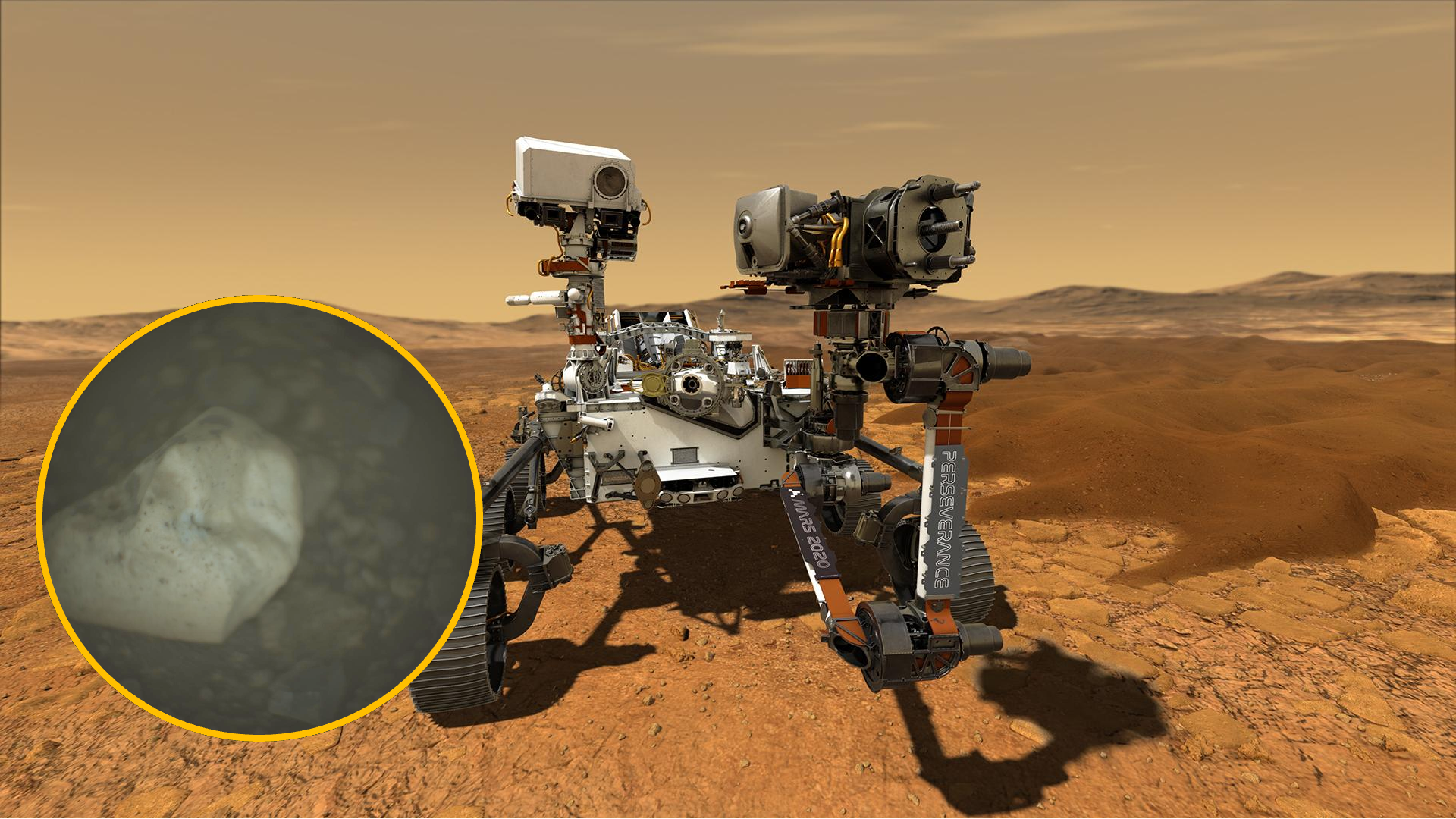
Observations by the Perseverance rover suggest that Mars’ rocks are filled with ruby-like crystals, and astronomers say other valuable minerals like sapphire may also be present throughout the Red Planet.
An international team of researchers presented their findings based on observations in spring 2025 at the 57th Lunar and Planetary Science Conference held in Texas on March 16. These findings are currently under peer review and will be published in the journal Geophysical Research Letters.
Article continues below
you may like
As scientists often do when faced with a curious specimen, they fired a laser at it, specifically a green laser from the Supercam atop the Perseverance rover’s mast. This laser excites the mineral and emits light at a specific wavelength. Additionally, all elements and compounds emit light at specific wavelengths, revealing the chemical composition of the sample.
Corundum conundrum
Analysis shows that three of the laser-blasted float rocks show distinct signatures of the mineral corundum, which contains the element chromium, and the crystals match the chemical description of ruby. But because the crystals are too small to be seen by Perseverance’s imagers and their exact chemical composition is unknown, researchers are unsure whether they have truly discovered a Martian ruby, or perhaps some other type of corundum.
“The different types of corundum are based on chemistry,” study co-author Valerie Peyre, a planetary geologist at the University of Iowa, told Live Science in an email. “Corundum is Al2O3, but trace elements such as chromium, titanium, and iron may be present.”
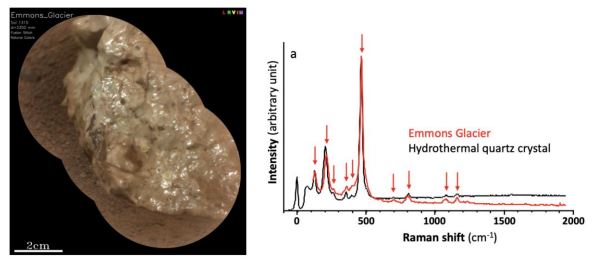
“These elements determine the color and name of the mineral,” Payré added. “The amount of chromium cannot be quantified, and other elements such as iron or titanium may also be present. Therefore, it is difficult to conclude whether they are rubies or other types of corundum.” [like sapphires]. ”
The research team ultimately classified the crystals as corundum, refusing to speculate about its variety without further chemical evidence.
Corundum is a mineral made from aluminum and oxygen. It is one of the hardest natural substances known, approaching the toughness of diamond. Pure corundum is colorless, but tiny impurities give it its vibrant hue. Inclusions of iron or titanium produce bright blue sapphires, while chromium produces even rarer, sparkling rubies.
At the moment, corundum crystals are found inside small pebbles that come from other places. That is, they are taken out of context. Therefore, it is difficult to constrain the entire story, but
Valerie Peyre, planetary geologist at the University of Iowa
But those hoping for a future Martian gem-encrusted necklace may be disappointed. The corundum crystals found within float rocks are very small, less than 0.2 millimeters (0.008 inches) in diameter.
What to read next
Could there be a larger Martian ruby? “It’s possible,” study co-author Olivier Beyssac, a principal investigator at France’s National Center for Scientific Research, told Live Science in an email. “In any case, corundum is quite rare on Earth and rarely exists as large crystals, so we would expect the same to be true on Mars.”
Space influence?
Also, the crystals may have formed under different conditions than on Earth. On Earth, corundum is produced through metamorphic and igneous processes. In this process, intense heat and pressure fueled by tectonic activity transforms existing rocks into potential gemstones.
However, since there is no conclusive evidence for plate tectonics on Mars, researchers suggest that Martian ruby-like crystals may have been formed by cosmic collisions.
“The impact creates high temperatures and pressures that can produce corundum. Hydrothermal fluids can also be produced,” Peyre explained. But researchers must find additional samples at its origin to explain its formation mechanism.
“At the moment, corundum crystals have been found in small pebbles that came from other places, meaning they are out of context. So it’s difficult to pin down the full story,” Peyre said.
Ruby is not the only spectacular stone found in Jezero Crater, and further research may also reveal stones similar to sapphire there. In the past, scientists have also found signs of other possible gemstones, such as quartz and opal, elsewhere on Mars, suggesting that our neighboring red planet is a gemstone laboratory.
Mars Quiz: Is your knowledge of the Red Planet out of this world?
Source link
