
Close Menu
  • Home
  • Identity
  • Inventions
  • Future
  • Science
  • Startups
  • Spanish
What's Hot

Rust-based VENON malware targets 33 Brazilian banks with credential-stealing overlay

Alexa+ now has a new “Adults Only” personality option that lets you swear but stays out of NSFW content

Rivian R2 launch: Here’s what you get for $57,990

Facebook X (Twitter) Instagram
  • Home
  • About Us
  • Advertise with Us
  • Contact Us
  • DMCA
  • Privacy Policy
  • Terms & Conditions
  • User-Submitted Posts
Facebook X (Twitter) Instagram
Fyself News
  • Home
  • Identity
  • Inventions
  • Future
  • Science
  • Startups
  • Spanish
Fyself News
Home » ‘Mass migration’ of stars away from the center of the Milky Way galaxy could explain why life exists in our solar system
Science

‘Mass migration’ of stars away from the center of the Milky Way galaxy could explain why life exists in our solar system

userBy userMarch 12, 2026No Comments3 Mins Read
Share Facebook Twitter Pinterest Telegram LinkedIn Tumblr Email Copy Link
Follow Us
Google News Flipboard
Share
Facebook Twitter LinkedIn Pinterest Email Copy Link

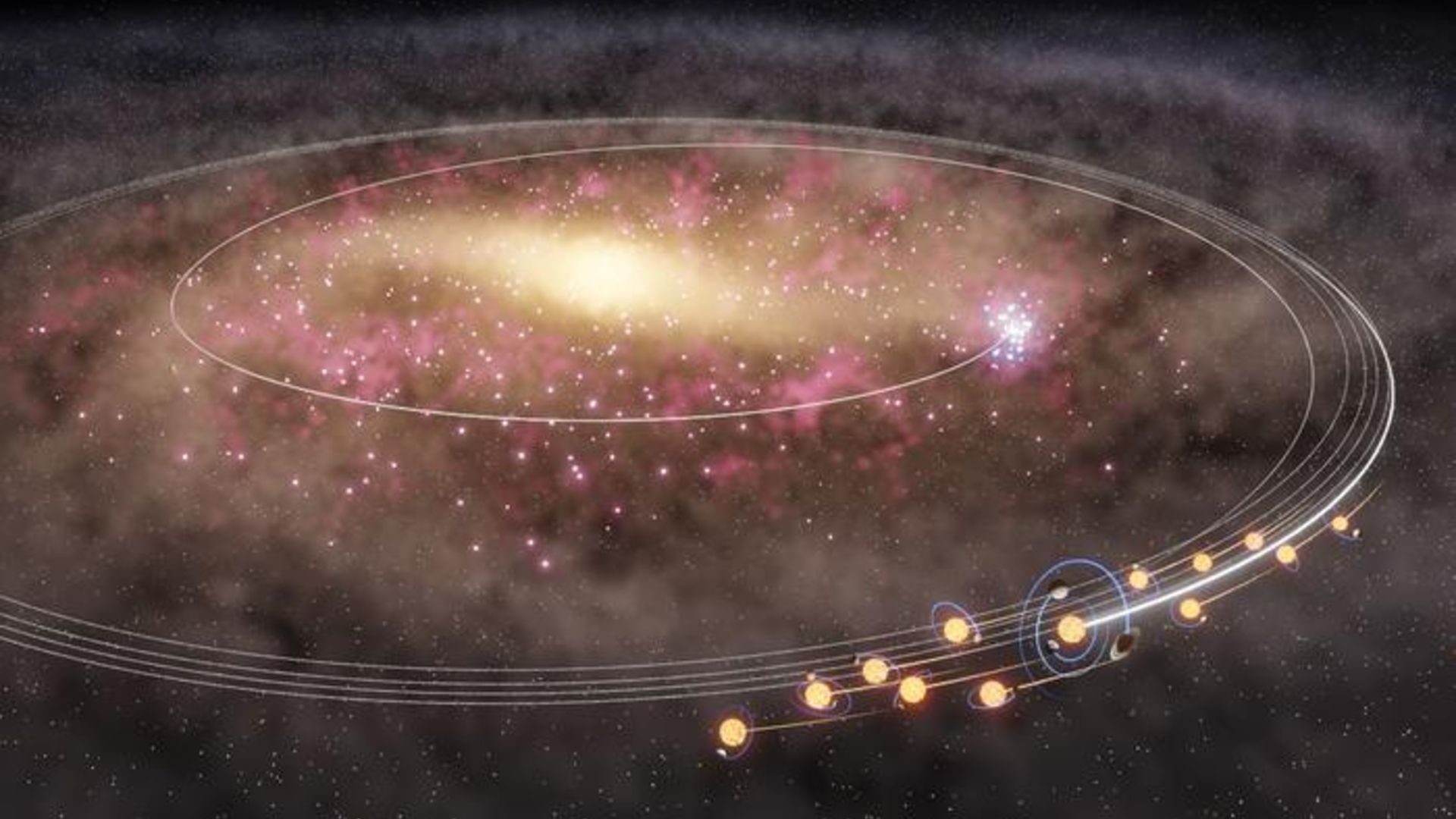
Thousands of solar “twins” discovered by space telescopes could shed new light on how our star came to host at least one life-friendly world, and whether large-scale stellar migration was involved.

The researchers used data from the Gaia Space Telescope, a now-defunct European Space Agency observatory, to record the movements of millions of stars in high resolution from 2014 to 2025. The telescope found 6,594 stellar “twins” (stars with similar age, temperature, composition, and surface gravity) to the Sun, about 30 times as many as found in previous surveys.

Furthermore, most of these sibling stars were discovered close to our Sun. Taken together, these samples reveal a mass exodus of stars from the galaxy’s dense center over billions of years.

Article continues below

you may like

“By studying these large populations of solar twins, we found evidence suggesting that many solar twins of the same age migrated through the Milky Way at about the same time as the Sun, providing new clues about when and how the Sun moved from its birthplace to its current location,” Daisuke Taniguchi, assistant professor at Tokyo Metropolitan University, who co-led the team with Takuji Tsujimoto at the National Astronomical Observatory of Japan, told LiveScience in an email.

movement of stars

Taniguchi led one of the studies and co-authored the other, published Thursday (March 12) in the journal Astronomy & Astrophysics. Taken together, these studies suggest that when the Milky Way’s central “bar” of stars and gas formed, this process promoted star formation and sent many stars to other regions of the galaxy. This formation and “migration”, as the researchers called it, included the Sun.
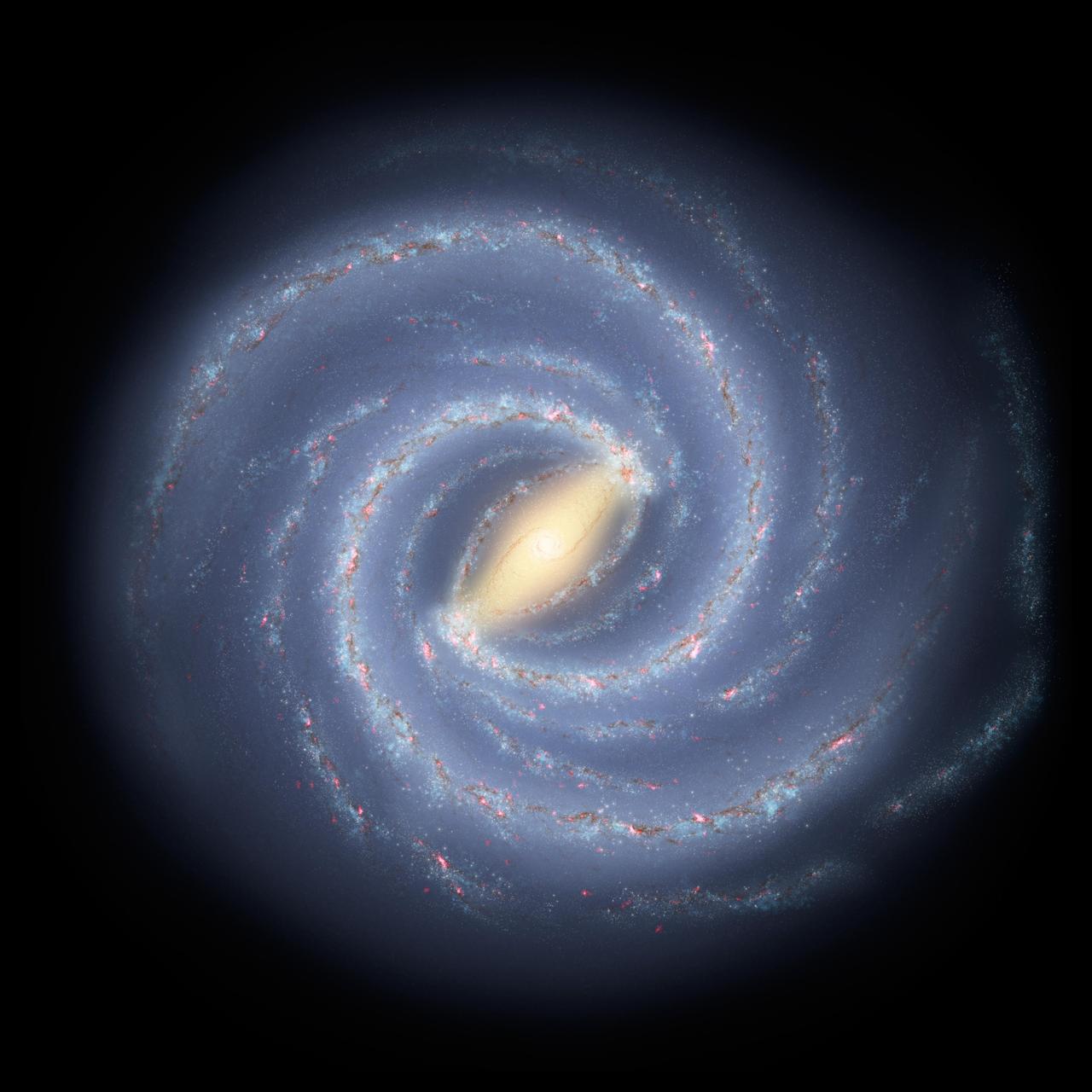
Image of a blue spiral galaxy with glowing streams of red and white gas in each arm and a straight yellow bar at the center of the galaxy.

The Milky Way’s central bar (yellow) is a dense region of stars that connects the galaxy’s spiral arms. (Image credit: NASA/JPL-Caltech)

“We propose that the formation of the Milky Way’s central bar promoted star formation and also caused large-scale migration, leading to the formation and outward migration of the Sun and many solar twins,” Taniguchi said.

Previous research had suggested that, based on its composition, the Sun must have traveled at least a few thousand light-years away from the galaxy’s center. But the problem, some models suggest, is that the Milky Way’s bars act as a “barrier” to distant stars. The solution to this problem, the scientists suggested, is to propose that the barrier only formed after all the stars had left the region.

Get the world’s most fascinating discoveries delivered straight to your inbox.

“If this scenario is correct, it may provide new constraints on the era of galaxy bar formation,” Taniguchi said. Researchers suggested that our galaxy’s central bar formed about 4 billion to 6 billion years ago. (The sun itself is about 4.5 billion years old, so it falls right within that time period.)

Taniguchi noted that supernovae and other types of “energetic events” tend to occur more frequently at the center of the Milky Way than in other regions. This is partly due to the extremely high population density of the star. This could make the galaxy’s interior hostile to life. And that could have implications for how life originated on Earth and other planets in the galaxy.

“If the Sun migrated outward relatively soon after its birth, as our study suggests, the solar system may have spent most of its history in a quieter outer disk,” Taniguchi said. “In other words, the sun did not arrive at an environment suitable for life purely by chance, but may have come into existence as a result of the formation of a galactic bar.”

Milky Way Quiz: How much do you know about our galaxy?


Source link

#Biotechnology #ClimateScience #Health #Science #ScientificAdvances #ScientificResearch
Follow on Google News Follow on Flipboard
Share. Facebook Twitter Pinterest LinkedIn Tumblr Email Copy Link
Previous ArticleBAM’s molecular printing platform transforms on-site PFAS analysis
Next Article EU gives green light to EUR 260 million investment in Belgium carbon capture and storage project
user
  • Website

Related Posts

‘Garlic rectal insertion for immune support’: Medical chatbot confidently offers disastrously misguided advice, experts say

March 11, 2026

Treasure trove of Russian revolutionary gold coins worth more than $500,000 discovered during home construction

March 11, 2026

The world is being held hostage by its reliance on oil. How can we break free from the fossil fuel?

March 11, 2026
Add A Comment
Leave A Reply Cancel Reply

Latest Posts

Rust-based VENON malware targets 33 Brazilian banks with credential-stealing overlay

Alexa+ now has a new “Adults Only” personality option that lets you swear but stays out of NSFW content

Rivian R2 launch: Here’s what you get for $57,990

How to Scale Phishing Detection in Your SOC: 3 Steps for CISOs

Trending Posts

Subscribe to News

Subscribe to our newsletter and never miss our latest news

Please enable JavaScript in your browser to complete this form.
Loading

Welcome to Fyself News, your go-to platform for the latest in tech, startups, inventions, sustainability, and fintech! We are a passionate team of enthusiasts committed to bringing you timely, insightful, and accurate information on the most pressing developments across these industries. Whether you’re an entrepreneur, investor, or just someone curious about the future of technology and innovation, Fyself News has something for you.

Castilla-La Mancha Ignites Innovation: fiveclmsummit Redefines Tech Future

Local Power, Health Innovation: Alcolea de Calatrava Boosts FiveCLM PoC with Community Engagement

The Future of Digital Twins in Healthcare: From Virtual Replicas to Personalized Medical Models

Human Digital Twins: The Next Tech Frontier Set to Transform Healthcare and Beyond

Facebook X (Twitter) Instagram Pinterest YouTube
  • Home
  • About Us
  • Advertise with Us
  • Contact Us
  • DMCA
  • Privacy Policy
  • Terms & Conditions
  • User-Submitted Posts
© 2026 news.fyself. Designed by by fyself.

Type above and press Enter to search. Press Esc to cancel.