

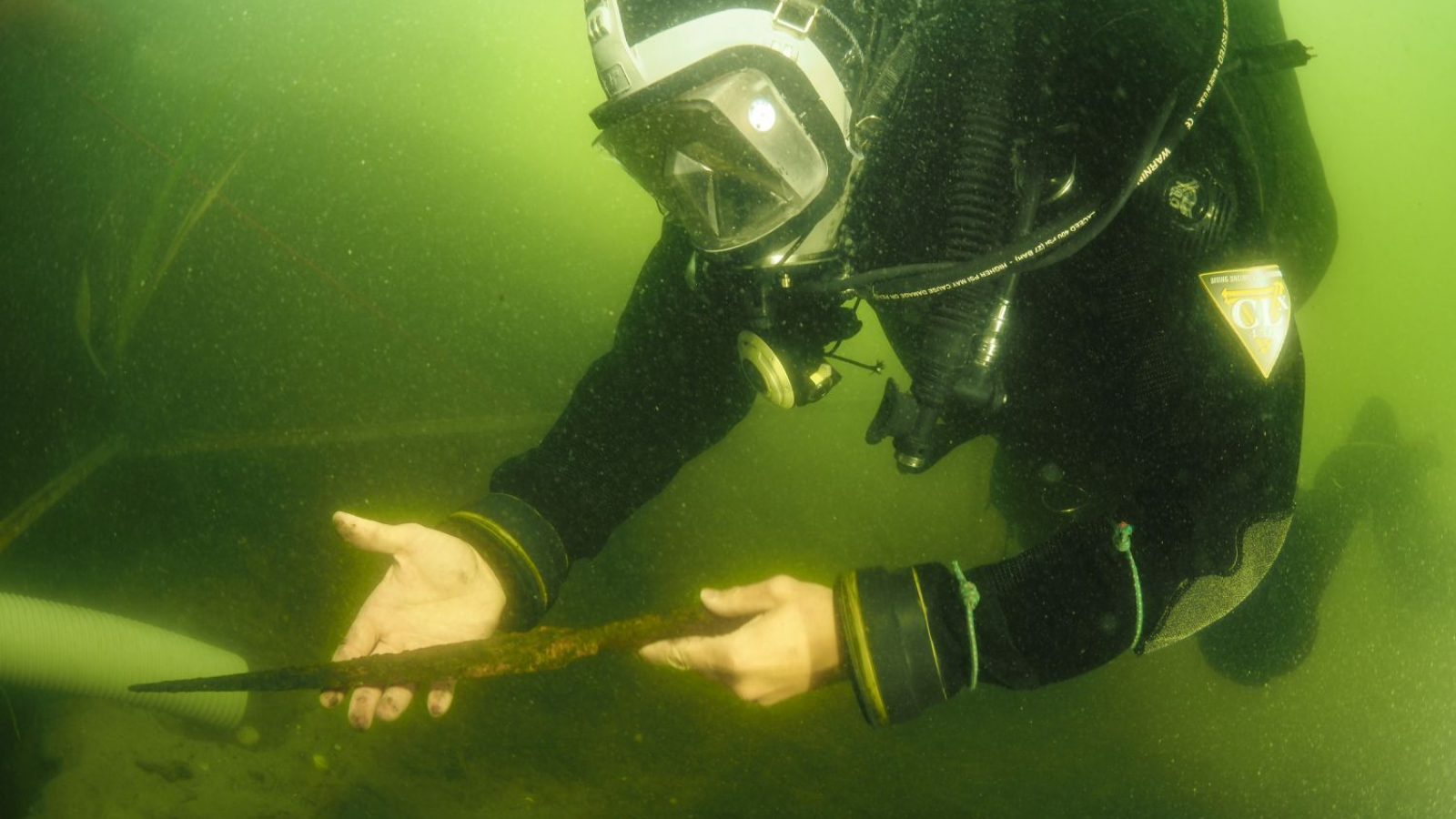
Underwater archaeologists have recovered four medieval spear points from Lake Lednica in Poland.
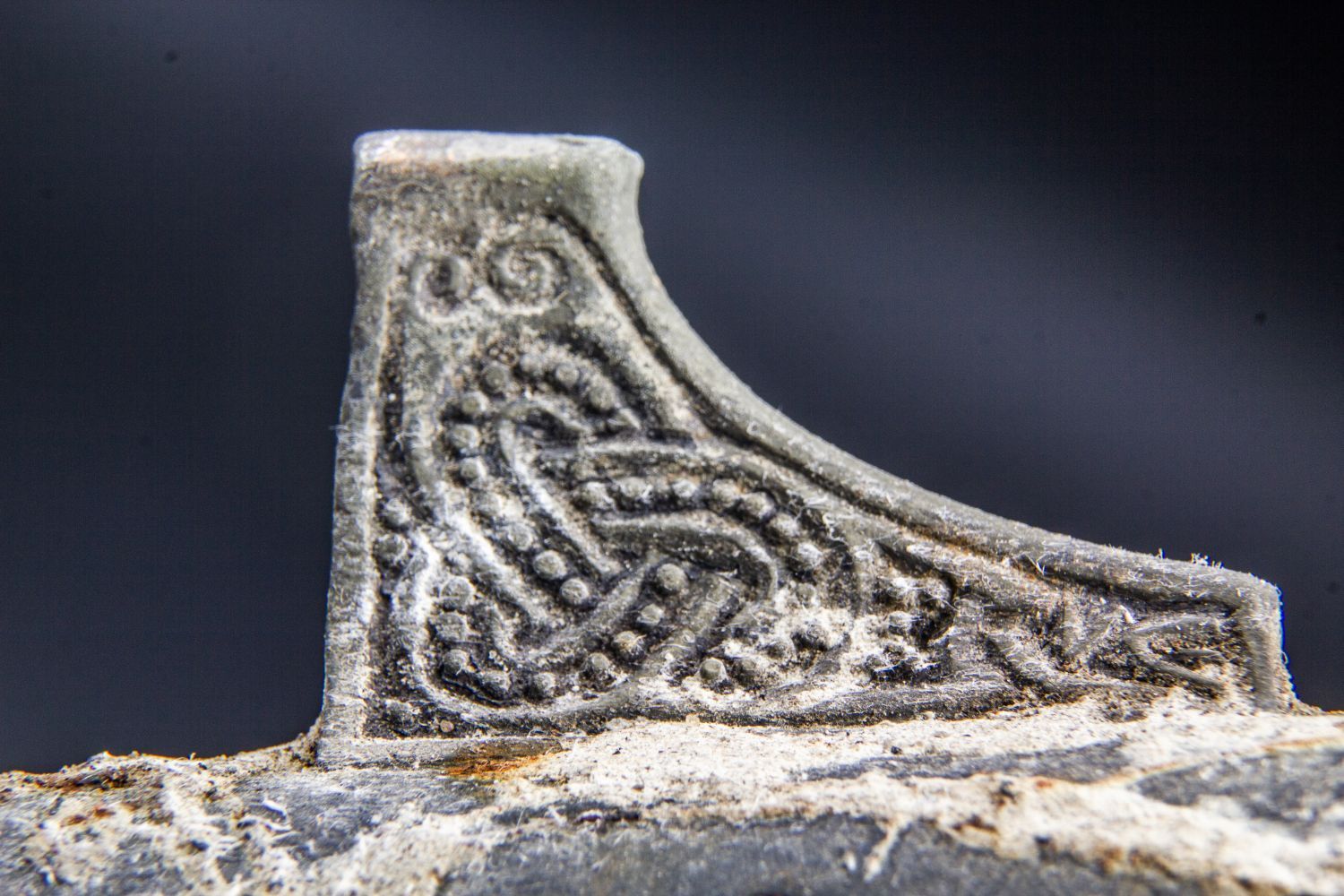
The archaeological team said in a translated statement that one of the spearheads was gilded with precious metals and had elaborate decorations, suggesting it may have belonged to a nobleman or prince.
you may like
The archaeologists said the spear itself “may have functioned as a symbol of power, the insignia of a high-ranking warrior, or a ceremonial tool” but was likely not intended for use in combat.
The smallest of the newly discovered spearheads is still attached to a 6.5-foot (2-meter) long shaft made of ash wood. “This is unusual because only the two spears from Lake Lednica have such well-preserved shafts,” Andrzej Pidin, professor of archeology at Nicolaus Copernicus University and director of the university’s Center for Underwater Archeology, said in a statement. In addition, “the weapon has an antler ring at the end, making it a unique artifact,” Piddin said.
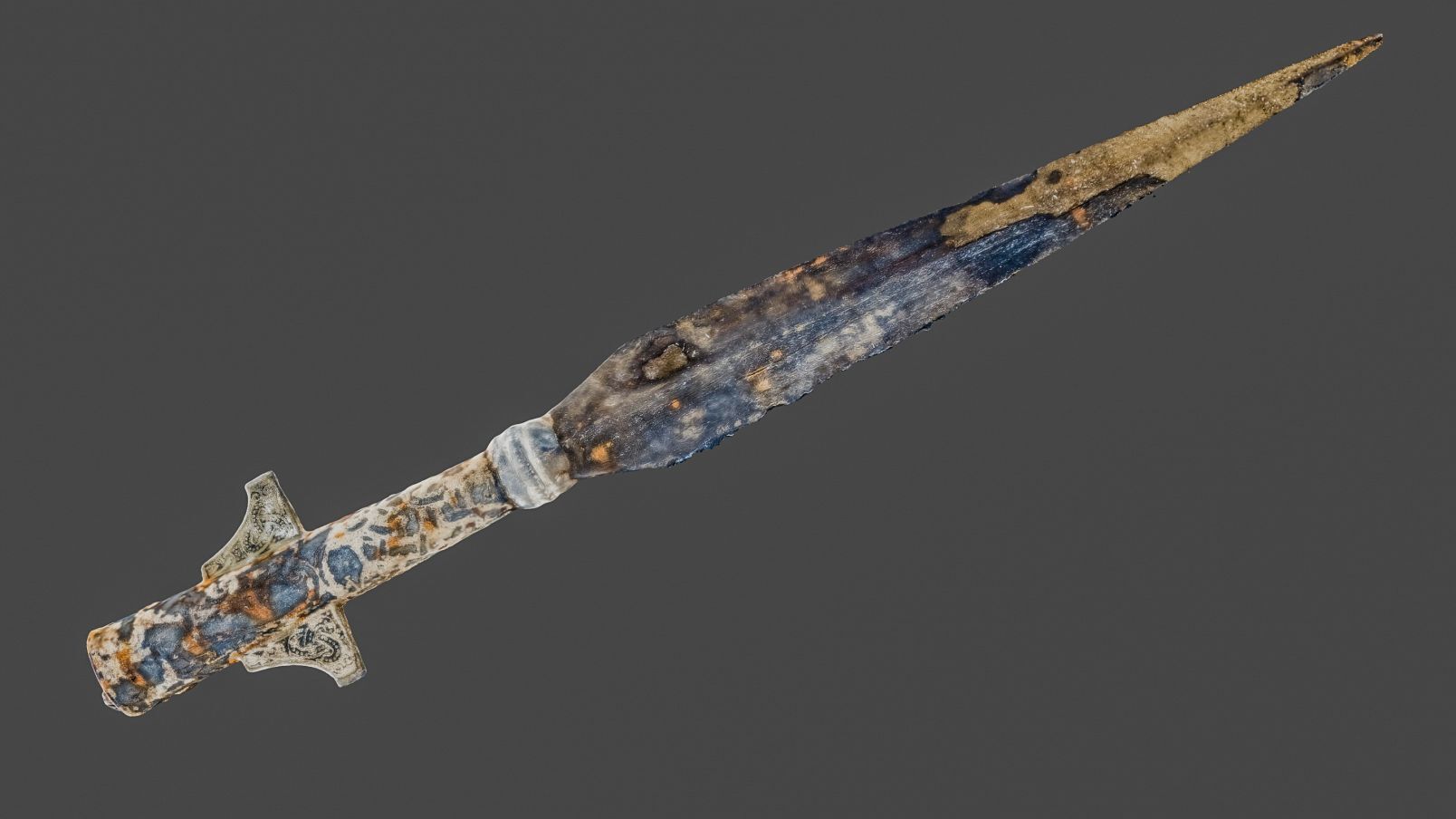
The tip of the other spear was “slender and delicate,” the researchers said, “resembling a willow leaf, a shape common in early medieval Europe.” The fourth spearhead was “made using a welding technique that repeatedly forged soft low-carbon steel and hard high-carbon steel, giving it excellent combat properties,” they added. “Spearheads forged in this way represented the highest technology of the time, and could be said to have been used throughout Europe.”
Lake Lednica is well known for the abundance of medieval weapons found in its waters. Divers from Nicolaus Copernicus University have been exploring the lake’s waters for 40 years and have discovered approximately 145 axes, 64 spearheads and eight swords, the statement said.
Why there are so many weapons in the lake is up for debate. One theory is that it is related to the conflict that broke out after the death of Mieszko II in 1034.
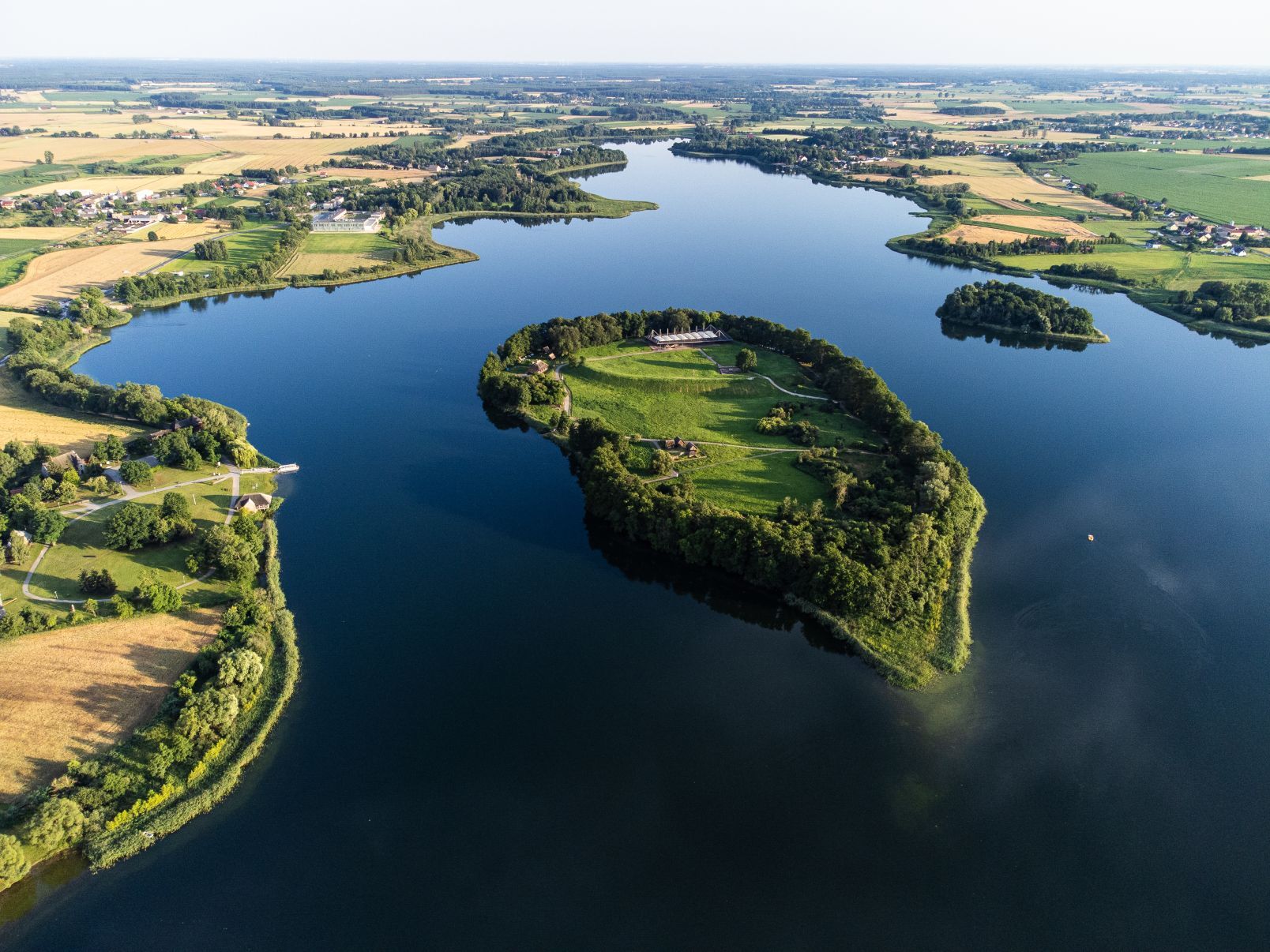
“According to reports, Czech Prince Bretislaus [also spelled Bretislav] “It is likely that they sacked Gniezno at that time and also the castles of Poznań and Ostórf Lednicki. Some of the weapons may have fallen into the sea during the fighting on the bridge connecting the island to the mainland, and possibly on boats,” the team said in a statement.
Another theory is that the weapons were ritual offerings made to appease the gods. About 1,000 years ago, the people of Poland had converted to Christianity, but pagan practices continued throughout much of the Middle Ages.
The research team is conducting macroscopic X-ray fluorescence studies, which may reveal more about the chemical composition of the tips, and therefore where and how they are formed. The exploration of the lake continues.
Source link
