
Close Menu
  • Home
  • Identity
  • Inventions
  • Future
  • Science
  • Startups
  • Spanish
What's Hot

Iran-linked RedKitten cyber campaign targets human rights NGOs and activists

This week’s science news: ‘Cloud People’ grave discovered in Mexico, pancreatic cancer epidemic, AI swarms ready to take over social media

Mandiant discovers ShinyHunters-style Vishing attack that steals MFA and compromises SaaS platforms

Facebook X (Twitter) Instagram
  • Home
  • About Us
  • Advertise with Us
  • Contact Us
  • DMCA
  • Privacy Policy
  • Terms & Conditions
  • User-Submitted Posts
Facebook X (Twitter) Instagram
Fyself News
  • Home
  • Identity
  • Inventions
  • Future
  • Science
  • Startups
  • Spanish
Fyself News
Home » NASA jet crashes in flames on Texas runway – removed from Artemis II mission
Science

NASA jet crashes in flames on Texas runway – removed from Artemis II mission

userBy userJanuary 29, 2026No Comments4 Mins Read
Share Facebook Twitter Pinterest Telegram LinkedIn Tumblr Email Copy Link
Follow Us
Google News Flipboard
Share
Facebook Twitter LinkedIn Pinterest Email Copy Link

New footage shows a 50-year-old NASA research jet making an emergency “belly” landing as it skidded down a Texas runway, spewing a torrent of flames and smoke.

The veteran aircraft was scheduled to play a small role in the upcoming Artemis II mission. However, that now seems unlikely as it sustained significant damage during the incident.

On Tuesday (January 27), a WB-57 research plane executed a controlled crash on the runway at Ellington Field Airport near NASA’s Johnson Space Center outside Houston. The aircraft touched down at relatively low speed and skidded several hundred yards before coming to a stop. Local news site KHOU 11 captured video of the incident, which showed yellow flames and white smoke periodically erupting from the underside of the plane due to extreme friction between the aircraft and the tarmac.

you may like

The emergency was caused by a “mechanical issue” that prevented the plane’s landing gear from deploying before landing, ABC News reported. NASA representatives said the plane suffered significant damage, but the crew, which included two unnamed pilots, was unharmed.

“A response to the accident is ongoing and all crew members are safe at this time,” NASA spokeswoman Bethany Stevens wrote on social platform
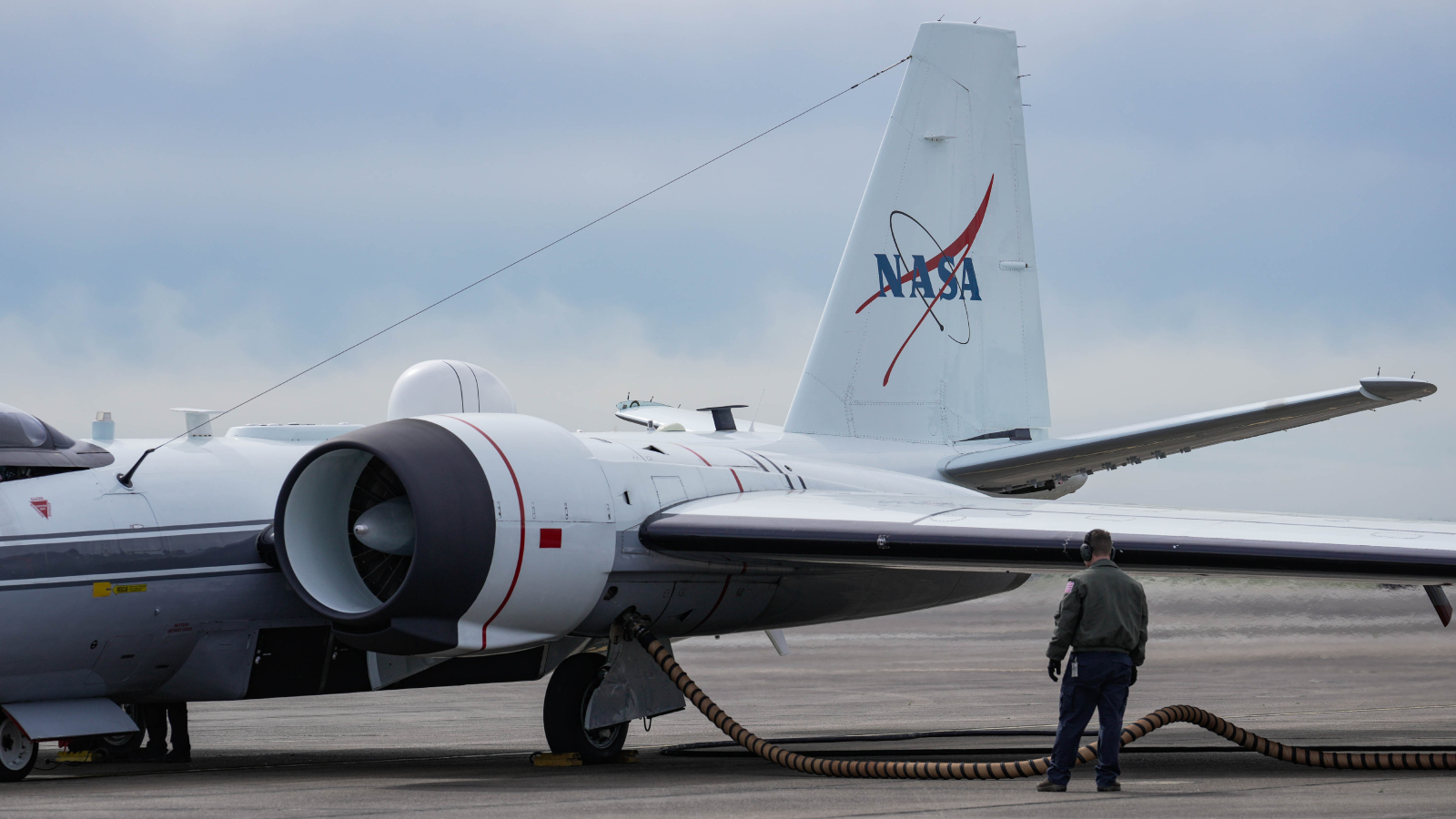
Photo of a WB-57 jet preparing for takeoff on the runway

NASA’s WB-57 jets operate from Ellington Field Airport near NASA’s Johnson Space Center in Texas. (Image credit: Raquel Natalicchio/Houston Chronicle, Getty Images)

NASA’s WB-57 jet is part of the High Altitude Research Program based at Ellington Field and can fly for up to 6.5 hours at up to 63,000 feet (19,000 meters), nearly twice the altitude of commercial aircraft. The jet has two crew members: one to fly the plane and the other to conduct scientific experiments using specialized onboard equipment.

According to the WB-57 website, “Examples of missions include atmospheric and earth sciences, ground mapping, space dust collection, rocket launch support, and testbed operations for future aircraft or spaceborne systems.” In April 2024, the jet was also used to study a total solar eclipse over North America, allowing it to extend its duration by tracking the moon.

Get the world’s most fascinating discoveries delivered straight to your inbox.

The WB-57 jet is a derivative of the RB-57F Canberra, a bomber-reconnaissance hybrid developed by the U.S. Air Force in the 1950s and flown in conflicts such as the Vietnam War. These aircraft were lightweight and capable of carrying heavy payloads, making them suitable for conversion into scientific vehicles.

According to Ars Technica, NASA currently has three WB-57 jets in its fleet, two of which have been in service since 1972 and one that was restored in 2013 after being discovered in an Air Force “graveyard” in Arizona. The three aircraft first flew together in 2015.
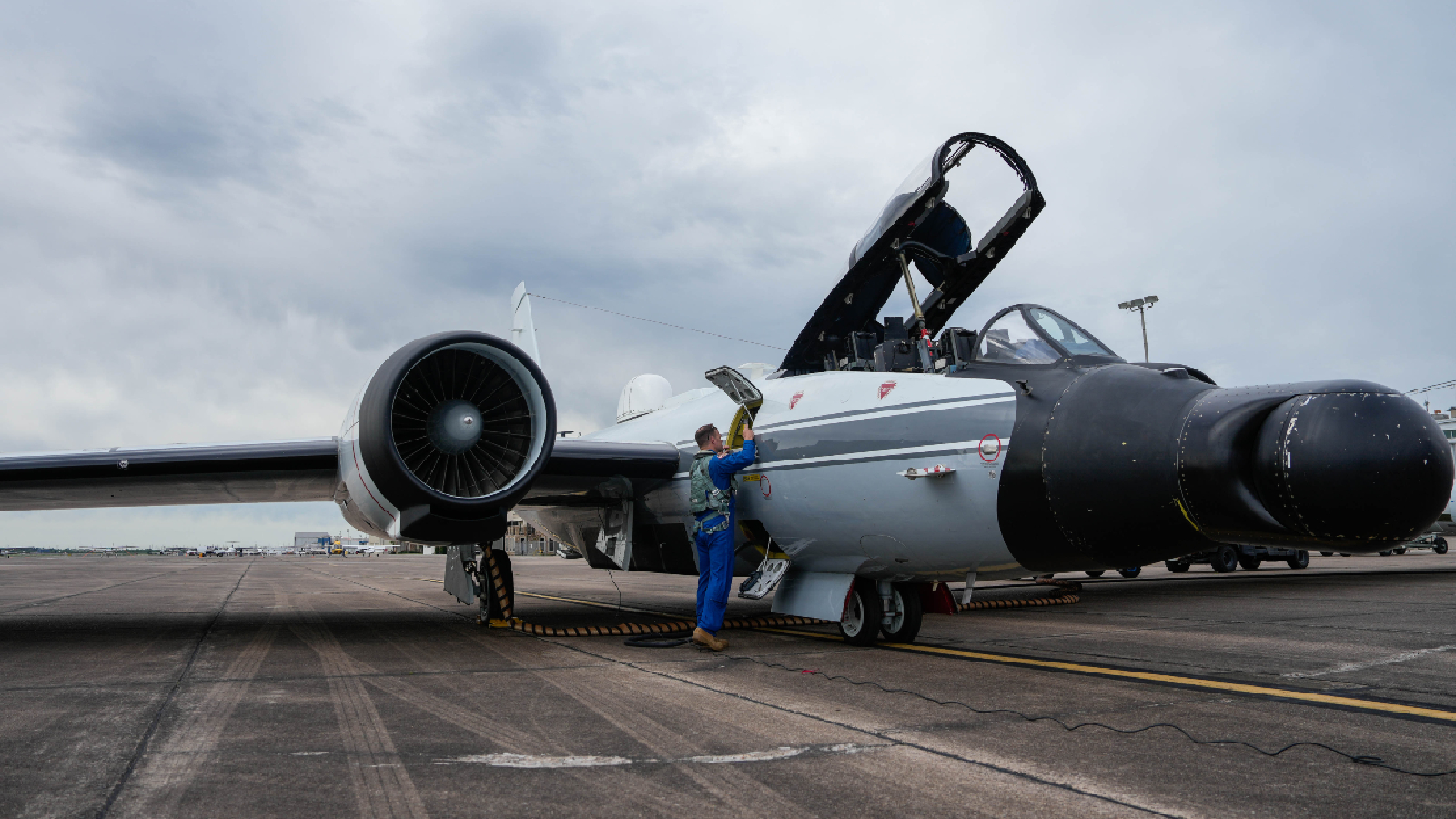
Photo of a WB-57 jet preparing for takeoff on the runway

The WB-57 jet is an improved version of the RB-57F Canberra designed in the 1950s. However, the aircraft was significantly updated in subsequent decades. (Image credit: Raquel Natalicchio/Houston Chronicle, Getty Images)

It is unclear whether the plane that crashed was the original or a reconstructed one. However, according to Live Science’s sister site Space.com, the other two aircraft are currently grounded for inspection, meaning all three aircraft will be out of service for the time being.

According to Ars Technica, the WB-57 aircraft has previously played a role in monitoring the exhaust plumes and re-entries of NASA rockets, including the Titan, Space Shuttle, Delta, Atlas and Athena spacecraft, as well as SpaceX’s wayward Starship rocket.

The jet that crashed was scheduled to do the same with the Artemis II moon rocket. The Artemis II moon rocket is ready and ready to launch humans into the lunar environment for the first time since 1972 (when NASA also started the WB-57 program). However, given the damage to the aircraft, it is unlikely that repairs will be completed before the mission’s earliest launch date, February 6.


Source link

#Biotechnology #ClimateScience #Health #Science #ScientificAdvances #ScientificResearch
Follow on Google News Follow on Flipboard
Share. Facebook Twitter Pinterest LinkedIn Tumblr Email Copy Link
Previous Article5,000-year-old rock art depicts ancient Egypt’s ‘horrible’ conquest of Sinai, but pharaoh’s name has been erased from history
Next Article I made a marshmallow castle with Google’s new AI world generator
user
  • Website

Related Posts

This week’s science news: ‘Cloud People’ grave discovered in Mexico, pancreatic cancer epidemic, AI swarms ready to take over social media

January 31, 2026

Snow moon will ‘engulf’ one of the brightest stars in the sky this weekend: where and when to see it

January 30, 2026

Halley was not the first to discover the existence of this famous comet. According to new research, monks in the 11th century were the first to do it.

January 29, 2026
Add A Comment
Leave A Reply Cancel Reply

Latest Posts

Iran-linked RedKitten cyber campaign targets human rights NGOs and activists

This week’s science news: ‘Cloud People’ grave discovered in Mexico, pancreatic cancer epidemic, AI swarms ready to take over social media

Mandiant discovers ShinyHunters-style Vishing attack that steals MFA and compromises SaaS platforms

CERT Polska details coordinated cyberattacks on over 30 wind and solar farms

Trending Posts

Subscribe to News

Subscribe to our newsletter and never miss our latest news

Please enable JavaScript in your browser to complete this form.
Loading

Welcome to Fyself News, your go-to platform for the latest in tech, startups, inventions, sustainability, and fintech! We are a passionate team of enthusiasts committed to bringing you timely, insightful, and accurate information on the most pressing developments across these industries. Whether you’re an entrepreneur, investor, or just someone curious about the future of technology and innovation, Fyself News has something for you.

Castilla-La Mancha Ignites Innovation: fiveclmsummit Redefines Tech Future

Local Power, Health Innovation: Alcolea de Calatrava Boosts FiveCLM PoC with Community Engagement

The Future of Digital Twins in Healthcare: From Virtual Replicas to Personalized Medical Models

Human Digital Twins: The Next Tech Frontier Set to Transform Healthcare and Beyond

Facebook X (Twitter) Instagram Pinterest YouTube
  • Home
  • About Us
  • Advertise with Us
  • Contact Us
  • DMCA
  • Privacy Policy
  • Terms & Conditions
  • User-Submitted Posts
© 2026 news.fyself. Designed by by fyself.

Type above and press Enter to search. Press Esc to cancel.