

As part of the Golden Age of Exploration and Discovery, NASA is increasing the frequency of missions under the Artemis program.
The expansion of the Artemis program is aimed at achieving the national goal of returning American astronauts to the Moon and establishing a permanent presence there.
This expansion includes standardizing vehicle configurations, adding additional missions in 2027, and conducting at least one ground landing each year thereafter.
Artemis IV: A new mission for 2028
As the team prepares to launch Artemis II in the coming weeks, the Artemis III mission, currently scheduled for 2027, is designed to test systems and operational capabilities in low Earth orbit in preparation for the Artemis IV landing in 2028.
This new mission will seek to include rendezvous and docking with one or both SpaceX and Blue Origin commercial landers, in-space testing of docked vehicles, integrated checkout of life support, communications and propulsion systems, and testing of a new extravehicular activity (xEVA) suit.
NASA will further define this test flight after completing a detailed review with industry partners.
Increasing the number of employees is the key to mission success
NASA’s recently announced Workforce Directive is a key enabler for the Artemis program to scale up.
The agency will rebuild the core competencies of its civil service workforce, including expanding its joint development efforts both internally and with Artemis partners, to enable a safer, more reliable and faster launch cadence.
“NASA must standardize approaches, safely increase flight speeds, and implement the President’s national space policy. With credible competition from our greatest geopolitical adversaries increasing by the day, we must move faster, eliminate delays, and achieve our goals.” said NASA Administrator Jared Isaacman.
“Standardizing vehicle configurations, increasing flight speeds, and achieving our goals in a logical, step-by-step approach is how we achieved our nearly impossible goals in 1969, and how we will continue to do so in the future.”
Critical testing steps needed to safely move forward with the Artemis program
NASA Deputy Administrator Amit Kshatriya explained: “After the successful completion of the Artemis I flight test, the upcoming Artemis II flight test, and a new, more robust test approach to Artemis III, it is unnecessarily complex to change the configuration of the SLS and Orion stack to tackle subsequent Artemis missions.
“There are too many learnings left on the table and too many development and production risks in front of us. Instead, we want to continue testing as we flew in. We are reflecting on the wisdom of those who designed Apollo.”
“The entire Artemis series of flights will require incremental capabilities, with each step moving closer to the ability to perform a safe landing mission.”
Current status of the Artemis II mission
The announcement was made during a press conference at NASA Kennedy, where leaders also discussed the status of the Artemis II mission.
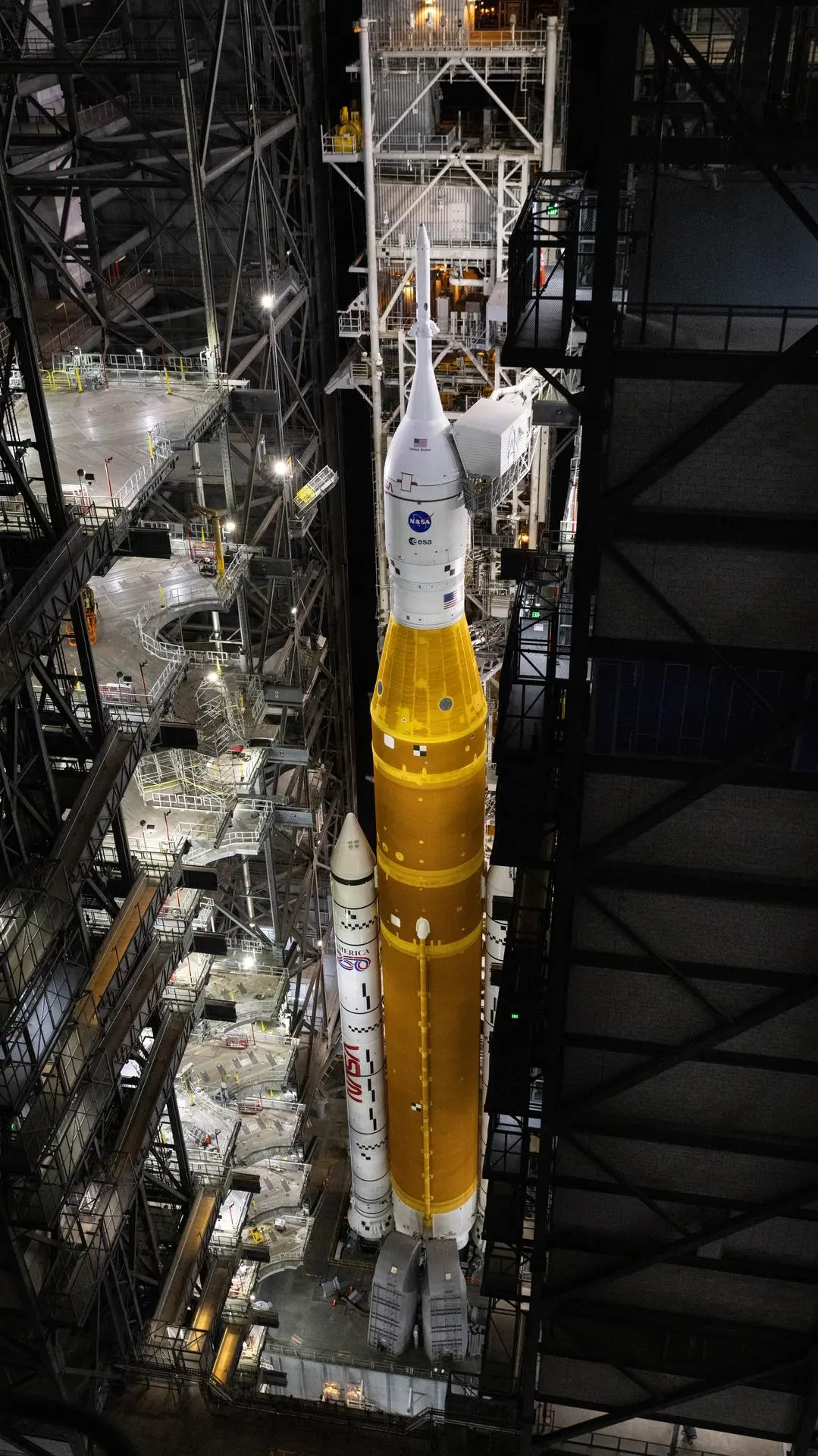
NASA brought the SLS and Orion spacecraft to the Vehicle Assembly Building (VAB) for repairs on February 25, ahead of their next launch opportunity for test flights in April.
Once the Artemis II hardware returned to the VAB, the team immediately began addressing the helium issue discovered in the interim cryogenic propulsion stage and prepared for several actions, including replacing the flight termination system battery and conducting end-to-end testing to meet range safety requirements.
Lori Glaze, acting deputy administrator for the Exploration Systems Development Mission Directorate at NASA Headquarters in Washington, concluded, “Our team is committed to the challenge of making the Artemis II mission a success, and soon thereafter will enable more frequent lunar missions.”
Source link
