

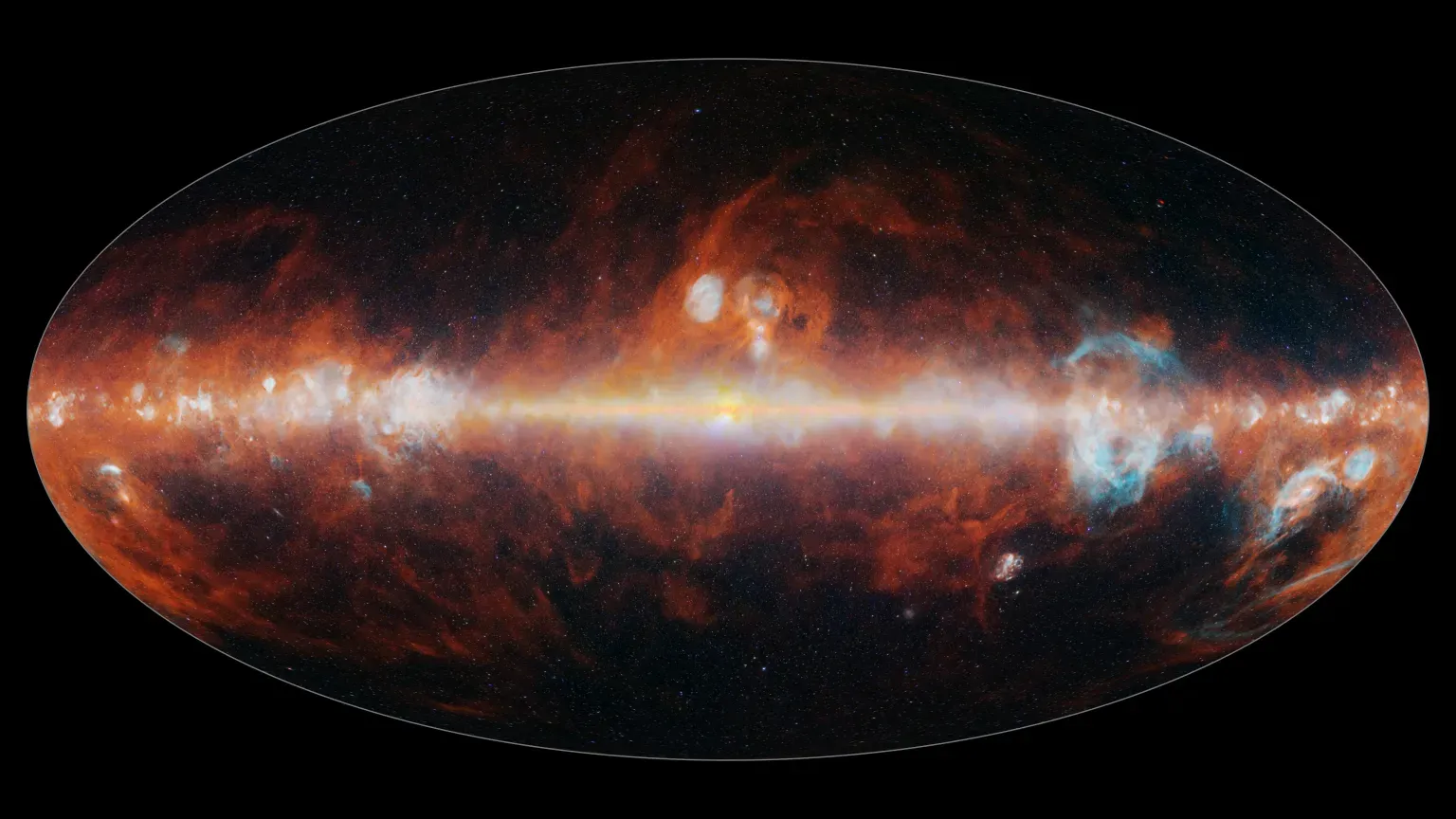
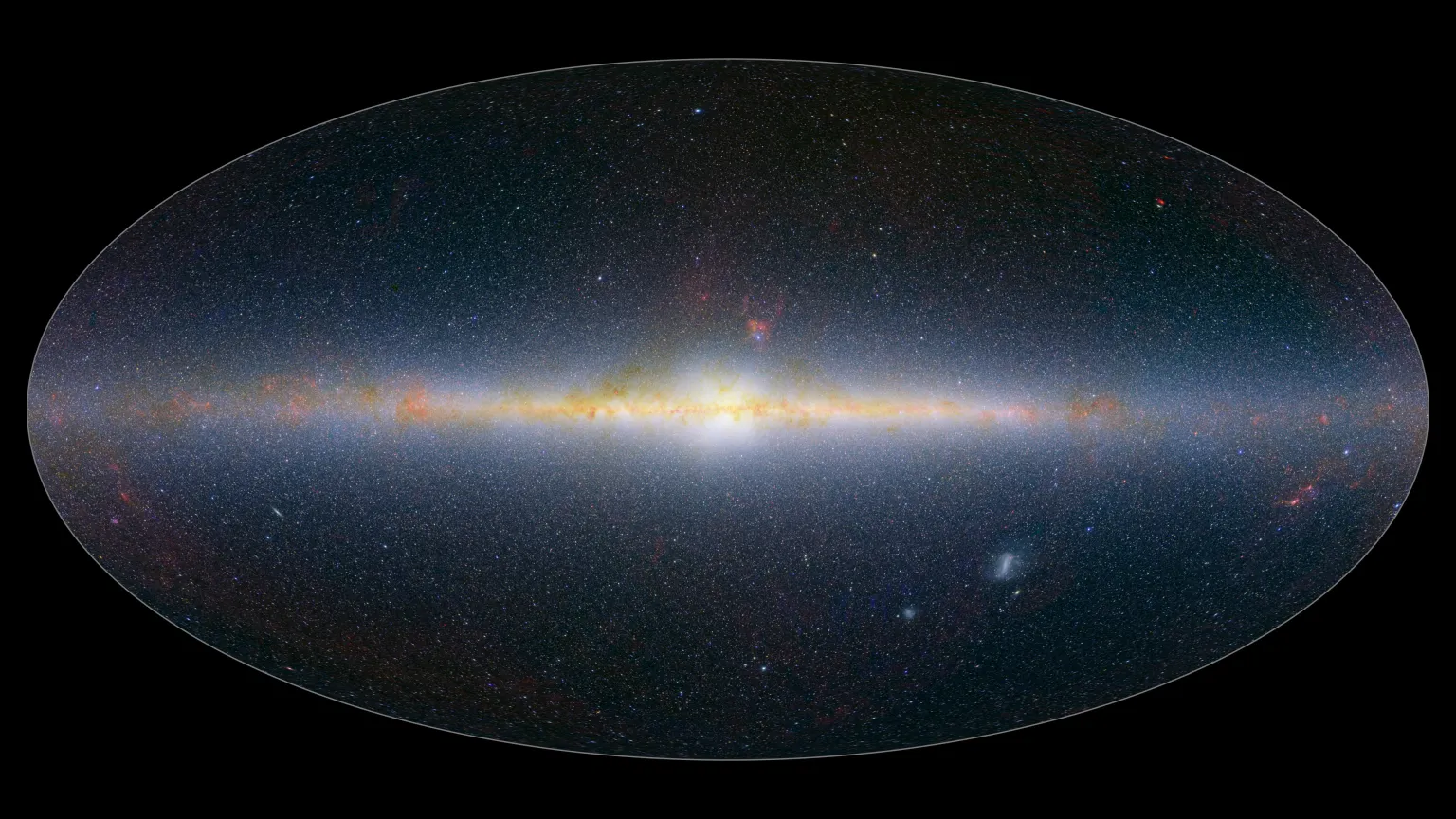
Six months after first setting its sights on space, NASA’s SPHEREx spacecraft has unveiled its first complete cosmic all-sky mosaic.
The first of at least four such maps expected from SPHEREx, the new map, which combines more than 100 individual exposures, promises to reveal unprecedented night sky detail.
“It’s incredible that SPHEREx has collected so much information in just six months,” Sean Domagal Goldman, acting director of the Astrophysics Division at NASA Headquarters in Washington, said in a statement. “This information is especially valuable when used in conjunction with data from other missions to better understand the universe.”
you may like
“Every astronomer will find something of value here,” he added. “Because NASA’s mission allows the world to answer fundamental questions about how the universe began and how it changed to ultimately make our home in space.”
“102 new maps of the entire sky”
Although modest in size and cost, SPHEREx (short for Spectrophotometer for the Exploration of the History of the Universe, Ages of Reionization, and Ice) is built to tackle some of astronomy’s biggest mysteries, from exploring the universe’s explosive beginnings to tracking the components of ice delivered to planets that may have contributed to the birth of life.
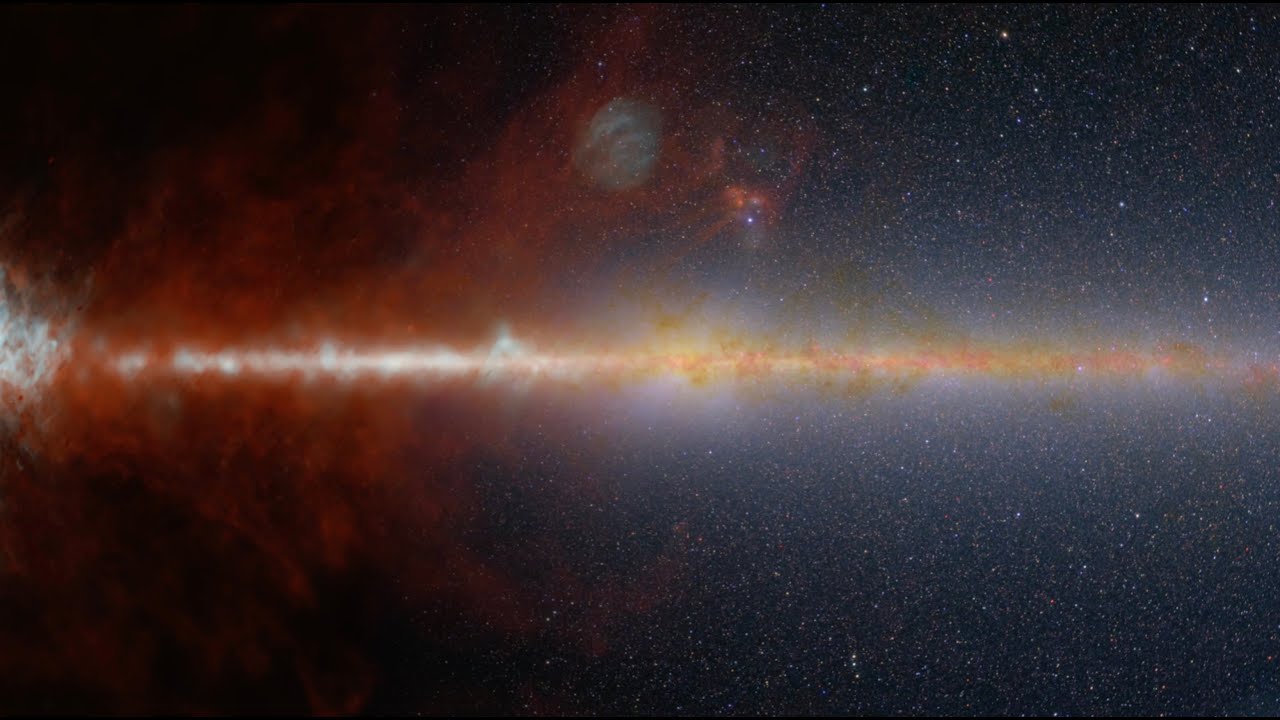
SPHEREx’s decisive strength is its panoramic vision. The spacecraft surveys the entire sky every six months, splitting incoming light into 102 different infrared “colors” invisible to the human eye. The first of these observations, a new map to be released in December 2025, will allow scientists to map the locations of hundreds of millions of galaxies in three dimensions and study stars, dust, and other cosmic objects in incredible detail.
“We have 102 new maps of essentially the entire sky, each with a different wavelength and unique information about the objects visible there,” Domagal-Goldman said in a statement.
watch on
Launched on March 12, 2025, SPHEREx took less than a month to set its sights on space. The first images, including more than 100,000 galaxies and stars, showed scientists that the spacecraft was working as designed.
Over its planned two-year mission, the $488 million telescope will scan the entire night sky every six months, collecting data from more than 450 million galaxies. To accomplish this, SPHEREx will take about 3,600 images per day, overlaying each full-sky pass on top of the last to reveal subtler cosmic details, according to NASA.
“The amount of information we can gather in a short period of time is amazing,” Beth Fabinski, SPHEREx’s deputy project manager, said in a statement. “I think this makes us telescopic mantis shrimps, because we have an amazing polychromatic visual detection system and can also see a very large area around us.”
you may like
One of SPHEREx’s central scientific goals is to study cosmic inflation, the theoretical rapid expansion of the universe that occurred in the first fraction of a second after the Big Bang. In a split second 14 billion years ago, the universe itself bulged outward, smoothing out the early universe and leaving subtle patterns, or ripples, that still influence the distribution of galaxies today.
By mapping the universe in three dimensions at such massive scales, SPHEREx is expected to record the statistical distribution of these inflationary ripples, which could help scientists narrow down the elusive physics that drove the universe’s initial growth.
The observatory will also act as a space reconnaissance vehicle within the Milky Way galaxy, surveying vast clouds of gas and dust, looking for particles of interstellar dust coated with frozen water, carbon dioxide, and other icy compounds that may have contributed to the birth of planets and potentially life.
photobomb threat
But SPHEREx continues to explore growing challenges to space astronomy.
Recent simulations modeling how future megasatellite constellations will appear to orbiting telescopes suggest that more than 96% of the radiation exposure from SPHEREx, along with those from the Hubble Space Telescope and two planned space observatories, China’s Xuantian Telescope and the European Space Agency’s ARRAKIHS mission, could be adversely affected.
Because each SPHEREx image covers a portion of the sky about 200 times the size of the full moon, nearly every image it captures is likely to contain at least one streak from a passing spacecraft, an analysis published in the journal Nature in early December found.
The number of satellites, currently around 15,000, is expected to rise to 1 million by the end of the 2030s, and astronomers warn that once weak cosmic signals are blocked, the damage may be irreversible, as lost scientific information cannot be fully recovered.
Source link
