

Close Menu
  • Home
  • Identity
  • Inventions
  • Future
  • Science
  • Startups
  • Spanish
What's Hot

UNC6692 Deploying SNOW malware by impersonating IT helpdesk via Microsoft Teams

Vercel announces some of its customers’ data was stolen before recent hack

Another customer of troubled startup Delve suffers a major security incident

Facebook X (Twitter) Instagram
  • Home
  • About Us
  • Advertise with Us
  • Contact Us
  • DMCA
  • Privacy Policy
  • Terms & Conditions
  • User-Submitted Posts
Facebook X (Twitter) Instagram
Fyself News
  • Home
  • Identity
  • Inventions
  • Future
  • Science
  • Startups
  • Spanish
Fyself News
Home » NASA’s Curiosity spacecraft discovers a surprising number of giant ‘dragon scales’ scattered on Mars
Science

NASA’s Curiosity spacecraft discovers a surprising number of giant ‘dragon scales’ scattered on Mars

By April 22, 2026No Comments4 Mins Read
Share Facebook Twitter Pinterest Telegram LinkedIn Tumblr Email Copy Link
Follow Us
Google News Flipboard
Share
Facebook Twitter LinkedIn Pinterest Email Copy Link

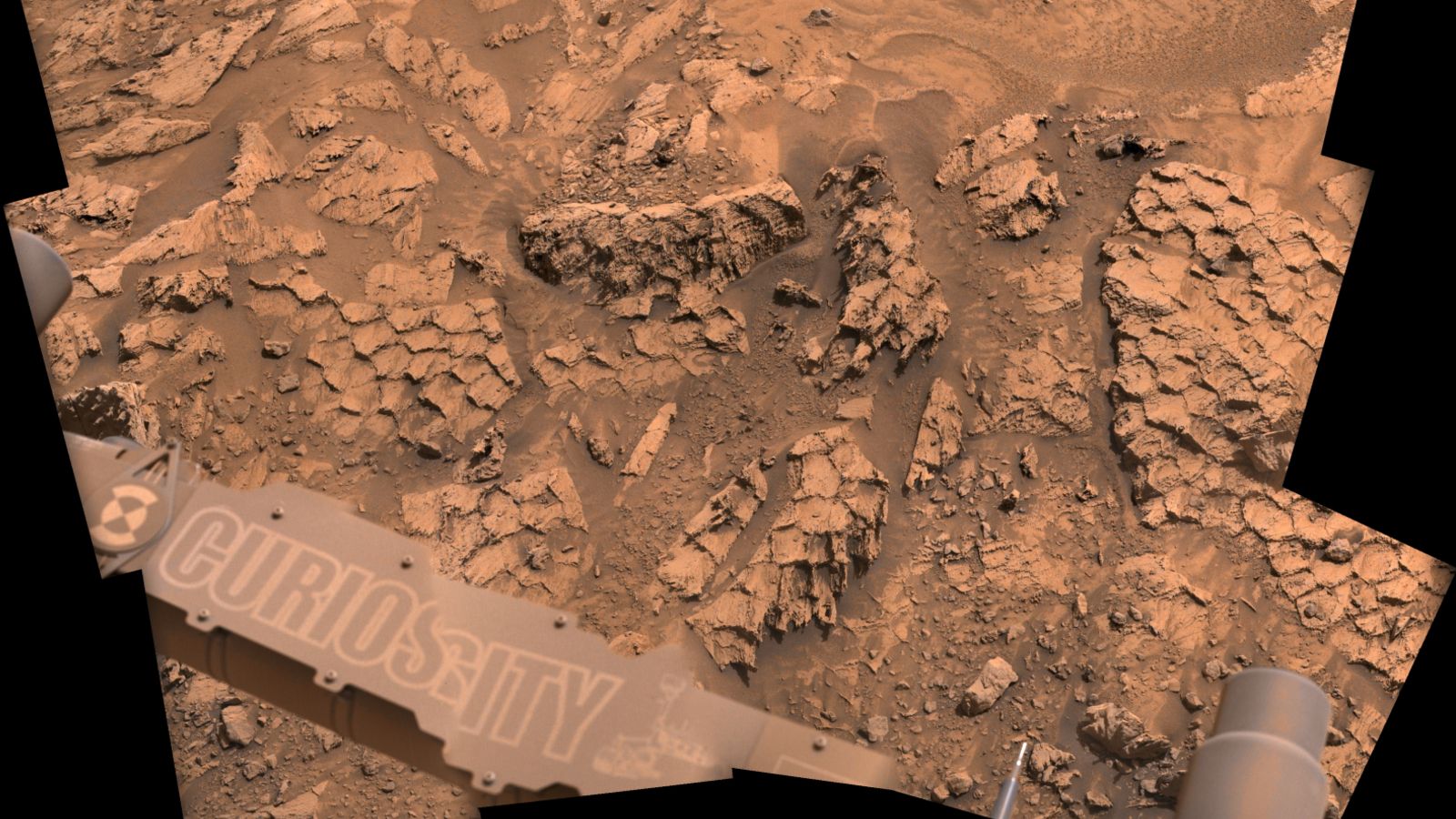
New photos show that parts of Mars are covered in a surprising number of features that look like chunks of fossilized giant reptile scales. But don’t worry. This strange structure was not created by giant aliens. Rather, it may have something to do with ancient water.

NASA’s Curiosity spacecraft snapped a photo of a strange rock while en route to Antofagasta. Antofagasta is a relatively young, 33-foot (10-meter) wide impact crater located on the slopes of Mount Sharp (also known as Mount Aeolis) within the larger Gale Crater near the Martian equator.

A black-and-white photo of the scales was released by NASA on April 14, and a close-up color image of the rock was shared online the next day by Kevin M. Gill, a software and spaceflight engineer at NASA’s Jet Propulsion Laboratory (JPL) who specializes in image processing. (The photos were taken on April 7 and April 13, respectively, and are also known as Sol 4859 and Sol 4865 on Mars time.)

you may like

The unusual shapes and dense masses of these rocks have been compared to the scales of reptiles such as crocodiles, and some have joked that the formations look like dragons.

It’s not immediately clear how many scaly rocks were photographed or how large they were, but they were spread “many meters” across the ground, according to an April 10 blog post from NASA.
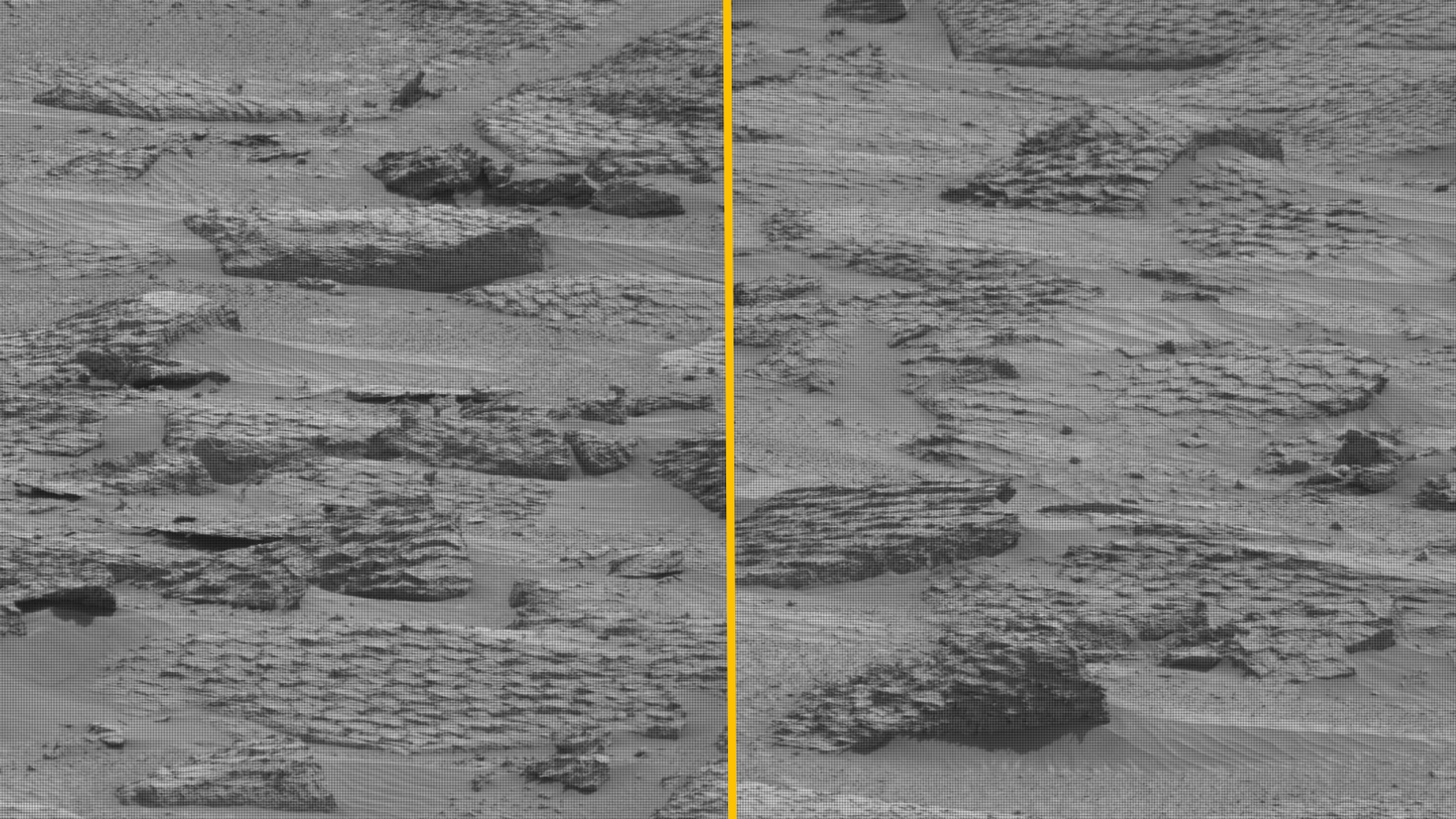
Black and white photo of polygon-covered rocks on Mars that look like giant reptilian scales

As Curiosity headed toward Antofagasta, it snapped several photos of scaly rocks that stretched “for many meters.” (Image credit: NASA/JPL-Caltech/MSSS)

The researchers weren’t shocked to see these multifaceted rocks, or “polygons,” but they were surprised by the sheer abundance of them in the area.

“Many of the rocks we drove over have incredible textures, with thousands of honeycomb-like polygons crisscrossing the surface,” JPL planetary scientist Abigail Freman said in a blog post. “We’ve seen rocks with polygonal patterns like this before, but never in such dramatic abundance.”

Get the world’s most fascinating discoveries delivered straight to your inbox.

Similar honeycomb-shaped polygons have been seen before on Mars, both on smaller and larger scales. In these past examples, the shape was often related to the drying of wet mud or ice crystals moving beneath the Martian surface. But it’s too early for scientists to know exactly how the latest shape formed.

Curiosity collected “a lot of image and chemical data that helps distinguish between different hypotheses about how the honeycomb structure formed,” Freman said.

animal scammer

Before arriving at Antofagasta, Curiosity spent much of the year studying Mount Sharp’s series of rock ridges known as the “boxwork.” These features are also known as Mars’ “spider webs” because of the way they zigzag across the ground, and a wandering robot recently discovered a small egg-like spheroid attached to its side. (This “web” is not to be confused with the infamous “Martian spiders,” the dark arachnid-like features that litter the surface of Mars.)

What to read next
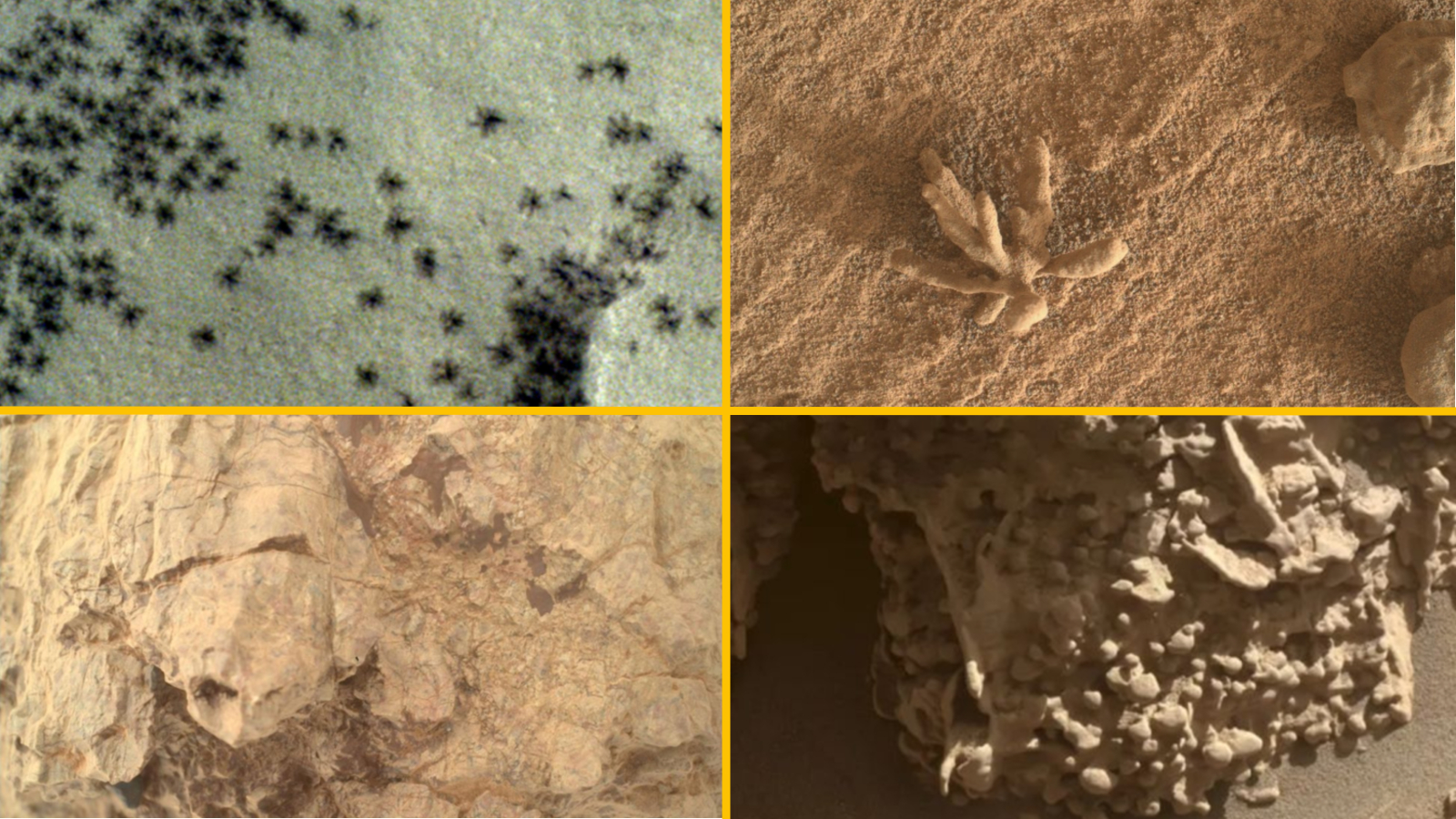
Collage of four rocks on Mars that look like other animals

Curiosity and other rovers on or around Mars have monitored dozens of animal deceivers on Mars’ surface, including “Martian spiders” (top left), coral-like rocks (top right), Martian turtles (bottom left), and egg-like spheroids (bottom right). (Image credits: Top left: ESA/DLR/FU Berlin, Top right: NASA/JPL-Caltech/MSSS, Bottom left: NASA/JPL-Caltech, Bottom right: NASA/JPL-Caltech/MSSS)

Since landing on Mars in 2012, the rover has also photographed a series of other objects, including surprisingly realistic coral-like rock formations and suspicious animals.

NASA’s other Mars rover, Perseverance, has also seen its fair share of pseudo-creatures since landing in 2021, including statuesque “turtles” poking their heads out of their shells. And a fleet of spacecraft orbiting Mars is monitoring other unusual entities, such as the “butterfly” crater and the Martian “dog” buried beneath Mars’ north pole.

Most of these animal associations are the result of a phenomenon known as pareidolia. Pareidolia is when the human brain sees or hears something important in random images or patterns.

Mars Quiz: Is your knowledge of the Red Planet out of this world?


Source link

#Biotechnology #ClimateScience #Health #Science #ScientificAdvances #ScientificResearch
Follow on Google News Follow on Flipboard
Share. Facebook Twitter Pinterest LinkedIn Tumblr Email Copy Link
Previous ArticlePowered by advanced AI, our table tennis robot rivals the pros – see it in action
Next Article Harvester uses Microsoft Graph API to bring Linux GoGra backdoor to South Asia

Related Posts

Archaeologists discover part of ‘Iliad’ in Egyptian mummy’s abdomen

April 22, 2026

Artemis moon landing could face significant delays while NASA waits for next-generation spacesuit

April 22, 2026

‘Tipping point in history’: Gene therapy improves hearing in 90% of patients with congenital hearing loss in largest trial of its kind

April 22, 2026
Add A Comment
Leave A Reply Cancel Reply

Latest Posts

UNC6692 Deploying SNOW malware by impersonating IT helpdesk via Microsoft Teams

Vercel announces some of its customers’ data was stolen before recent hack

Another customer of troubled startup Delve suffers a major security incident

Samsung labor dispute could worsen memory chip supply problems

Trending Posts

Subscribe to News

Subscribe to our newsletter and never miss our latest news

Please enable JavaScript in your browser to complete this form.
Loading

Welcome to Fyself News, your go-to platform for the latest in tech, startups, inventions, sustainability, and fintech! We are a passionate team of enthusiasts committed to bringing you timely, insightful, and accurate information on the most pressing developments across these industries. Whether you’re an entrepreneur, investor, or just someone curious about the future of technology and innovation, Fyself News has something for you.

Castilla-La Mancha Ignites Innovation: fiveclmsummit Redefines Tech Future

Local Power, Health Innovation: Alcolea de Calatrava Boosts FiveCLM PoC with Community Engagement

The Future of Digital Twins in Healthcare: From Virtual Replicas to Personalized Medical Models

Human Digital Twins: The Next Tech Frontier Set to Transform Healthcare and Beyond

Facebook X (Twitter) Instagram Pinterest YouTube
  • Home
  • About Us
  • Advertise with Us
  • Contact Us
  • DMCA
  • Privacy Policy
  • Terms & Conditions
  • User-Submitted Posts
© 2026 news.fyself. Designed by by fyself.

Type above and press Enter to search. Press Esc to cancel.