

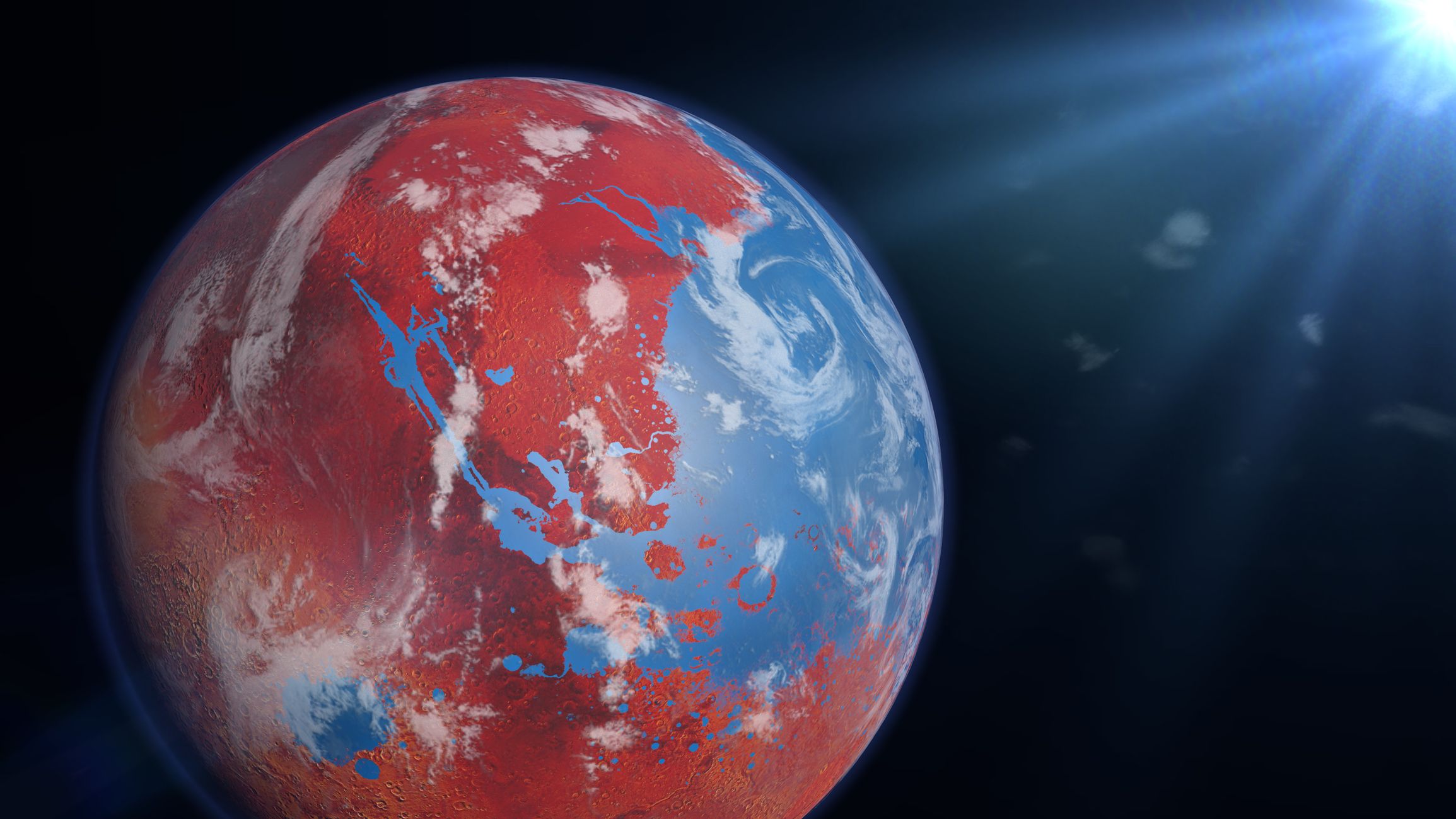
New evidence of ancient rivers suggests Mars may have been a “blue planet” thanks to oceans that span the entire northern hemisphere.
Cameras on multiple Mars rovers have apparently captured the dusty remains of a river delta, as described in a study published January 7 in the journal NPJ Space Exploration.
you may like
“These structures represent the mouth of a river to the sea,” the statement added. “The new study therefore provides clear evidence of a Martian coastline and thus an early ocean.”
water, water everywhere
Although Mars is currently dry and dusty, there are many signs that there was water on Mars in ancient times. For example, Mars rovers have discovered “blueberry stones” that may contain water-bearing iron oxide minerals. NASA’s Curiosity rover imaged possible “ripples” in ancient riverbeds in 2025, and several orbital missions have discovered what could be giant underground reservoirs.
The new study focused on the study of Mars’ topography, the surface and its processes, and used several spacecraft, including the ExoMars Trace Gas Orbiter, Mars Express, and the Mars Reconnaissance Orbiter (which recently shared its 100,000th photo).
“Thanks to the unique high-resolution satellite images of Mars, it is now possible to study the Martian topography in detail through surveying and mapping,” said Ignatius Algadescia, first author of the study and a doctoral student at the Institute of Geosciences and the Institute of Physics at the University of Bern, in a statement.
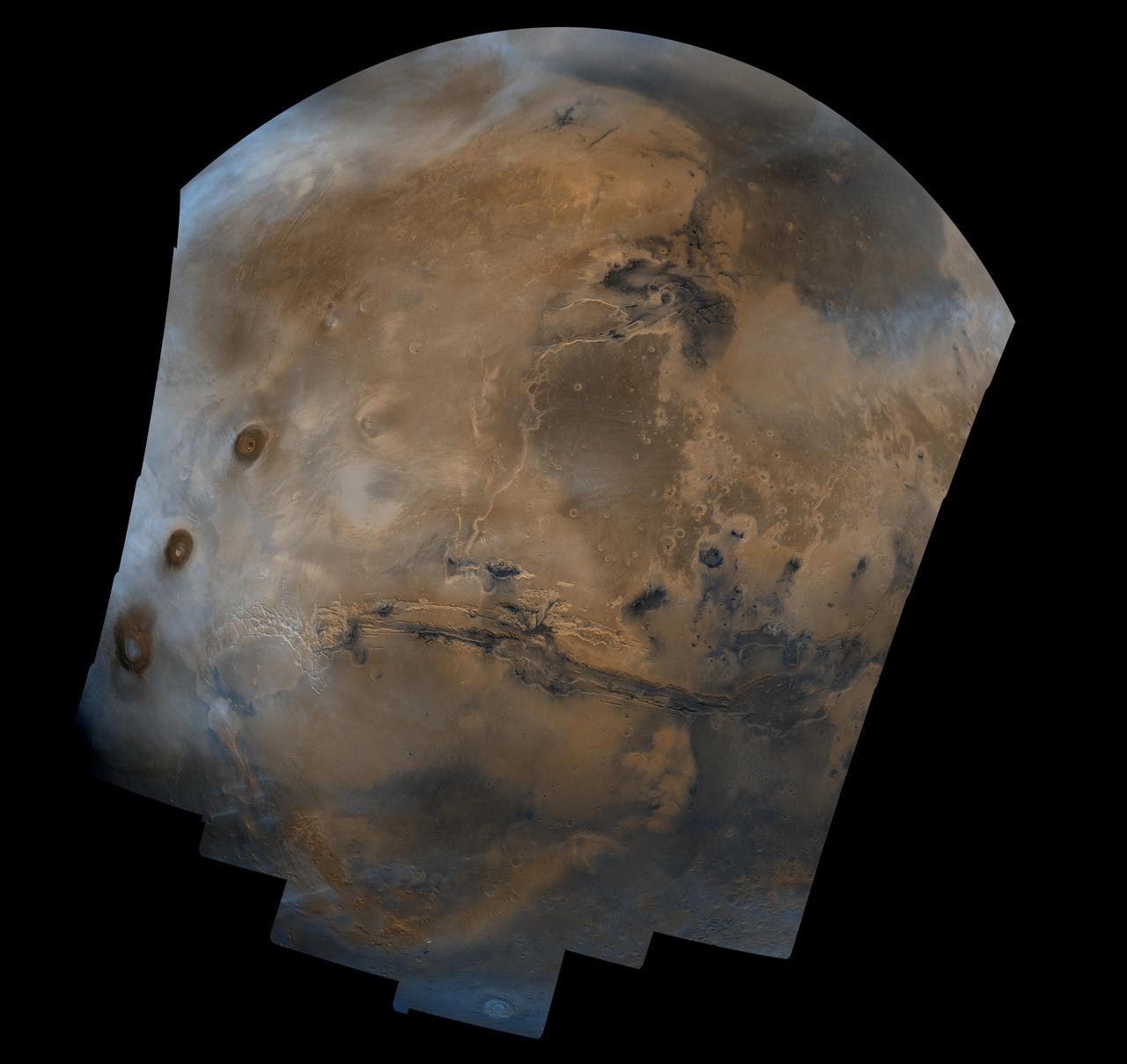
“When we measured and mapped images of Mars, we were able to recognize mountains and valleys that resemble mountainous regions on Earth,” Algadestia said. “But I was particularly impressed by the delta area we discovered at the edge of the mountain.”
The research team recognized the possibility of “fan-shaped deltas,” which are formed when debris and sand pile up in still water. The researchers say the deposits in the Mars images are very similar to active fan deltas on Earth. On our planet, these deltas are piled up at the entrances where rivers flow into the ocean.
All “deposits” were mapped at elevations ranging from 11,975 to 12,300 feet (3,650 to 3,750 meters) and were formed approximately 3.37 billion years ago. Given that all the deposits are at approximately the same elevation and in the northern lowland regions of Mars and Valles Marineris, the researchers argue that these structures mark the boundaries of an ancient coastline. The ocean that once flowed there likely extended across Mars’ entire northern hemisphere, the researchers added.
Based in part on past research, scientists say this ancient Martian ocean was at least as large as the modern-day Arctic Ocean.
“We are not the first to postulate the existence and size of the ocean,” Fritz Schrunegger, professor of geology at the University of Bern and co-author of the study, said in a statement. “However, previous claims were based on less accurate data and partly on indirect arguments, whereas our sea-level reconstruction is based on clear evidence of such coastlines, since we were able to use high-resolution images.”
Source link
