

A New Jersey man has died in the first recorded death from alpha-gal syndrome, a meat allergy caused by tick bites.
In September 2024, a 47-year-old man collapsed and lost consciousness about four hours after eating a hamburger at a barbecue, doctors wrote in a case report. Despite attempts by the man’s son and paramedics to resuscitate him, he was pronounced dead later that night after being taken to hospital.
The authors of the case report, who published details of the case in The Journal of Allergy and Clinical Immunology in Practice on Thursday (Nov. 13), write that it is important to document this deadly case because many U.S. doctors remain unaware of alpha-gal syndrome, even as the ticks that most often spread the disease are moving into new areas.
you may like
“We would argue that public education is greatly needed in areas where ticks are on the rise,” they said.
Alpha-gal is a sugar found in all mammals except humans and other primates. In alpha-gal syndrome, a person’s immune system overreacts to this sugar, causing symptoms that range from mild to life-threatening. These symptoms may include hives, vomiting, abdominal pain, difficulty breathing, decreased blood pressure, dizziness, and in the most severe cases, anaphylaxis.
A tick bite can cause an allergy to this alpha-gal because the person is exposed to sugar through the tick’s saliva, setting off a chain reaction that leads to sensitivity, or allergy, to sugar. So, even if you safely eat the product many times before being bitten by a tick, your body will overreact the next time you ingest a product containing alpha-gal.
Beef, pork, lamb, venison, and rabbit meat contain high concentrations of alpha-girl. In addition, dairy products and products of mammalian origin (such as gelatin, lard, and gravy) may also contain enough sugar to cause a reaction in some people with this syndrome. Non-mammalian animal products such as poultry, eggs, fish, and seafood do not contain alpha-gal.
In the case of the New Jersey man, alpha-gal syndrome may have gone undetected because his family typically ate chicken, the case report suggests.
A few weeks before his death, the man went camping with his family and ate beefsteak for dinner on the way. About four hours later, he felt severe abdominal discomfort and was “throwing around in agony, having diarrhea and vomiting.” My symptoms subsided after a few hours, and I felt well enough to go for a 5-mile walk and eat breakfast the next day.
Two weeks later, after a camping trip, the man and his wife attended a barbecue where they ate hamburgers. Again, the patient was well for approximately 4 hours before developing gastrointestinal distress, but symptoms rapidly progressed from there to anaphylaxis.
you may like
“The fact that severe abdominal pain without other allergic symptoms may be an important and indeed dangerous form of anaphylaxis is poorly recognized,” the case report authors wrote. When the man’s body was examined immediately after his death, an autopsy found no obvious signs of anaphylaxis, and the death was initially recorded as “sudden death of unknown cause.”
After the man’s death, his wife asked her friend Dr. Erin McFeely, a New Jersey-based pediatrician and co-author of the case report, to review the autopsy report. The study raised the question of whether alpha-gal syndrome could be an explanation, and the researchers contacted experts at the University of Virginia (UVA) School of Medicine in Charlottesville to further investigate the case.
Analysis of the man’s blood revealed that he had antibodies to alpha-gal and extremely high levels of tryptase, an enzyme released into the bloodstream by immune cells during allergic reactions. The UVA team asked the man’s wife if she had been bitten by a tick recently, and she said she had not been bitten by a tick in the past year, but had been bitten by a chigger.
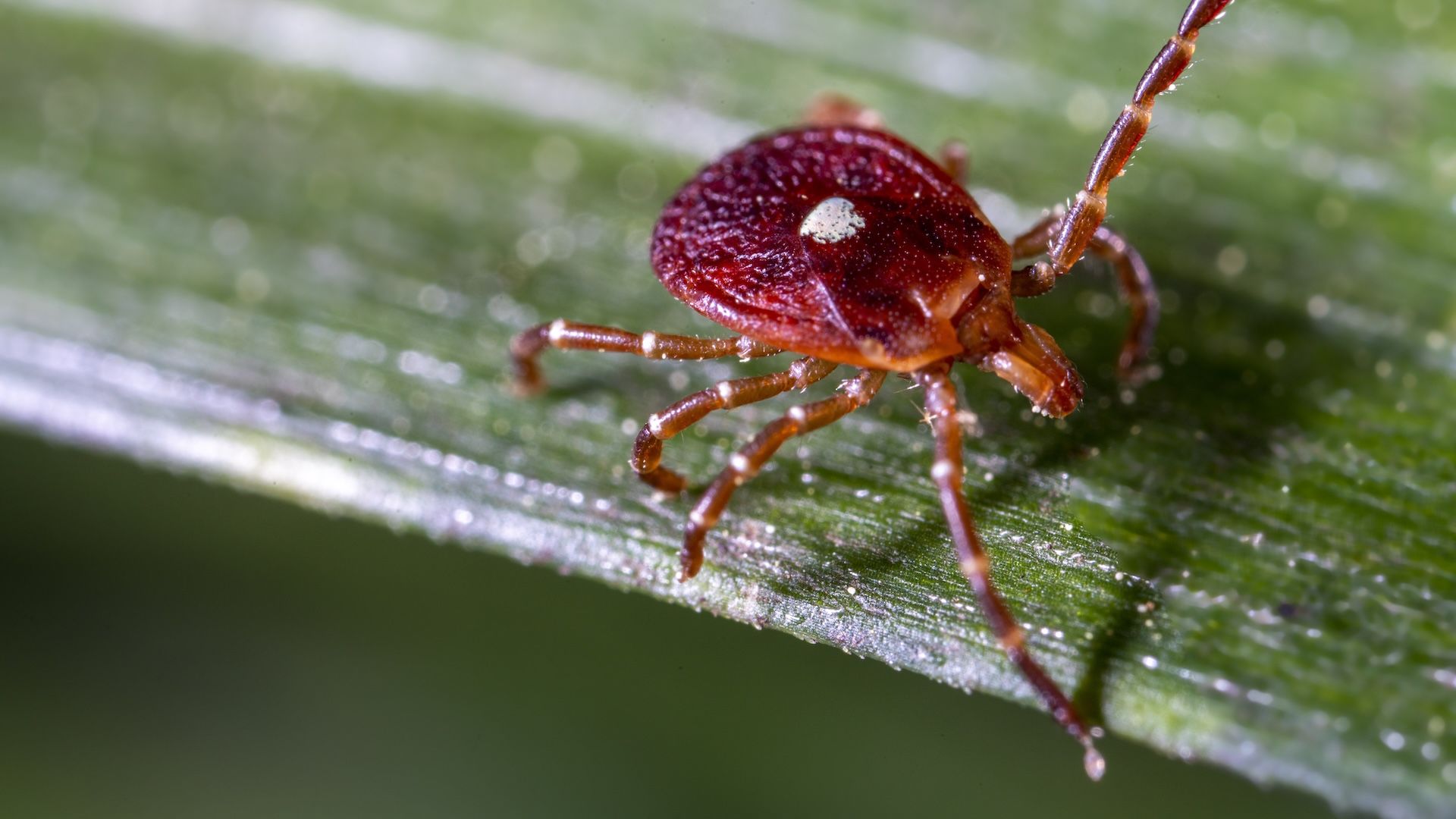
Although chiggers are a type of mite and not a type of mite, people who are actually bitten by the larvae of the chigger mite (Amblyomma americanum) may think they have been bitten by a chigger, the study authors noted. Although multiple tick species can spread alpha-gal syndrome, the lone star tick is the most frequent culprit in the United States.
In particular, white-tailed deer (Odocoileus virginianus) are the primary host of these ticks. As New Jersey’s deer population is exploding, the report’s authors cited this as one of the factors driving the tick population.
“The significance of this case is that the majority of the U.S. population is exposed to the Lone Star tick, both because the tick is moving north and because deer populations are increasing in many states,” the researchers wrote. They added that certain symptoms of an alpha-gal reaction may not alert patients to the fact that it is an allergic reaction, which could delay much-needed medical care.
“Although the patient felt frightened during the first episode, neither he nor his wife considered it ‘anaphylaxis’; therefore, they could not link the pain to the beef eaten four hours earlier,” the researchers wrote. “So he had no reason not to have a hamburger two weeks later.”
This article is for informational purposes only and does not provide medical advice.
Source link
