

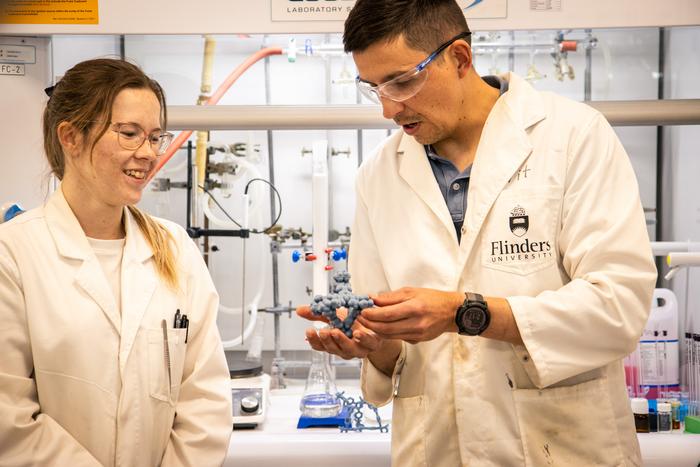
The new adsorption method shows strong PFAS capture performance, including difficult-to-remove short-chain compounds.
Contamination with per- and polyfluoroalkyl substances, commonly known as PFAS, continues to pose complex challenges to water authorities and environmental regulators around the world.
These synthetic chemicals are used in industrial processes, firefighting foams, and a wide range of consumer products, persist in soil and water systems, and have even been detected in drinking water supplies in several countries.
Now, researchers at Flinders University report progress toward more effective PFAS removal, particularly targeting short-chain variants that have proven difficult to remove with conventional treatment techniques.
Addressing deep water treatment gaps
Long-chain PFAS compounds may be reduced by activated carbon filtration or other standard adsorption methods.
However, short-chain molecules are more mobile in water and less likely to bind effectively to existing materials, limiting the capture rate of PFAS in many treatment systems.
A research team led by Dr. Witold Block from the university’s School of Science and Engineering has developed a nanoscale molecular structure designed to selectively bind these small PFAS molecules.
At the heart of this approach is a nanosized molecular “cage” designed to attract and trap PFAS within its internal cavity.
According to the researchers, this cage promotes the aggregation of PFAS molecules inside the structure, creating strong and selective binding interactions that are different from traditional adsorbent materials.
Engineering of functional adsorption materials
To translate this concept into a usable filtration material, the research team embedded molecular cages in mesoporous silica.
Mesoporous silica itself typically does not bind PFAS. However, when modified with nanocage structures, the composites demonstrated the ability to capture PFAS over a wide range of chain lengths.
Laboratory tests using model tap water showed that the material removed up to 98% of PFAS at environmentally relevant concentrations.
Importantly for practical deployment, the sorbent maintains its performance over at least five reuse cycles, suggesting it is potentially suitable for integration into existing filtration systems.
The researchers report that detailed molecular-level analysis was performed prior to the materials design stage, allowing them to understand exactly how the PFAS molecules interact within the cage structure.
This mechanistic insight influenced the final adsorbent composition and contributed to its reported efficiency.
Impact on drinking water treatment
Increasing regulatory oversight of PFAS contamination has increased the demand for reliable PFAS removal technologies. Utilities face increasing pressure to recover PFAS before treated water enters the water distribution network, especially as health concerns about long-term exposure continue to rise.
Although the new materials are still in the laboratory validation phase, this study highlights a potential route to improve PFAS capture performance, especially for compounds that have historically evaded conventional treatments.
Further research is required to evaluate scalability, cost, and performance under real operating conditions.
However, the findings suggest that molecularly engineered sorbents could play a role in next-generation water treatment strategies aimed at combating persistent PFAS contamination.
Source link
