Close Menu
  • Home
  • Identity
  • Inventions
  • Future
  • Science
  • Startups
  • Spanish
What's Hot

ClawJacked flaw allows malicious sites to hijack local OpenClaw AI agents via WebSockets

OpenAI’s Sam Altman announces agreement with Department of Defense on ‘technical safeguards’

Xiaomi launches 17 Ultra smartphone, AirTag clone and ultra-slim power bank

Facebook X (Twitter) Instagram
  • Home
  • About Us
  • Advertise with Us
  • Contact Us
  • DMCA
  • Privacy Policy
  • Terms & Conditions
  • User-Submitted Posts
Facebook X (Twitter) Instagram
Fyself News
  • Home
  • Identity
  • Inventions
  • Future
  • Science
  • Startups
  • Spanish
Fyself News
Home » New observations of Apollo moon rocks solve decades-old mystery about the moon’s magnetic field
Science

New observations of Apollo moon rocks solve decades-old mystery about the moon’s magnetic field

userBy userFebruary 26, 2026No Comments4 Mins Read
Share Facebook Twitter Pinterest Telegram LinkedIn Tumblr Email Copy Link
Follow Us
Google News Flipboard
Share
Facebook Twitter LinkedIn Pinterest Email Copy Link

For decades, debate has raged over whether the moon ever had a strong magnetic field or whether it was always weak. Now, a new analysis of Apollo-era moon rocks suggests that the moon’s magnetic field may be mostly weak despite brief bursts of strong activity, potentially solving the mystery for good.

The study, published Thursday (February 26) in the journal Nature Geoscience, shows that the moon’s magnetic field briefly strengthened early in its history, about 3.5 billion to 4 billion years ago, but that it remained weak for most of the moon’s 4.5 billion-year history.

“Over a very short period of time – less than 5,000 years, or even just a few decades – the melting of titanium-rich rocks at the boundary between the moon’s core and mantle produced an extremely strong magnetic field,” lead author Claire Nicholls, associate professor of planetary processes geology at the University of Oxford, said in a statement.

you may like

long discussion

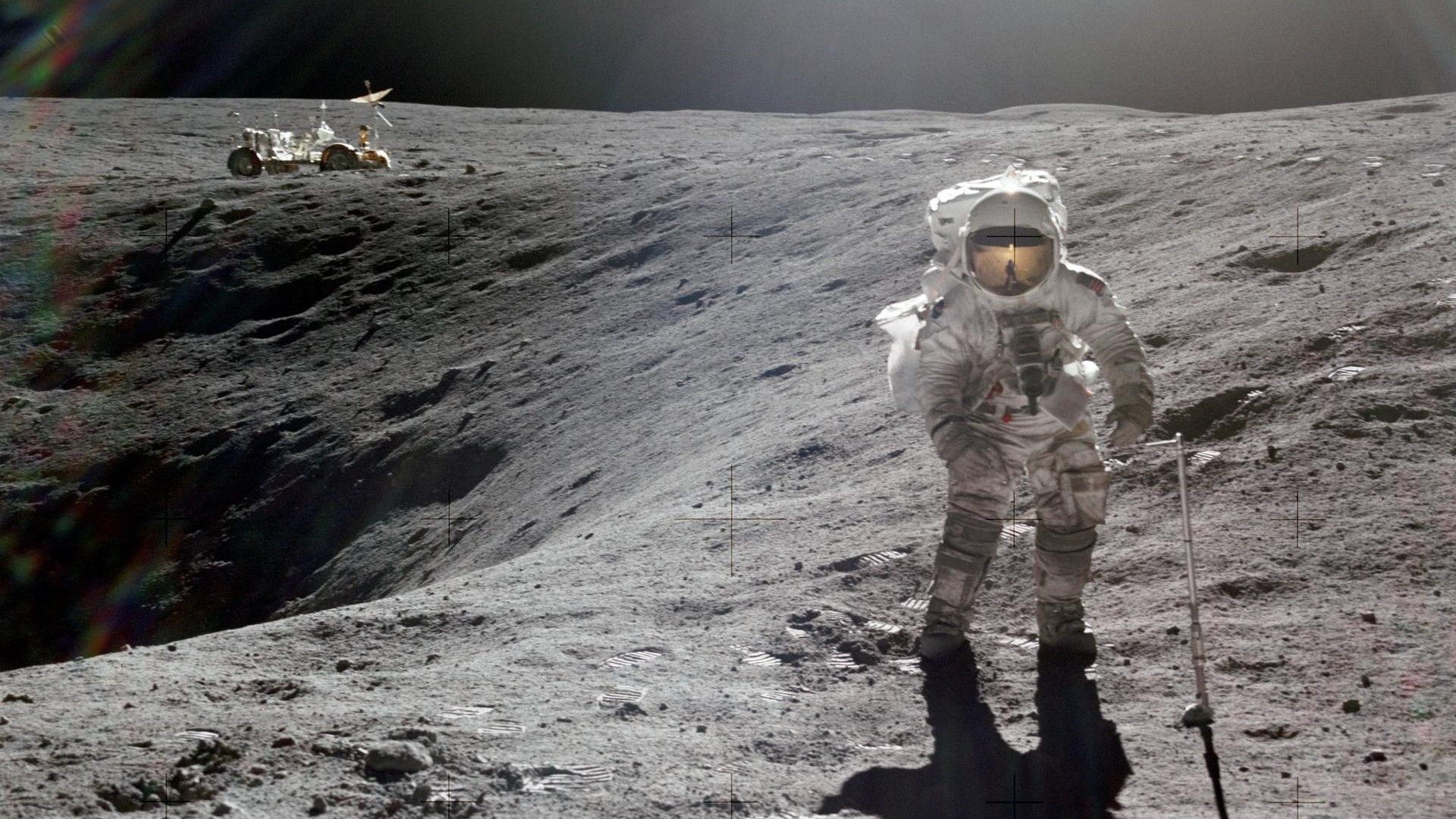
Discussions about the moon’s magnetic field are based on a limited sample of lunar rocks. Between 1969 and 1972, six Apollo missions landed on the moon, landing in areas near the moon’s equator. According to the researchers, these missions landed in roughly the same place, in an area with similar types of rock.

It was easiest for astronauts to land their small spacecraft in a vast, flat, basalt region called Maria. Maria is an old lava plain that formed after an ancient meteorite impact melted the original rock. These Apollo landing areas are rich in titanium basalt.
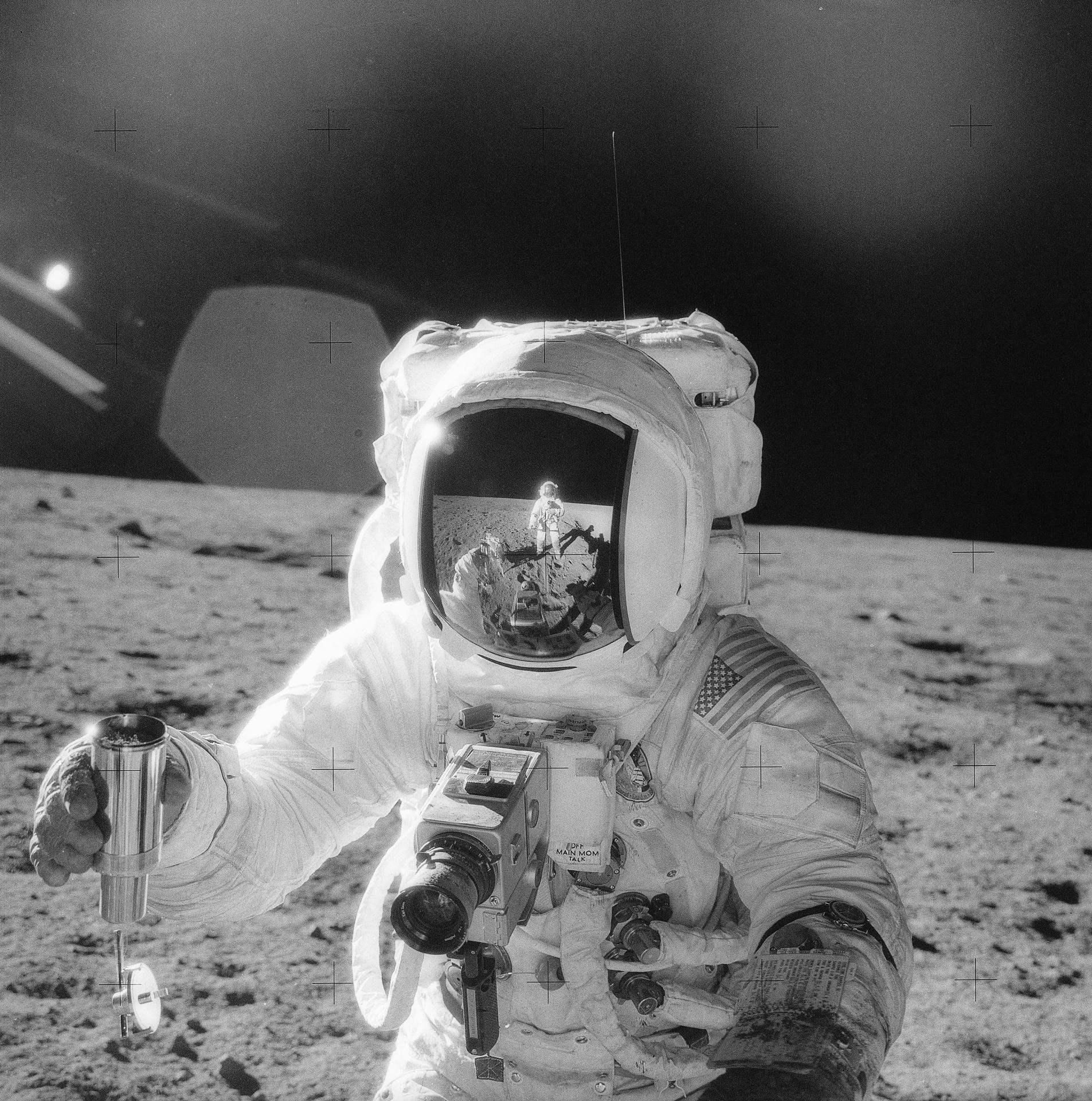
Astronaut with lunar rock sample on the moon surface

Apollo 12 astronauts collect lunar samples and their fellow crew members take photos. (Image credit: NASA)

A new study graphed the amount of titanium in lunar samples and the strength of the rock’s magnetization. The scientists found that rock samples with less than 6% titanium had weaker magnetic fields, while rocks with higher titanium concentrations had stronger magnetic fields.

The statement said this suggests a link between the formation of titanium-rich rocks and the generation of a strong lunar magnetic field. Researchers believe that both were caused by the melting of titanium-rich material deep within the moon, creating a temporarily extremely strong magnetic field.

Get the world’s most fascinating discoveries delivered straight to your inbox.

limited sample

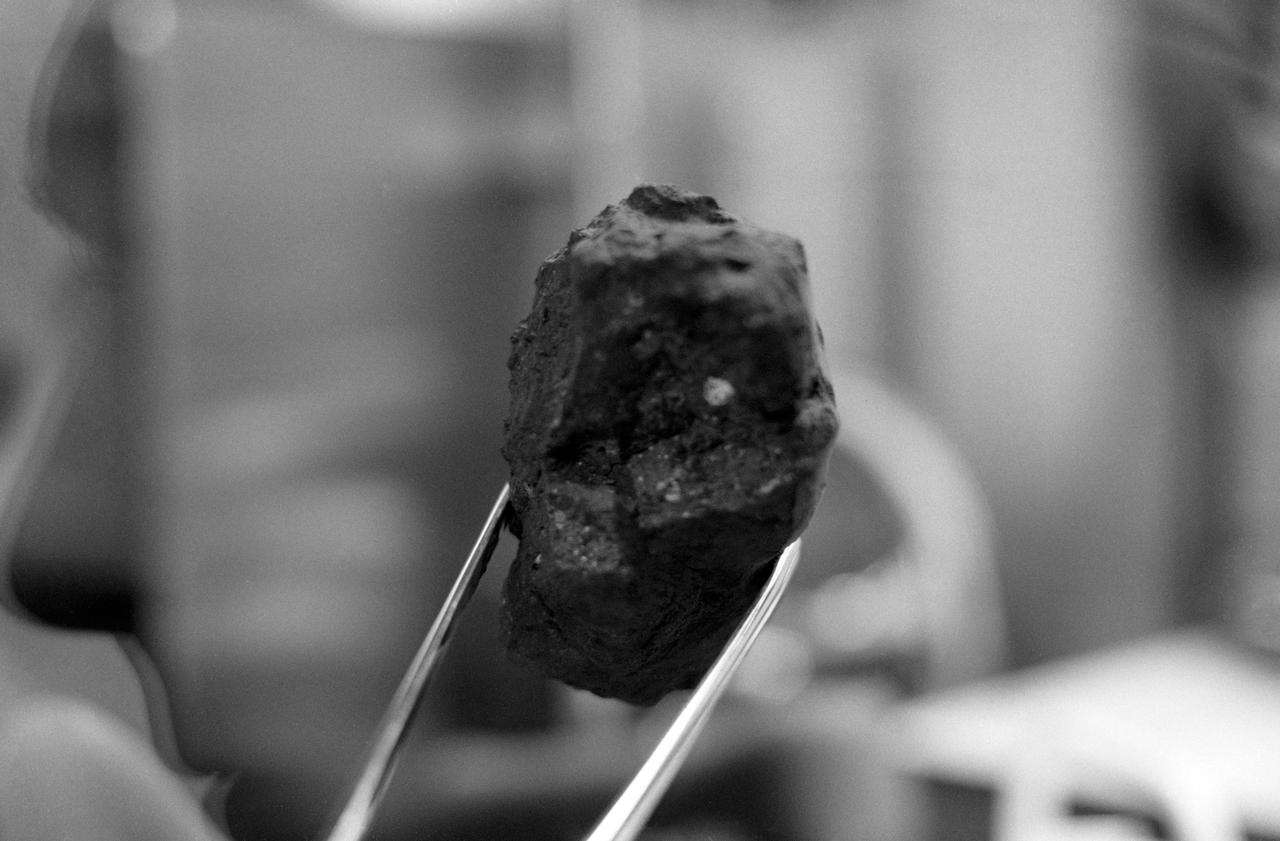
Dark moon rock grabbed with tweezers in the lab

This stony Apollo sample, collected during the Apollo 12 landing mission, makes up the bulk of the lunar samples on Earth. (Image credit: AccuSoft Inc. / NASA)

Apollo’s moon rocks make up a significant portion of Earth’s moon resources. Auction house Christie’s suggests that about 1,433 pounds (650 kilograms) of moon rocks on Earth came from meteorites. According to NASA, the Apollo archives account for approximately 842 pounds (382 kg) of that inventory.

Scientists have analyzed many of the titanium-rich Apollo stones, leading to the realization that the Moon has had a strong magnetic field for a long time, the University of Oxford said in a statement. But that seemed odd to other scientists, who argued that the moon’s core was too small, at just one-seventh of its radius, to be able to generate a strong magnetic field over long periods of the moon’s history.

The researchers checked for sampling bias by running the model, and the results showed that the set of random lunar samples the scientists analyzed contained very few rocks with strong magnetic fields. The NASA-led Artemis astronaut mission is expected to land at more diverse locations and collect samples that span the moon’s 4.5 billion-year history.

“If we were aliens exploring Earth and had landed on Earth only six times, we would probably have had a similar sampling bias, especially if we had chosen a flat surface to land on,” study co-author John Wade, associate professor of planetary materials at the University of Oxford, said in a statement. “It’s just a coincidence that the Apollo missions focused on the moon’s rare-earth regions. If they had landed elsewhere, the moon would have had only a weak magnetic field and we would have completely missed this important part of early lunar history.”


Source link

#Biotechnology #ClimateScience #Health #Science #ScientificAdvances #ScientificResearch
Follow on Google News Follow on Flipboard
Share. Facebook Twitter Pinterest LinkedIn Tumblr Email Copy Link
Previous ArticleAnthropic acquires computer AI startup Vercept after Meta poachs one of its founders
Next Article Salesforce CEO Marc Benioff: This isn’t our first SaaSpocalypse
user
  • Website

Related Posts

This week’s science news: Spider webs on Mars, tigers returned to Kazakhstan, 2,000-year-old skull with permanently blackened teeth

February 28, 2026

Inherited diseases don’t work like we thought they did

February 27, 2026

“I’m not lying. So who are you?”: What happens when a DNA test shows that a woman is not the mother of the child she gave birth to?

February 27, 2026
Add A Comment
Leave A Reply Cancel Reply

Latest Posts

ClawJacked flaw allows malicious sites to hijack local OpenClaw AI agents via WebSockets

OpenAI’s Sam Altman announces agreement with Department of Defense on ‘technical safeguards’

Xiaomi launches 17 Ultra smartphone, AirTag clone and ultra-slim power bank

Why China’s humanoid robot industry is winning in the nascent market

Trending Posts

Subscribe to News

Subscribe to our newsletter and never miss our latest news

Please enable JavaScript in your browser to complete this form.
Loading

Welcome to Fyself News, your go-to platform for the latest in tech, startups, inventions, sustainability, and fintech! We are a passionate team of enthusiasts committed to bringing you timely, insightful, and accurate information on the most pressing developments across these industries. Whether you’re an entrepreneur, investor, or just someone curious about the future of technology and innovation, Fyself News has something for you.

Castilla-La Mancha Ignites Innovation: fiveclmsummit Redefines Tech Future

Local Power, Health Innovation: Alcolea de Calatrava Boosts FiveCLM PoC with Community Engagement

The Future of Digital Twins in Healthcare: From Virtual Replicas to Personalized Medical Models

Human Digital Twins: The Next Tech Frontier Set to Transform Healthcare and Beyond

Facebook X (Twitter) Instagram Pinterest YouTube
  • Home
  • About Us
  • Advertise with Us
  • Contact Us
  • DMCA
  • Privacy Policy
  • Terms & Conditions
  • User-Submitted Posts
© 2026 news.fyself. Designed by by fyself.

Type above and press Enter to search. Press Esc to cancel.