
New school! Billboard Japan Women in Music 11 Years Interview
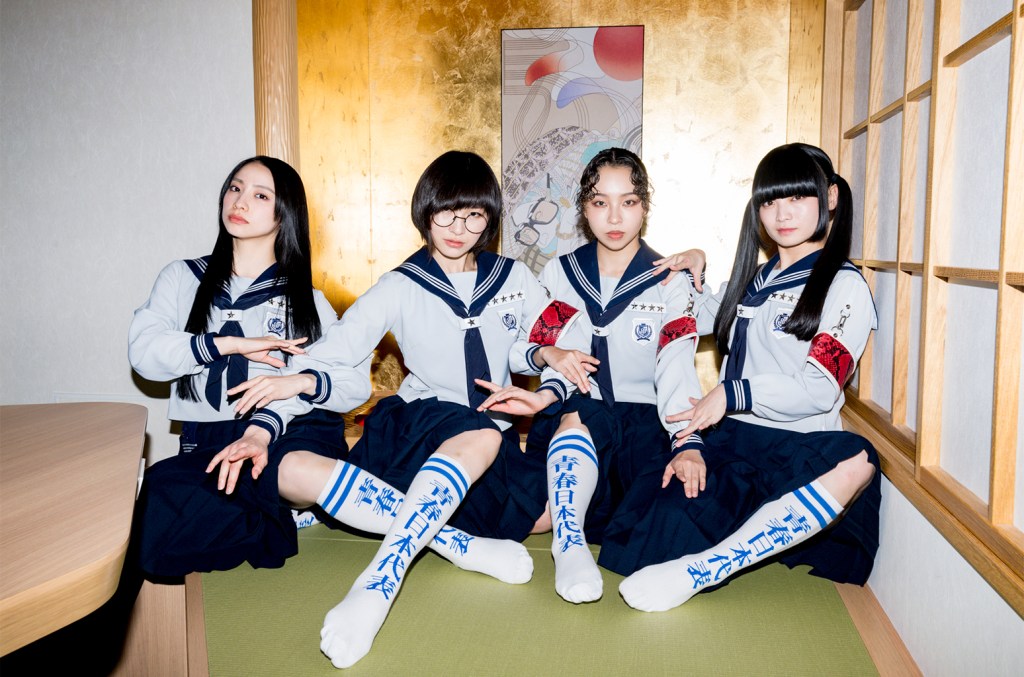
Billboard Japan’s Women in Music interview series is back with a new school! The initiative was launched in 2022 in the footsteps of Billboard’s annual Women in Music honors, which celebrate artists, producers and executives who have made significant contributions to music and entertainment and inspired other women through their work. This series featuring female players in the Japanese entertainment industry is one of the highlights of the Japanese WIM project.
explore

Check out the latest videos, charts and news
This interview arrived ahead of Billboard Japan and Spotify’s one-night-only special live event “Women in Music – EQUAL STAGE” which will be held on June 9th. The second interview series features SUZUKA, MIZYU, RIN, and KANON from the new school! Celebrating their 11th year as a group based on the concept of “exceeding hamidashi with individuality and freedom,” they once again spoke with writer Rio Hirai about their philosophy on standing out, their bonds, and what they will bring to the June 9th concert.
This is the group’s second time in this series. Mr. SUZUKA, what left an impression on me in the previous WIM interview was that he talked about wanting to live an “unbelievable life.” We are almost halfway through 2026, how is the situation so far?
Suzuka: As we enter our 11th year after our 10th anniversary, and we have achieved double digits, I felt it was the right time to make a new start. While returning to our roots, we have held various shows with the desire to express ourselves in a positive manner with an eye to the future. In July, they will perform at Lollapalooza in Berlin, followed by stops in the Czech Republic and London to celebrate their 11th anniversary. He will head to Seattle in September, and is planning a Latin American tour in December that will include stops in Chile, Brazil, and Mexico.
Mr. KANON, last time you talked about the importance of living in the present to the fullest.
KANON: That hasn’t changed at all. We always say, “If these four people live in the moment to the fullest, that’s youth.” Every day, I give my all to the here and now.
What is your most memorable moment of the first half of 2026?
RIN: After finishing the hall tour, we did a one-man live with the theme of the entrance ceremony in April. It was a highly conceptual production and setlist that recreated the atmosphere of entrance ceremonies that are familiar to anyone who attended a school in Japan, using red and white curtains, a large podium, and welcoming the audience with applause. It was a very meaningful program for us as it delved deeply into what a new school is! It’s about.
MIZYU: Every day is memorable. Not only the show itself, but also the creative days leading up to it, and the days that followed as we listened to the audience’s reactions. During the first half of this year, I was also focusing on creating new songs, so every day was truly precious.
Suzuka: That’s right!
You often perform in front of non-Japanese speaking audiences overseas. What do you keep in mind when standing on such a stage?
RIN: Even though there is a language barrier, performance is our weapon. So we use facial expressions and big movements to say, “This is what we’re saying right now,” “This is what joy looks like,” and we dial everything up and convey the same energy that we give in Japan. For us, wearing a sailor suit has become commonplace, but for overseas customers it is symbolic, so all we have to do is do our best. I stand on stage believing that if I give my all, it will definitely come true.
SUZUKA: Something like “Attention, bow!” This is a very familiar routine in Japan. If you do it in another country, that gesture will elicit loud applause. The Japanese audience goes along with it as if nothing has happened, but the cultural differences create many moments of surprise and joy overseas.
It feels like a new school! The abbreviation is really pervasive among people not only in Japan but all over the world. How does it feel from where you are standing?
Suzuka: I think there is still a long way to go. We feel that there are people all over the world who love us for reasons we never imagined. Looking back 10 years ago, I’m amazed at how many fans we have now. However, it would be a waste to be satisfied with just that. We must continue to grow based on this. We are always on an adventure and want to discover sides of ourselves that we have never seen before. We want to show that to people and reach more people with our energy. No, we’re not there yet.
It’s been 11 years, but are you still discovering new things about each other?
SUZUKA: We’ve known each other since we were in the second year of junior high school, and we really spent our youth together. My bones are bigger now. [Laughs] When creating songs and choreography, we each take inspiration from our daily lives and bring that to the group. There is always some new change happening, but at the same time there is a sense of security and stability that is quite the opposite. It’s an interesting balance.
MIZYU: The foundation remains the same, but we will continue to sharpen the individuality that each of us has built through our adventures, and find a form that suits our individual edges. It feels like each piece continues to be updated and slotted together. Things like curiosity and the desire to keep evolving may actually be getting stronger. I think we have matured.
RIN: The reason the four of us are able to get along so well is because we all deeply respect that moment when we first met 12 years ago and laughed out loud. Even though things have changed, each of us still has the same desire to cherish being the four of us.
KANON: We’re together almost every day, and the conversations we have when we get together as a group are constantly evolving. Even if the shape of someone’s feelings shifts, for some reason, the hole doesn’t open properly. It’s an amazing kind of relationship.
Even as you all evolve, each of you seems to be living “hamidashi” in your own way. What’s the secret to accepting each other’s ways of doing things and still staying fit?
SUZUKA: The concept is not “marudashi” but “hamidashi”. The latter means breaking the rules or violating the school regulations. Hamidashi is about how much freedom and individuality can be found within existing rules. If you change your perspective, you’ll see that there’s a lot of room for adventure, just by pushing the limits of the rules. It works because the four of us are intuitively in tune with each other.
KANON: When you go outside of Japan, the rules are really different depending on the country. Even if the choreography is completely fine in Japan, it may have a slightly different meaning overseas. In such a case, we will ask the local people and change the move on the same day. In order to be accepted by people around the world, there is always a spirit of respecting the rules of each country.
What would you say to someone who feels that going beyond the norm is scary or takes too much courage?
Suzuka: I understand that fear. There are moments when we ourselves feel unsure of how far we can go. But you can’t see new scenery unless you destroy something. I think anxiety comes from fear of failure, but I think it’s better to see failure as a starting point. Failure is normal. Learn from it, take it as a guide to success, and simply think, “Oh, I failed.” As long as you’re not dead, you’re fine. Go on an adventure, crash and burn, but get back up again. And if you need something to help you get back on your feet, reach for your music or look up at the sky and find something that soothes and uplifts you in your own way.
MIZYU: I think it’s up to you how you interpret “going beyond common sense.” One form of this is wanting to do something different. It is also important to live each day in your own way. You don’t have to feel pressured to do it, and you don’t have to do it alone. Finding someone to do it with you may be part of going beyond the norm. No pressure. Once you feel ready, move in the direction you want. That’s the important thing.
KANON: It’s important to be able to say to yourself, “I like this,” even if it’s something you might say out loud because you’re worried about what other people think. I want everyone to always take care of their feelings.
RIN: “Going beyond the norm” may sound a bit forced or like pushing forward on your own, but that’s not necessarily the case. There are people who will work with you, and sometimes it’s good to ask them, “I’m trying to go beyond the norm, what do you think?” Enough to make you feel more secure. You don’t even have to do it right away. Everyone has their own pace of life, their own comfort zone. You can do it whenever you want, and it’s okay if the timing isn’t right. I live my life believing that humans can be much more free than we think.
At Women in Music – EQUAL STAGE on June 9th, you will be performing with Awich, Hitsuji Bungaku, and LANA. What are you looking forward to and what will you bring with you that night?
RIN: It’s all women, different generations, and completely different genres. We have performed with Awich several times and she always gives us strength. LANA is younger than us, but she has very strong energy. And now that sheep literature is a duo, I think it has a different presence. I think this will be a day when even fans of one artist can discover a completely new genre. Those who come to see it may be shocked by the strength of the female rappers, or shaken by the clear voice of Hitsuji Bungaku. Music is such a new discovery, so I’m really looking forward to a wide range of people being able to incorporate the energy of Japanese female artists.
SUZUKA: A lineup that combines healing and provocation at the same time. If everyone present is open about everything, the venue will definitely have a sense of unity and excitement. We will always be who we are.
MIZYU: Actually, we just had a solo live at SGC Hall Ariake, which opened in April, so we know firsthand that it’s a great venue. I’m looking forward to going there again and being able to experience a completely different atmosphere even in the same space.
Suzuka: This may actually be the first time that an event exclusively for women is held at SGC Hall. When you think about it that way, it feels even more meaningful.
KANON: I’m really looking forward to being able to go beyond the boundaries of being a “female” and explode my energy as a human being at a new school! This is the first time that all four groups have performed together like this, so I’m looking forward to seeing what kind of energy they’ll bring out and what kind of audience they’ll meet.
—This interview with Rio Hirai first appeared on Billboard Japan
Source link

