


Providing additional nitrogen could double the growth of tropical trees in recovering forests, significantly increasing the amount of carbon dioxide (CO2) they can absorb over a 10-year period, according to a new study.
The researchers found that adding nitrogen fertilizer to the soil in the youngest forests (forests less than a year old) increased tree biomass by 95% compared to a control group that did not receive fertilizer. A 10-year-old forest also recovered with nitrogen treatment and showed a 48% growth increase compared to the control group.
you may like
Researchers at the Smithsonian Tropical Research Institute (STRI) tracked the growth of trees and woody vines over a four-year period, monitoring how fertilizers with nitrogen, phosphorus, or a combination of both affected growth. Working in plots around the Panama Canal watershed, they also tested responses across a gradient of forest types, including areas that were cattle pastures less than a year ago, 10-year-old recovering forests, 30-year-old recovering forests, and 600-year-old forests.
For three months each year, the field team regularly fertilized the trees. “You’ll be driving up and down steep hills to get to the site,” Batterman said. “And it’s very beautiful. You can see the Panama Canal in the distance, big ships coming and going, and you drive through a landscape of cow pastures and forests in various stages of recovery.”
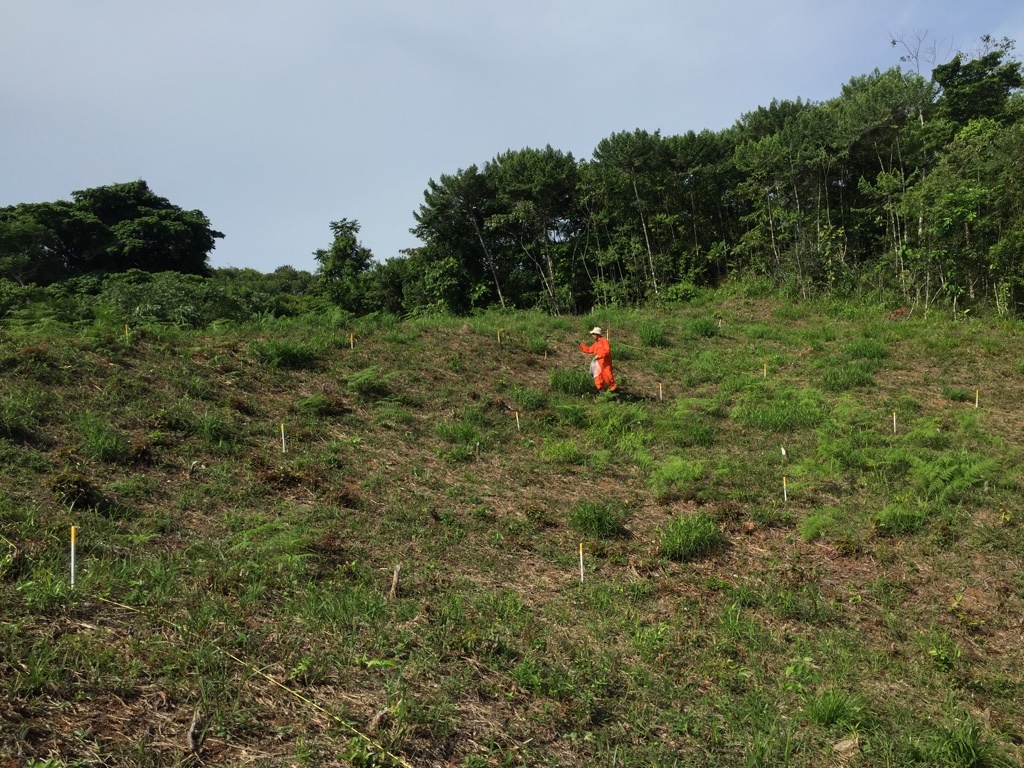
After hikes ranging from 5 minutes to an hour and a half, field teams fertilized the trees and measured their trunks. “It’s very hot and sweaty and there are a lot of mosquitoes and insects,” Batterman said.
From the diameter of a tree’s trunk, researchers can estimate the tree’s above-ground biomass and, importantly, its carbon storage.
The team’s findings, published January 13 in the journal Nature Communications, showed that nitrogen almost doubled growth in areas that were agricultural land a year ago and boosted growth by almost 50% in forests that had been recovering for a decade.
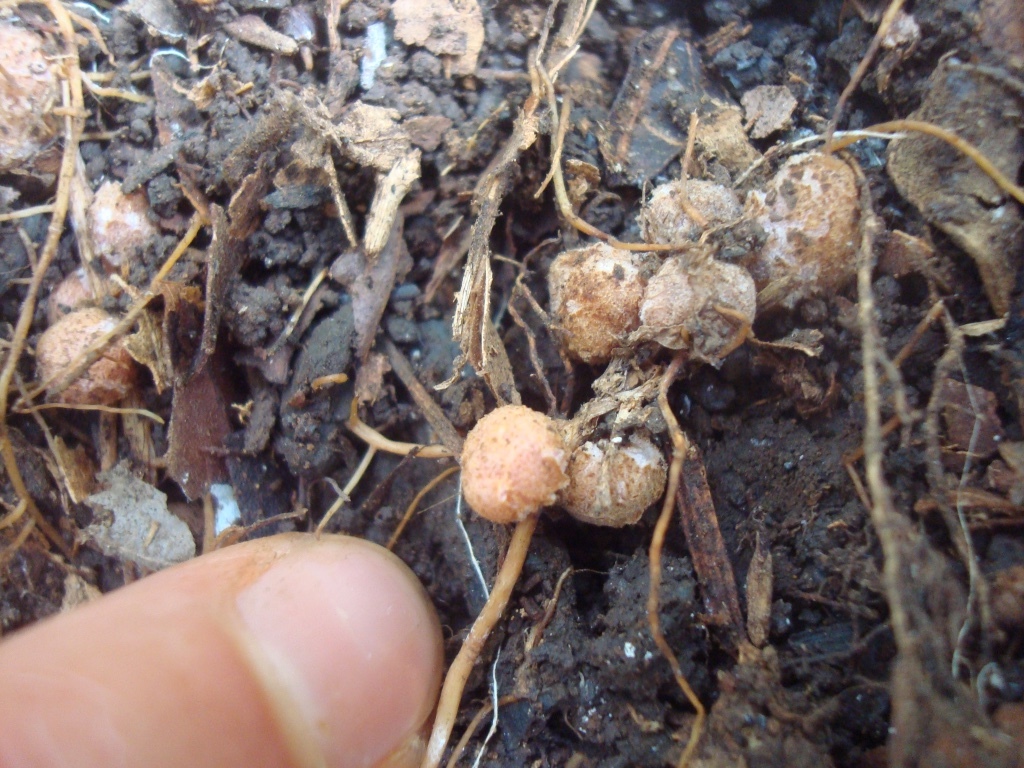
Older forests showed no response to added nitrogen, and none of the forests showed a response to phosphorus fertilization.
When trees are removed from a rainforest, the soil beneath them also deteriorates and is depleted of nutrients such as nitrogen and phosphorus. This degradation is still detectable decades after deforestation.
you may like
But rather than proposing physically fertilizing vast tropical forests with nitrogen, the new findings could be used to design forest restoration projects that prioritize tree species that can convert atmospheric nitrogen into nutrients. This is known as a “nitrogen-fixing tree,” said study co-author Jefferson Hall, director of STRI’s Agua Salud Project, which provided some of the forest plots where the experiment was conducted.
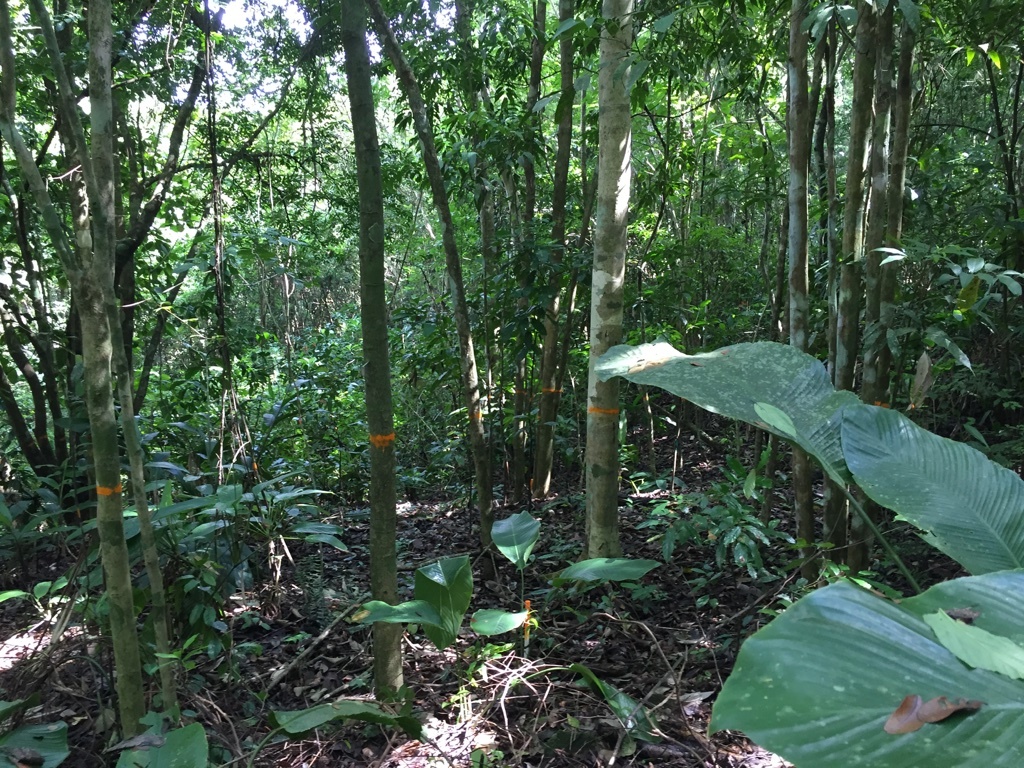
“It’s not realistic for people to go out and fertilize forests around the world to capture CO2,” Hall told Live Science. “A natural way to strengthen the nitrogen system would be to plant more nitrogen-fixing trees.”
Richard Birdsee, a senior scientist at the Woodwell Climate Research Center who was not involved in the study, said the findings confirm years of observations about nutrients. “Fifty years ago, when I was in school, the problem of nutrient depletion in tropical forests was known. But experiments like this had never been done. It was just an observation,” he told Live Science.
Former tropical forests, most often cleared for agriculture, are deficient in nutrients in the soil, and even if the land is reforested, these nutrients often take a long time to rebuild. “This study confirms some long-held beliefs about how tropical forests function and what happens when they are cleared,” Birdsey said.
Birdsey, who worked for the U.S. Forest Service for more than 40 years, said restoring tropical forests is a globally important carbon sink, which means they absorb more carbon than they emit.
“They absorb about 2.5 pentagrams of carbon per year,” he said. “Globally, forests cover about 3.5 pentagrams of land, making them the largest component of carbon sinks overall. And tropical regrowth forests, or forests that are regenerating, make up the largest portion of tropical forest sinks.”
Tang, W., Hall, JS, Phillips, OL, Brienen, RJW, Wright, SJ, Wong, MY, Hedin, LO, Van Breugel, M., Yavitt, JB, Hannam, PM, and Batterman, SA (2026). Carbon sequestration in tropical forests accelerated by nitrogen. Nature Communications, 17(1), 55. https://doi.org/10.1038/s41467-025-66825-2
Source link
