
Close Menu
  • Home
  • Identity
  • Inventions
  • Future
  • Science
  • Startups
  • Spanish
What's Hot

JanelaRAT malware targets Latin American banks with 14,739 attacks in Brazil in 2025

Anodot hack leaves more than a dozen compromised companies facing extortion charges

FBI and Indonesian police dismantle W3LL phishing network behind $20 million fraud

Facebook X (Twitter) Instagram
  • Home
  • About Us
  • Advertise with Us
  • Contact Us
  • DMCA
  • Privacy Policy
  • Terms & Conditions
  • User-Submitted Posts
Facebook X (Twitter) Instagram
Fyself News
  • Home
  • Identity
  • Inventions
  • Future
  • Science
  • Startups
  • Spanish
Fyself News
Home » ‘No human mind should have to go through this’: Artemis II crew recalls the surreal moment Earth disappeared — Space Photo of the Week
Science

‘No human mind should have to go through this’: Artemis II crew recalls the surreal moment Earth disappeared — Space Photo of the Week

By April 12, 2026No Comments3 Mins Read
Share Facebook Twitter Pinterest Telegram LinkedIn Tumblr Email Copy Link
Follow Us
Google News Flipboard
Share
Facebook Twitter LinkedIn Pinterest Email Copy Link

simple facts

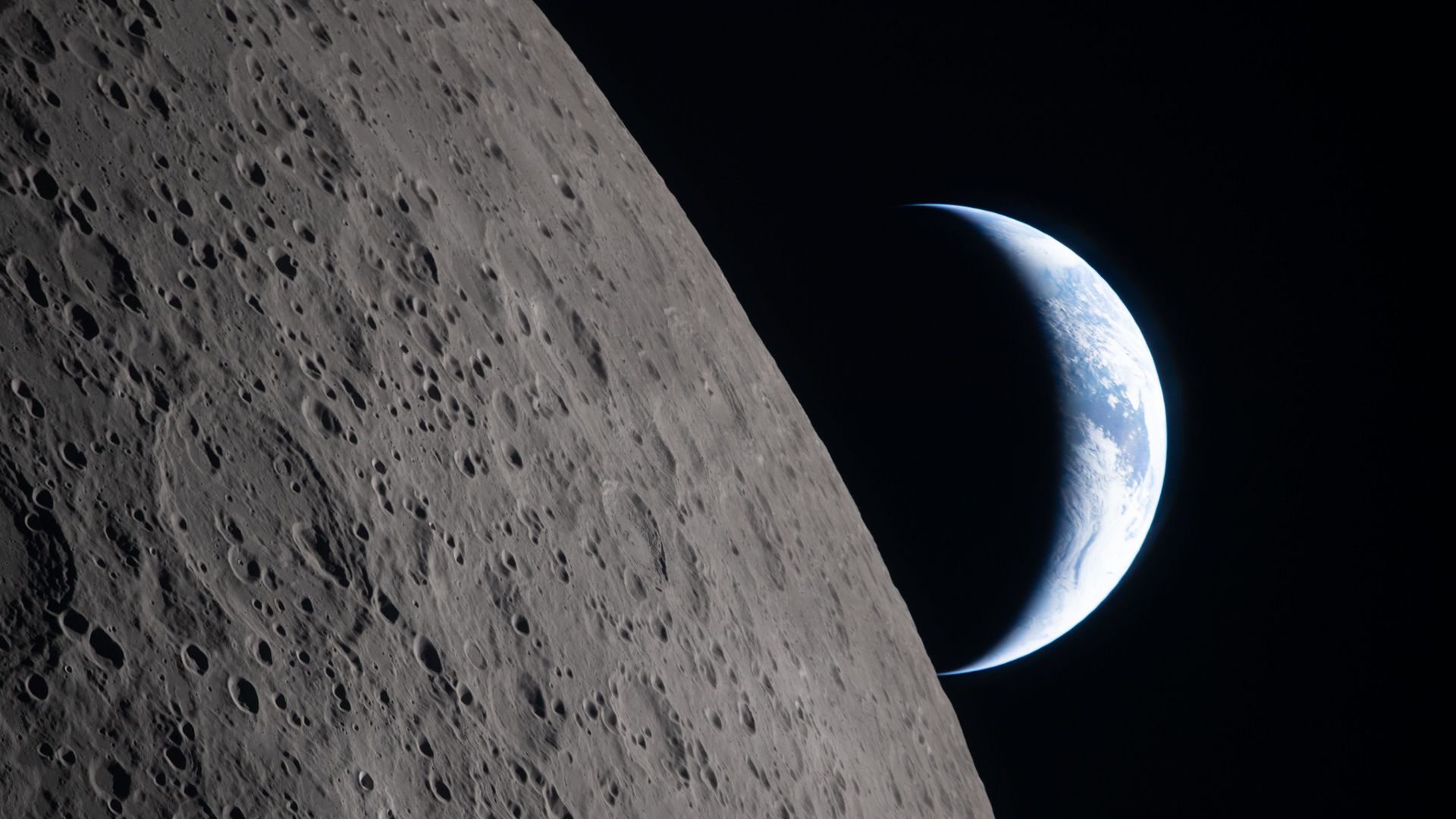
What it is: ‘Earthset’ seen by the crew of NASA’s Artemis II mission

Location: 4,070 miles (6,550 kilometers) above the moon’s surface

Share date: April 6, 2026.

This striking image shows a crescent-shaped Earth slipping behind the Moon’s rugged edge. This “Earth set” was witnessed by the crew of NASA’s Artemis II mission and is likely the highlight of the first lunar orbit mission since 1972. Shortly after this image was taken, the Orion spacecraft passed the far side of the moon and began a 31-minute communications blackout with mission control in Houston, Texas.

In the foreground is a clear lunar surface, beyond which the Earth floats subtly in space, with Australia and Oceania disappearing during the day and the rest disappearing into the night. It was a sight that moved the crew.

“I’m really getting chills right now. My palms are sweating just thinking about it,” Capt. Reed Wiseman said from the Orion capsule during a live press conference on Wednesday, April 8. “It’s amazing to see your home planet disappear behind the moon. You see the atmosphere. You see the moon’s terrain projected all over the Earth… It was just an incredible sight… and then it disappeared. It became invisible.”

you may like

This image inevitably invites comparisons to Earthrise, taken on Christmas Eve 1968 during the Apollo 8 mission. This mission marked the first time that three humans had orbited the moon. That photo, taken by pilot Bill Anders, revealed Earth to be a fragile, finite world suspended in darkness. This perspective is widely credited with helping to fuel the modern environmental movement.
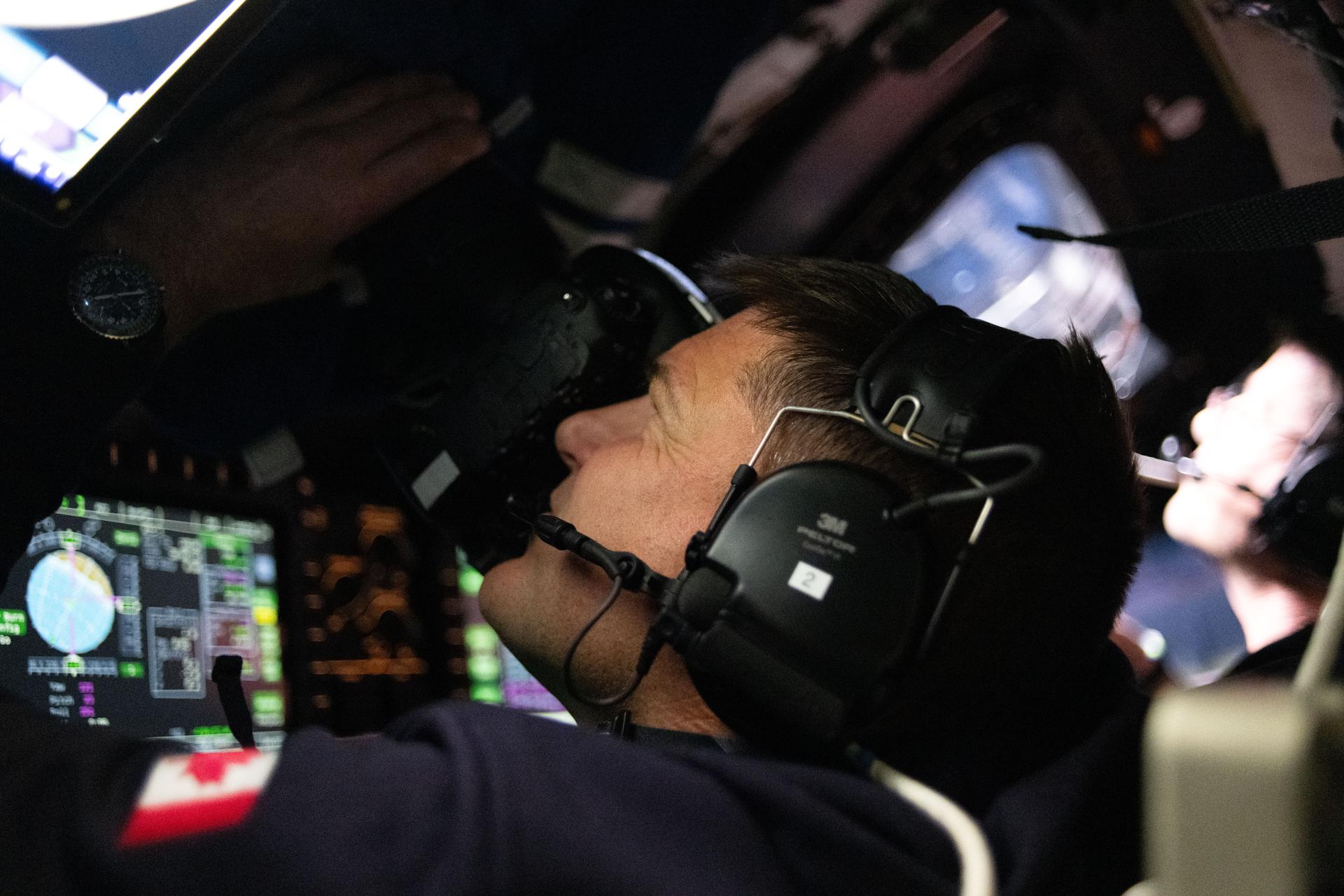
Mission specialist Jeremy Hansen took photos of the moon through the window of the Orion spacecraft during the crew's seven-hour lunar flight.

Mission Specialist Jeremy Hansen, CSA, took photos of the moon through the window of the Orion spacecraft during the crew’s seven-hour lunar flight. (Image credit: NASA)

The Artemis II crew went on to capture their own images of Earthset, but it was the first Earthset (also taken from a distance, close-up and wide-angle) that had a profound impact on Wiseman, pilot Victor Glover, mission specialist Christina Koch, and Canadian Space Agency astronaut Jeremy Hansen.

The human mind does not need to experience what these have experienced.

Reed Wiseman, Artemis II Commander

“The four of us took some time,” Wiseman said. “We shared the maple cookies that Jeremy had brought. We took about three to four minutes as a crew to reflect on our situation, and then we quickly got back to science.”

“There’s a lot for our brains to process,” Wiseman added. “The human mind doesn’t have to go through what it just went through. It’s a true gift.”

Get the world’s most fascinating discoveries delivered straight to your inbox.

The original Earthrise image announced humanity’s arrival on the Moon. It was unexpected and impromptu. The Earth set is intentional and marks humanity’s return to the moon after more than half a century.


Source link

#Biotechnology #ClimateScience #Health #Science #ScientificAdvances #ScientificResearch
Follow on Google News Follow on Flipboard
Share. Facebook Twitter Pinterest LinkedIn Tumblr Email Copy Link
Previous ArticleDoes the moon look the same no matter where you are on Earth?
Next Article At the HumanX conference, everyone was talking about Claude

Related Posts

Does the moon look the same no matter where you are on Earth?

April 12, 2026

Found a new meteor shower – it’s coming from an asteroid scorched by the sun

April 11, 2026

AI for farewell messages? How chatbots are interfering with our ability to deal with difficult social situations.

April 11, 2026
Add A Comment
Leave A Reply Cancel Reply

Latest Posts

JanelaRAT malware targets Latin American banks with 14,739 attacks in Brazil in 2025

Anodot hack leaves more than a dozen compromised companies facing extortion charges

FBI and Indonesian police dismantle W3LL phishing network behind $20 million fraud

Slate Auto raises $650 million in funding for affordable EV truck plan

Trending Posts

Subscribe to News

Subscribe to our newsletter and never miss our latest news

Please enable JavaScript in your browser to complete this form.
Loading

Welcome to Fyself News, your go-to platform for the latest in tech, startups, inventions, sustainability, and fintech! We are a passionate team of enthusiasts committed to bringing you timely, insightful, and accurate information on the most pressing developments across these industries. Whether you’re an entrepreneur, investor, or just someone curious about the future of technology and innovation, Fyself News has something for you.

Castilla-La Mancha Ignites Innovation: fiveclmsummit Redefines Tech Future

Local Power, Health Innovation: Alcolea de Calatrava Boosts FiveCLM PoC with Community Engagement

The Future of Digital Twins in Healthcare: From Virtual Replicas to Personalized Medical Models

Human Digital Twins: The Next Tech Frontier Set to Transform Healthcare and Beyond

Facebook X (Twitter) Instagram Pinterest YouTube
  • Home
  • About Us
  • Advertise with Us
  • Contact Us
  • DMCA
  • Privacy Policy
  • Terms & Conditions
  • User-Submitted Posts
© 2026 news.fyself. Designed by by fyself.

Type above and press Enter to search. Press Esc to cancel.