
Close Menu
  • Home
  • Identity
  • Inventions
  • Future
  • Science
  • Startups
  • Spanish
What's Hot

Benchmark raises $225 million in special funding to double Cerebras

AI startup founder says he plans a ‘March for Billionaires’ to protest California’s wealth tax

From Svedka to Anthropic, brands are boldly leveraging AI in their Super Bowl ads

Facebook X (Twitter) Instagram
  • Home
  • About Us
  • Advertise with Us
  • Contact Us
  • DMCA
  • Privacy Policy
  • Terms & Conditions
  • User-Submitted Posts
Facebook X (Twitter) Instagram
Fyself News
  • Home
  • Identity
  • Inventions
  • Future
  • Science
  • Startups
  • Spanish
Fyself News
Home » Oops! Russia accidentally destroys the only operational launch pad as astronauts take off to the ISS
Science

Oops! Russia accidentally destroys the only operational launch pad as astronauts take off to the ISS

userBy userDecember 1, 2025No Comments5 Mins Read
Share Facebook Twitter Pinterest Telegram LinkedIn Tumblr Email Copy Link
Follow Us
Google News Flipboard
Share
Facebook Twitter LinkedIn Pinterest Email Copy Link

Russia’s only operating launch pad has been temporarily disabled after sustaining severe damage during its recent launch of three astronauts to the International Space Station (ISS). Experts say this leaves the country unable to send humans into space for the first time in more than 60 years.

On Thanksgiving Day (November 27), the Soyuz MS-28 spacecraft launched from Site 31/6 of the Baikonur Cosmodrome in Kazakhstan at approximately 2:30 pm local time (4:30 am ET). The rocket carried Russian cosmonauts Sergei Kudo Sverchkov and Sergei Mikayev, along with NASA astronaut Chris Williams, and they all arrived safely at the ISS and will remain there for the next eight months, Live Science’s sister site Space.com reported.

However, shortly after launch, Russian space agency Roscosmos revealed that something had happened to the launch pad during the rocket’s takeoff. “The launch pad was inspected, as is done every time a rocket is launched,” Roscosmos representatives wrote on Telegram in a translated statement. “Damage to several launch pad components has been confirmed.”

you may like

Russian authorities did not say which part of the launch pad was hit or how it was damaged, only saying that the damage was “currently being assessed” and “will be repaired soon.”

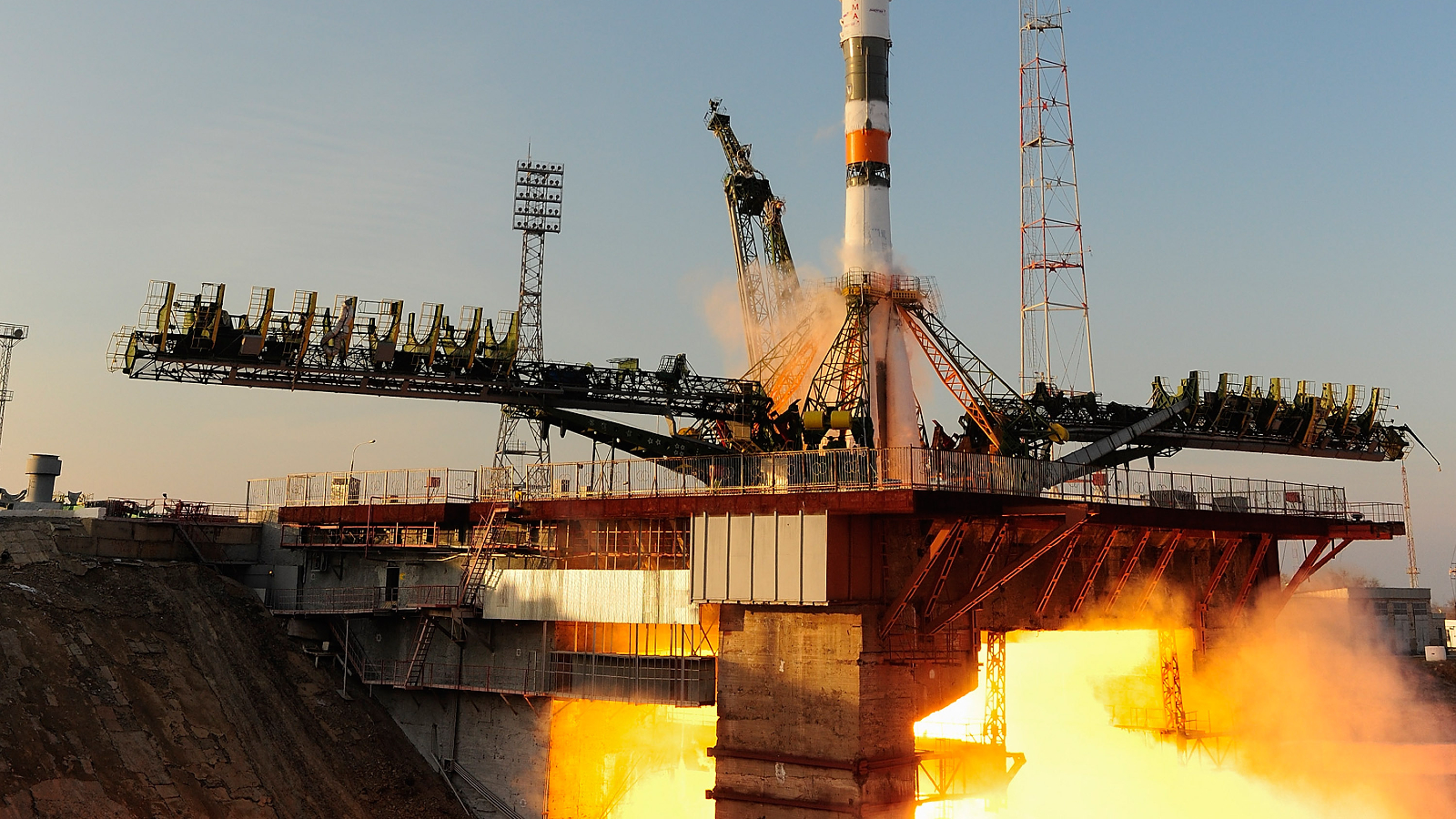
However, Ars Technica reported that an anonymous witness noticed that during the liftoff, the approximately 22-ton (20 metric ton) service platform used to access the rocket’s engines fell into the “flame trench,” the lower part of the launch pad where the rocket’s fiery plume spewed out. (If confirmed, this probably means the platform was not properly secured in place before launch.)
A photo of a rocket emitting intense exhaust gas through a hole in the launch pad to start its engine

Ars Technica reported that the 22-ton service platform dislodged during takeoff and fell into a flame trench below site 31/6. This photo shows a Soyuz rocket ejecting a fiery exhaust plume into a flame trench during its 2015 ISS launch. (Image credit: ESA – Stephane Corvaja via Getty Images)

It is unclear how long it will take to repair Site 31/6 or whether another decommissioned pad can be renovated in its place. But until this happens, Russia has no way to launch astronauts.

“Virtually from this day on, Russia has lost the ability to launch humans into space. This has not happened since 1961,” Russian space journalist Vitaly Egorov wrote on Telegram, CNN reported. “Now we will need to quickly repair this launch pad or modernize another launch pad.”

Get the world’s most fascinating discoveries delivered straight to your inbox.

Baikonur Cosmodrome was built in the late 1950s, when Russia was part of the Soviet Union and engaged in a space race with the United States that ultimately ended with the Apollo moon landings. Since the collapse of the Soviet Union in 1991, the site has been leased back to Russia by Kazakhstan for about $115 million a year.

Russia also has two other operating space bases within its borders: Vostochny and Plesetsk. However, neither base is currently capable of launching manned Soyuz rockets.

Site 31/6 has been used for more than 400 successful rocket launches, but became the last operational launch pad at Baikonur in 2020 when Roscosmos retired its only other active launch pad, Site 1/5 (also known as Gagarin’s Start). According to Space.com, the decommissioned pad was used to launch Yuri Gagarin, the first man to fly into space, in 1961, and part of it can now be used to repair Site 31/6.

you may like
A photo taken from below the launch pad showing a Soyuz rocket preparing for launch.

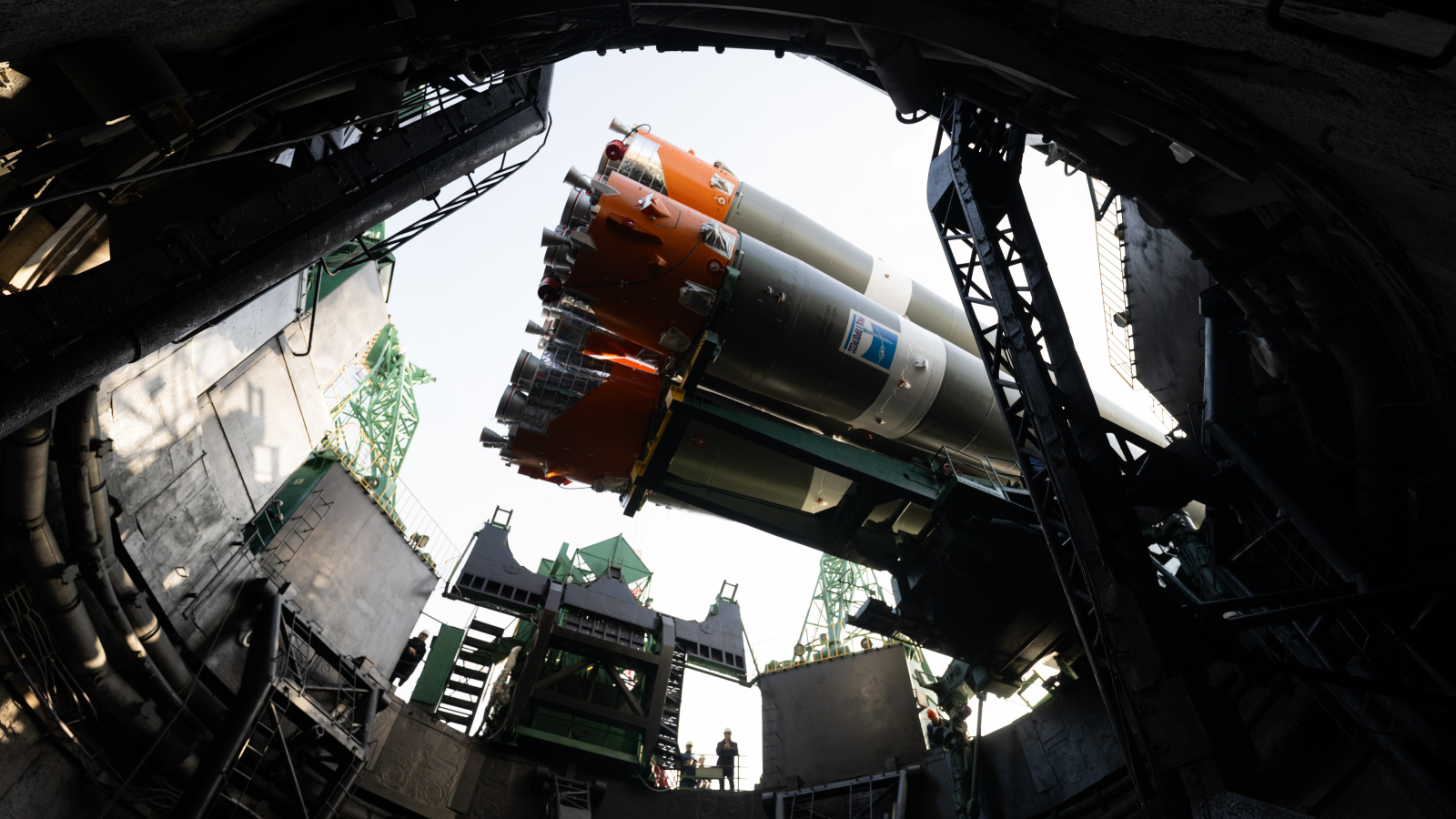
The service platform under Site 31/6 allowed technicians to work on the Soyuz rocket’s booster engine before launch. (Image credit: Joel Kowsky/NASA from Getty Images)

Russia launches astronauts to the ISS every six months, less frequently than in the past. That’s partly due to the advent of SpaceX’s reusable Falcon 9 rocket, but also because Russia is scaling back its involvement in the ISS project, which is scheduled to end by 2030.

The next manned ISS mission is scheduled to take off from Site 31/6 in July 2026, while the unmanned resupply mission is scheduled to begin less than three weeks later, on December 20, Space News said.

Jeff Manber, a space policy expert who heads the space station division at private aerospace company Voyager Technologies, told Ars Technica whether Russia prepares for these launches “is a real test of Russia’s resilience.” “We’re going to learn how important the ISS is to the leadership there.”

Russia currently plans to launch missions from Site 31/6 to support the construction of a new Russian orbital service station, scheduled to begin construction in 2027, Egorov wrote.

Once the ISS is decommissioned, Russian astronauts are also expected to be sent to China’s Tiangong space station (it is unclear which country these astronauts will launch from), as the two countries strengthen ties to achieve the common goal of building a base on the moon by 2035.

China has also experienced major failures with its own spacecraft in recent weeks. In early November, an accident believed to be caused by space debris collided with the return capsule attached to Tiangong, leaving three astronauts stranded in space. The three astronauts then returned to Earth in another capsule, leaving three more astronauts temporarily stranded until an unmanned “lifeboat” was launched on November 24.


Source link

#Biotechnology #ClimateScience #Health #Science #ScientificAdvances #ScientificResearch
Follow on Google News Follow on Flipboard
Share. Facebook Twitter Pinterest LinkedIn Tumblr Email Copy Link
Previous ArticleIndia orders mobile phone manufacturers to pre-install Sanchar Saathi app to prevent wire fraud
Next Article Europol shuts down crypto-mixing website that helped launder 1.3 billion euros
user
  • Website

Related Posts

All major galaxies except one are moving away from the Milky Way – and we finally know why

February 6, 2026

“Mono” viruses increase the risk of MS and cancer for some people. 22 genes suggest why.

February 5, 2026

The spotted orchid fly has invaded the United States. They may have acquired evolutionary superpowers in Chinese cities.

February 5, 2026
Add A Comment
Leave A Reply Cancel Reply

Latest Posts

Benchmark raises $225 million in special funding to double Cerebras

AI startup founder says he plans a ‘March for Billionaires’ to protest California’s wealth tax

From Svedka to Anthropic, brands are boldly leveraging AI in their Super Bowl ads

Prince Andrew’s advisor encouraged Jeffrey Epstein to invest in EV startups like Lucid Motors

Trending Posts

Subscribe to News

Subscribe to our newsletter and never miss our latest news

Please enable JavaScript in your browser to complete this form.
Loading

Welcome to Fyself News, your go-to platform for the latest in tech, startups, inventions, sustainability, and fintech! We are a passionate team of enthusiasts committed to bringing you timely, insightful, and accurate information on the most pressing developments across these industries. Whether you’re an entrepreneur, investor, or just someone curious about the future of technology and innovation, Fyself News has something for you.

Castilla-La Mancha Ignites Innovation: fiveclmsummit Redefines Tech Future

Local Power, Health Innovation: Alcolea de Calatrava Boosts FiveCLM PoC with Community Engagement

The Future of Digital Twins in Healthcare: From Virtual Replicas to Personalized Medical Models

Human Digital Twins: The Next Tech Frontier Set to Transform Healthcare and Beyond

Facebook X (Twitter) Instagram Pinterest YouTube
  • Home
  • About Us
  • Advertise with Us
  • Contact Us
  • DMCA
  • Privacy Policy
  • Terms & Conditions
  • User-Submitted Posts
© 2026 news.fyself. Designed by by fyself.

Type above and press Enter to search. Press Esc to cancel.