


Close Menu
  • Start
  • Celebrities
  • Music
  • Influencers
  • Tendencies
  • Exclusives
  • Business & Brands
  • TwinH
  • Spanish
What's Hot

President Trump to headline America’s 250th anniversary celebration after artist declines

This 5-year piano learning app offer has been reduced to just $68, making it cheaper than ever.

Taylor Swift completed ‘Toy Story 5’ song in ‘hectic’ 8 hours

Facebook X (Twitter) Instagram
  • Home
  • About The FYMOUS
  • Advertising / Promotion
  • Contact
  • DMCA
  • Privacy Policy
  • Terms
  • Publish News
Facebook X (Twitter) Instagram
FYMOUS News
  • Start
  • Celebrities
  • Music
  • Influencers
  • Tendencies
  • Exclusives
  • Business & Brands
  • TwinH
  • Spanish
FYMOUS News
Home » Pathogens that plagued prehistoric people found in 1,300-year-old poop in Mexico’s Cave of Dead Children
Tendencies

Pathogens that plagued prehistoric people found in 1,300-year-old poop in Mexico’s Cave of Dead Children

By October 22, 2025No Comments3 Mins Read
Share Facebook Twitter Pinterest Telegram LinkedIn Tumblr Email Copy Link
Follow Us
Google News Flipboard
Share
Facebook Twitter LinkedIn Pinterest Email Copy Link

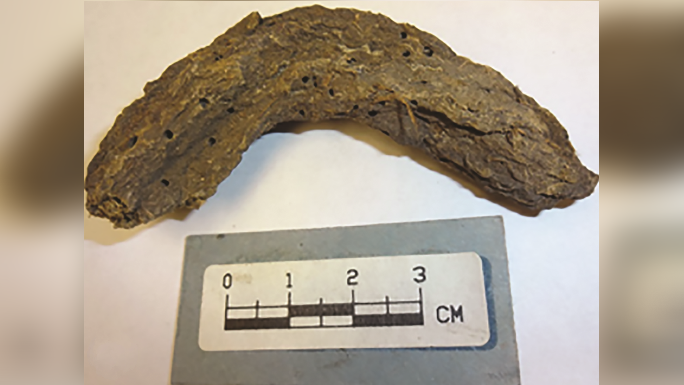
Scientists analyzing 1,300-year-old human feces from the Dead Children’s Cave in Mexico found that more than 1,000 years ago people often suffered from nasty intestinal infections.

“Working with these ancient samples is like opening a biological time capsule, with each sample revealing insights about human health and daily life,” study lead author Drew Capone, assistant professor of environmental health at Indiana University, said in a statement.

Capone and his colleagues used molecular analysis techniques to study 10 ancient dried fecal samples (also called paleostools) dating from 725 to 920 AD, discovered in a cave in Mexico’s Rio Zape Valley, just north of the city of Durango in northwestern Mexico. The researchers published their findings in the academic journal PLOS One on Wednesday (October 22).

you may like

In the late 1950s, archaeologists excavated the Cave of Dead Children and recovered ancient human and non-human feces, plant remains, and animal and human bones from a large trash pile. This cave was used by the prehistoric Roma San Gabriel culture people. They practiced small-scale farming, produced unique pottery, lived in small villages, and sometimes performed child sacrifice. Archaeologists named this cave after the skeleton of a child discovered there.

Previous studies of paleo-faeces from caves have revealed the presence of hookworm, whipworm and pinworm eggs, suggesting that people who dumped faeces in caves were infected with a variety of parasites.

In a new study, scientists used cutting-edge molecular techniques to detect additional microorganisms in paleofecal matter from 10 “different defecation events”, with the aim of improving understanding of the burden of disease in Roma people. “There are many possibilities for applying modern molecular methods that inform past research,” study co-author Joe Brown, a professor of environmental science at the University of North Carolina at Chapel Hill, said in a statement.
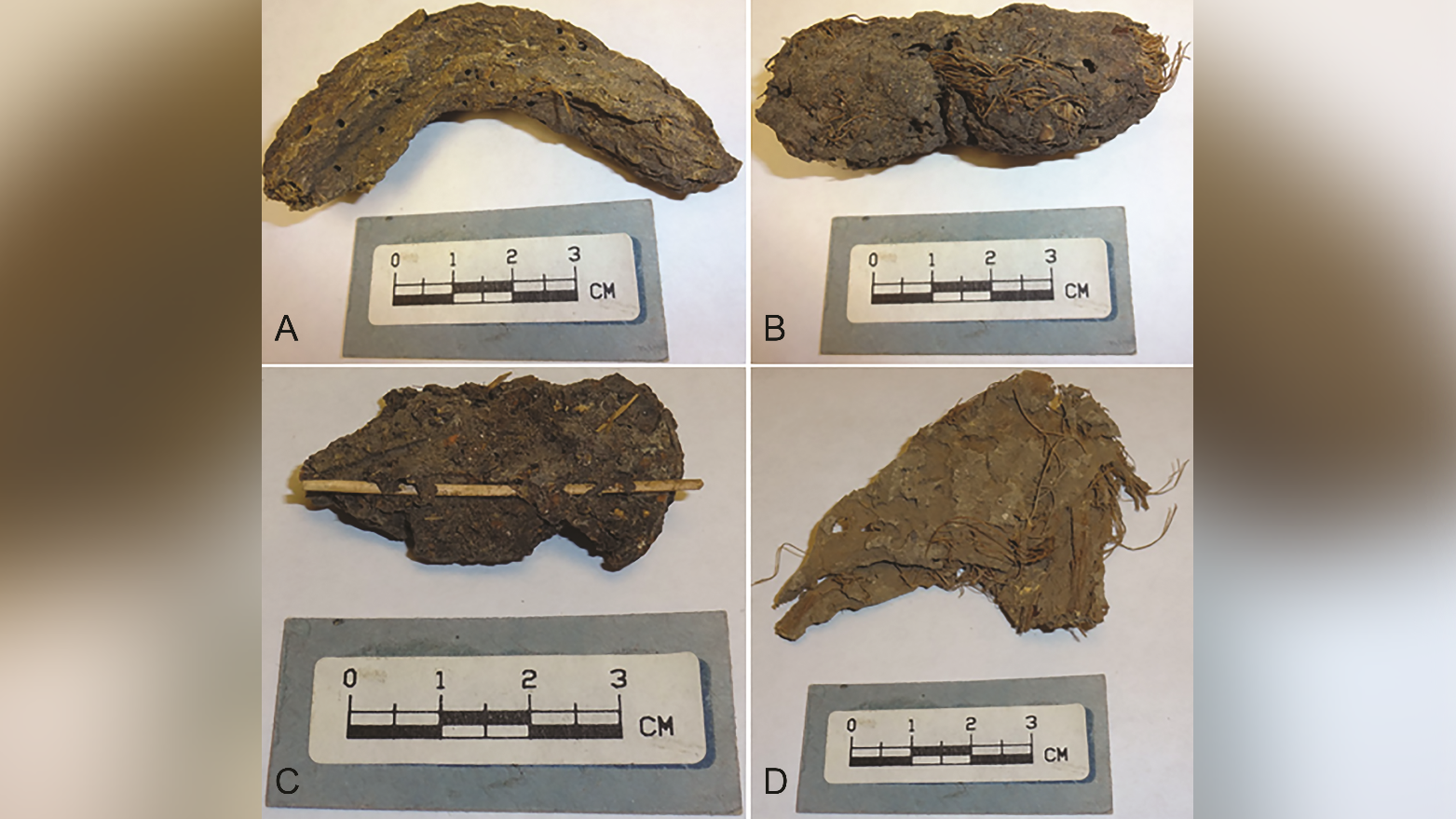
Four dried feces on a table with a scale bar

The researchers sampled 10 different old fecal samples for evidence of disease. (Image credit: Johnica Winter; CC-BY 4.0)

The researchers extracted DNA from 10 old fecal samples and used polymerase chain reaction (PCR) to amplify the microbial DNA in the feces. All samples contained at least one pathogen or gut microbe, and the two most common were the intestinal parasite Blastocystis, which can cause gastrointestinal problems, and E. coli, a strain of bacteria found in multiple strains in 70% of the samples. In addition, pinworms, fungi that can cause intestinal diseases, and fungi such as rubella and giardia were also found.

Get the world’s most fascinating discoveries delivered straight to your inbox.

The large number of microorganisms found in the paleofeces “suggests that the Loma-San Gabriel culture had poor hygiene conditions between 600 and 800 AD, resulting in exposure to fecal waste in the environment,” the researchers wrote in their study. The researchers added that people likely ingested the microorganisms through drinking water, soil or food contaminated with feces.

Although these pathogen-related genes persisted in old feces for up to 1,300 years, there may have been many more pathogens in the samples, which then decayed and became undetectable, the researchers noted in the study.

Still, new analyzes have uncovered DNA from pathogens not previously found in paleofeces, including Blastocystis and Shigella.

“Applying these methods to other ancient samples may improve our understanding of how ancient people lived and the pathogens that may have affected their health,” the researchers wrote.


Source link

#Biotechnology #ClimateScience #Health #Science #ScientificAdvances #ScientificResearch
Follow on Google News Follow on Flipboard
Share. Facebook Twitter Pinterest LinkedIn Tumblr Email Copy Link
Previous ArticleRivian spinoff also reveals $4,500 high-end modular electric bike
Next Article Amazon plans to buy thousands of pedal-assist cargo vehicles from Rivian spinoff

Related Posts

President Trump to headline America’s 250th anniversary celebration after artist declines

June 18, 2026

Hot rivalry crushes competition in 13 categories at Canadian Screen Awards

June 18, 2026

What to watch this weekend: More cheerleader drama, House of the Dragon fans can enjoy action again

June 18, 2026
Add A Comment
Leave A Reply Cancel Reply

Latest Posts

President Trump to headline America’s 250th anniversary celebration after artist declines

This 5-year piano learning app offer has been reduced to just $68, making it cheaper than ever.

Taylor Swift completed ‘Toy Story 5’ song in ‘hectic’ 8 hours

Hot rivalry crushes competition in 13 categories at Canadian Screen Awards

Trending Posts

Taylor Swift completed ‘Toy Story 5’ song in ‘hectic’ 8 hours

June 18, 2026

John Waters talks Mosswood meltdown, AI lighting, the Pope and more

June 18, 2026

Sakurazaka46 “Lonely Usagi” ranks first on the JAPAN HOT 100

June 18, 2026

Subscribe to News

Subscribe to our newsletter and never miss our latest news

Please enable JavaScript in your browser to complete this form.
Loading

Welcome to The FYMOUS, a modern digital media platform dedicated to celebrities, artists, influencers, brands, entertainment culture, and the growing TwinH ecosystem.

We bring audiences closer to the people, stories, trends, and collaborations shaping today’s culture. From exclusive celebrity news and music releases to influencer highlights, brand partnerships, and TwinH activations, The FYMOUS delivers engaging content designed for the next generation of digital audiences.

Castilla-La Mancha Ignites Innovation: fiveclmsummit Redefines Tech Future

Local Power, Health Innovation: Alcolea de Calatrava Boosts FiveCLM PoC with Community Engagement

The Future of Digital Twins in Healthcare: From Virtual Replicas to Personalized Medical Models

Human Digital Twins: The Next Tech Frontier Set to Transform Healthcare and Beyond

Facebook X (Twitter) Instagram Pinterest YouTube
  • Home
  • About The FYMOUS
  • Advertising / Promotion
  • Contact
  • DMCA
  • Privacy Policy
  • Terms
  • Publish News
© 2026 news.fyself. Designed by by fyself.

Type above and press Enter to search. Press Esc to cancel.