
Close Menu
  • Home
  • Identity
  • Inventions
  • Future
  • Science
  • Startups
  • Spanish
What's Hot

Warning of signal phishing targeting German government agencies, politicians, military personnel and journalists

Benchmark raises $225 million in special funding to double Cerebras

AI startup founder says he plans a ‘March for Billionaires’ to protest California’s wealth tax

Facebook X (Twitter) Instagram
  • Home
  • About Us
  • Advertise with Us
  • Contact Us
  • DMCA
  • Privacy Policy
  • Terms & Conditions
  • User-Submitted Posts
Facebook X (Twitter) Instagram
Fyself News
  • Home
  • Identity
  • Inventions
  • Future
  • Science
  • Startups
  • Spanish
Fyself News
Home » ‘Perfectly preserved’ Neanderthal skull suggests their noses didn’t evolve into warm air
Science

‘Perfectly preserved’ Neanderthal skull suggests their noses didn’t evolve into warm air

userBy userNovember 17, 2025No Comments4 Mins Read
Share Facebook Twitter Pinterest Telegram LinkedIn Tumblr Email Copy Link
Follow Us
Google News Flipboard
Share
Facebook Twitter LinkedIn Pinterest Email Copy Link

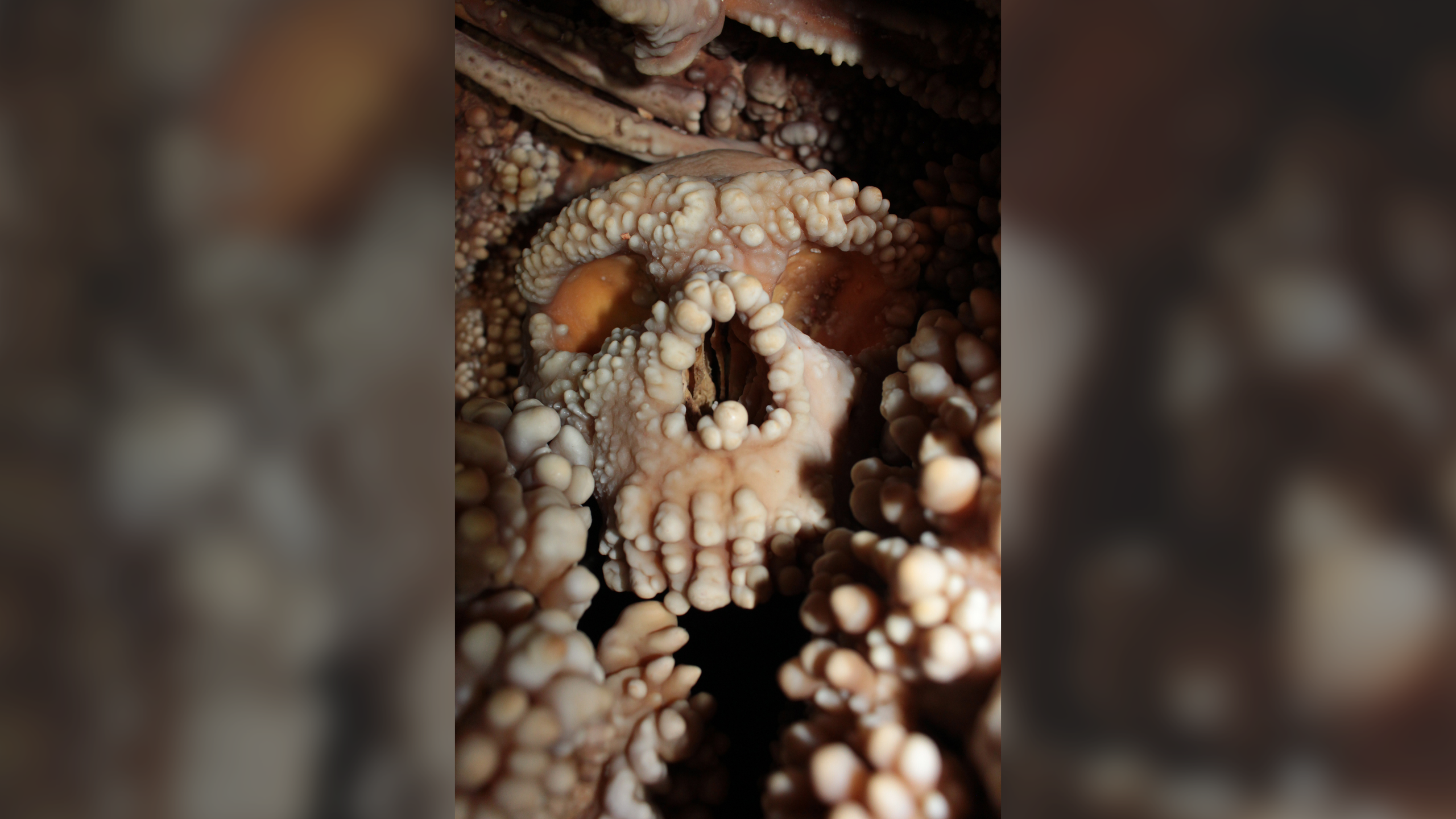
Digital analysis of a perfectly preserved nasal bone in a bizarre-looking Neanderthal skull reveals that long-standing theories about Neanderthal noses don’t pass the sniff test.

This skull belongs to the Altamura man, one of the most complete and well-preserved Neanderthal skeletons ever discovered. Speleologists discovered it in 1993 while exploring a cave near the town of Altamura in southern Italy. Altamuraman has not been removed from the cave to prevent damage to the bones, as it is covered with a thick layer of calcite, or “cave popcorn.” This Neanderthal man likely died at the exact location where the skeleton was found, between 130,000 and 172,000 years ago.

The Altamura man’s “perfectly preserved” nasal cavity is the only one in the entire human fossil record, according to a study published Monday (November 17) in the journal PNAS. These rare and fragile bones could therefore provide important information into the question of whether Neanderthal faces were adapted to cold climates.

you may like

“The general shape of Neanderthal nasal cavities and nostrils followed a very constant trend,” study lead author Costantino Busi, a paleoanthropologist at the University of Perugia, told Live Science via email. “Generally, they start out large, but over the course of evolution they get even bigger, and the last populations of this species have very large nostrils.”

One theory about Neanderthals’ large noses is that they had similarly large sinuses and strengthened airways that evolved as an adaptation to living in cold, dry environments. Their specialized nasal structures may have helped warm and humidify the air before it reached the lungs. However, all previous studies of Neanderthal nasal anatomy were based on approximations of the delicate bones within the nasal cavity. This is because these bones (ethmoid, vomer, and inferior turbinate) are broken or missing in all Neanderthal skulls discovered so far.

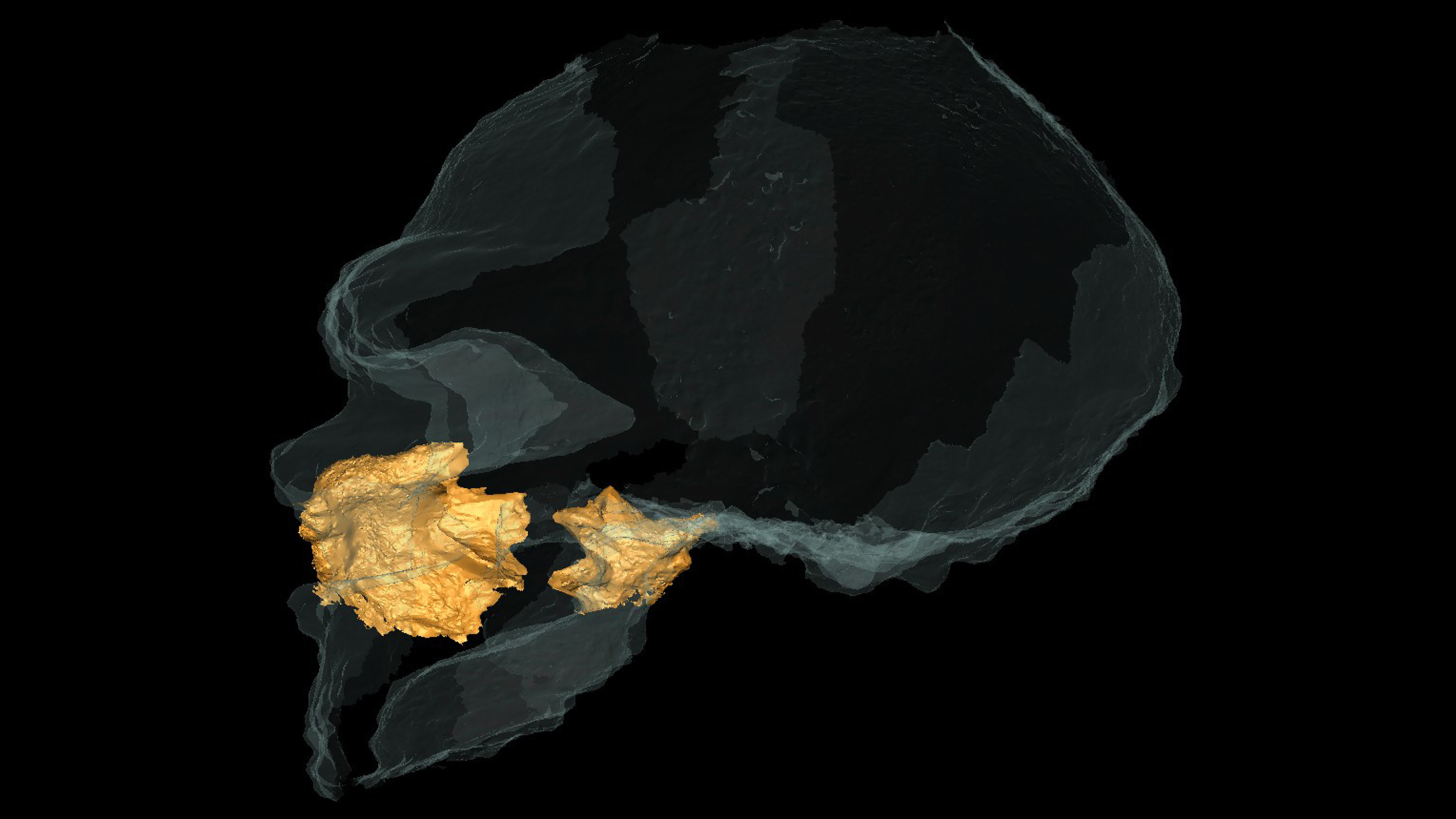
Bulli and his colleagues are working on a “virtual paleoanthropology” project to document and digitize the Altamura people without removing specimens from the caves. The researchers used an endoscopic probe to capture video from inside the nasal cavity of the skull, creating the first 3D photogrammetry model of a Neanderthal nasal bone.

Analyzing endoscopic images, researchers found that Altamura’s internal nasal structure was neither special nor substantially different from that of modern humans. The rest of the Neanderthal skeleton appeared to be adapted to the cold, with shorter limbs and a stockier build than modern humans, but not the nose.
Get the world’s most fascinating discoveries delivered straight to your inbox.

Side view of the outline of the skull with the nasal bones filled in yellow

Side view of digital reconstruction of the nasal cavity of the Altamura skull. (Image credit: Constantino Buzi/IPHES-CERCA)

Todd Ray, a paleoanthropologist at the University of Sussex who was not involved in the study, told Live Science in an email that the new study is useful because “two of the three unique features of the Neanderthal nasal cavity previously proposed do not appear to be present in this specimen.” The lack of unique features “suggests that there is previously unknown species diversity,” Ray said.

Buj agreed that there was probably some intraspecific variation among Neanderthals, but cautioned that hard evidence for this variation is limited, as Altamura is the only one to provide evidence for the internal structure of the Neanderthal nose.

But the answer to why Neanderthals had big noses may have nothing to do with biological adaptation to cold climates, Ray says.

“All early Homo species have broad noses,” Ray said. “While most Homo sapiens have broad noses, only the Nordic/Arctic peoples do not, which is a small minority of species.”

Rather than viewing the Neanderthal nose as a unique adaptation to cold climates, it is better to understand it as an efficient way to vary the temperature and humidity of the inhaled air needed to power Neanderthals’ gigantic bodies. Buj said a number of environmental pressures and physical constraints likely helped shape Neanderthal faces, “resulting in a model that replaced our faces but was perfectly adapted to the harsh climate of the late Pleistocene of Europe.”

Neanderthal quiz: How much do you know about our closest relatives?


Source link

#Biotechnology #ClimateScience #Health #Science #ScientificAdvances #ScientificResearch
Follow on Google News Follow on Flipboard
Share. Facebook Twitter Pinterest LinkedIn Tumblr Email Copy Link
Previous ArticleNever-before-seen NASA images of comet 3I/ATLAS will be released on Wednesday (November 19).
Next Article ‘Sophisticated’ Bronze Age city unearthed in Kazakhstan ‘changes our understanding of steppe societies’
user
  • Website

Related Posts

Psychedelics may rewire the brain to treat PTSD. Scientists are finally beginning to understand how.

February 6, 2026

All major galaxies except one are moving away from the Milky Way – and we finally know why

February 6, 2026

“Mono” viruses increase the risk of MS and cancer for some people. 22 genes suggest why.

February 5, 2026
Add A Comment
Leave A Reply Cancel Reply

Latest Posts

Warning of signal phishing targeting German government agencies, politicians, military personnel and journalists

Benchmark raises $225 million in special funding to double Cerebras

AI startup founder says he plans a ‘March for Billionaires’ to protest California’s wealth tax

From Svedka to Anthropic, brands are boldly leveraging AI in their Super Bowl ads

Trending Posts

Subscribe to News

Subscribe to our newsletter and never miss our latest news

Please enable JavaScript in your browser to complete this form.
Loading

Welcome to Fyself News, your go-to platform for the latest in tech, startups, inventions, sustainability, and fintech! We are a passionate team of enthusiasts committed to bringing you timely, insightful, and accurate information on the most pressing developments across these industries. Whether you’re an entrepreneur, investor, or just someone curious about the future of technology and innovation, Fyself News has something for you.

Castilla-La Mancha Ignites Innovation: fiveclmsummit Redefines Tech Future

Local Power, Health Innovation: Alcolea de Calatrava Boosts FiveCLM PoC with Community Engagement

The Future of Digital Twins in Healthcare: From Virtual Replicas to Personalized Medical Models

Human Digital Twins: The Next Tech Frontier Set to Transform Healthcare and Beyond

Facebook X (Twitter) Instagram Pinterest YouTube
  • Home
  • About Us
  • Advertise with Us
  • Contact Us
  • DMCA
  • Privacy Policy
  • Terms & Conditions
  • User-Submitted Posts
© 2026 news.fyself. Designed by by fyself.

Type above and press Enter to search. Press Esc to cancel.