
Close Menu
  • Home
  • Identity
  • Inventions
  • Future
  • Science
  • Startups
  • Spanish
What's Hot

China-linked DKnife AitM framework, routers targeted for traffic hijacking and malware distribution

Combat antimicrobial resistance with McGill rapid tests

Asian State Assistance Group TGR-STA-1030 breaches 70 governments and infrastructure-related organizations

Facebook X (Twitter) Instagram
  • Home
  • About Us
  • Advertise with Us
  • Contact Us
  • DMCA
  • Privacy Policy
  • Terms & Conditions
  • User-Submitted Posts
Facebook X (Twitter) Instagram
Fyself News
  • Home
  • Identity
  • Inventions
  • Future
  • Science
  • Startups
  • Spanish
Fyself News
Home » Photosynthetic bacteria may help reduce PFAS contamination
Inventions

Photosynthetic bacteria may help reduce PFAS contamination

userBy userDecember 1, 2025No Comments2 Mins Read
Share Facebook Twitter Pinterest Telegram LinkedIn Tumblr Email Copy Link
Follow Us
Google News Flipboard
Share
Facebook Twitter LinkedIn Pinterest Email Copy Link

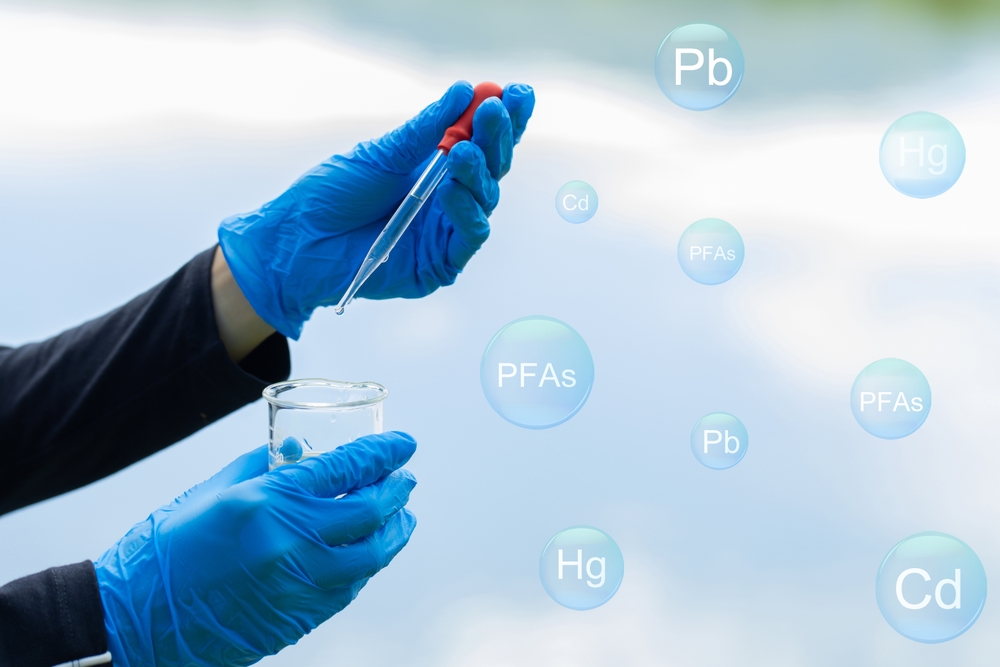
Scientists at the University of Nebraska-Lincoln Institute of Technology have discovered that widespread photosynthetic bacteria can interact with perfluorooctanoic acid, a highly resistant member of the PFAS family.

Researchers discovered that the photosynthetic bacterium Rhodopseudomonas palustris pulls PFOA into its cell membrane, and its behavior changes over time.

This discovery provides early insight into how natural microorganisms may ultimately be induced or manipulated to reduce PFAS contamination, potentially aiding efforts to protect water quality and public health.

R. palustris can remove over 40% of PFAS from its surroundings

The researchers noted that during a controlled laboratory test, R. palustris removed approximately 44% of PFOA from its environment within 20 days.

Most of the absorbed chemicals later returned to the environment, presumably because the cells were broken apart. This result highlights both the utility and challenges of relying on photosynthetic bacteria to capture or modify PFAS.

“Although R. palustris did not completely degrade the chemical, our findings suggest a step-by-step mechanism by which the bacterium initially traps PFOA in its membranes,” the researchers explained.

“This gives us a foundation to explore future genetic or systems biology interventions that may improve retention or even enable biotransformation.”

Collaborate expertise to enhance research

The university’s Aich Lab provided specialized PFAS detection capabilities, allowing the team to track PFOA levels with high precision.

At the same time, Saha’s group conducted biological experiments to examine how bacteria respond to various PFAS concentrations.

“This kind of collaboration is exactly what is needed to address complex environmental challenges,” said Richard McNeil, associate professor at Aich.

“By integrating microbiology, chemical engineering, and environmental analytical science, we can get a more complete picture of how to use biological tools to tackle PFAS contamination.”

Expanding new approaches to tackle PFAS contamination

PFAS compounds remain a global problem because they persist for long periods in soil and water.

Existing treatments can be expensive and require large amounts of energy. Microbial strategies may offer a more adaptive and less resource-intensive path forward, but substantial scientific developments are still needed.

The project’s findings point in that direction, and the research team is already planning additional research focused on microbial engineering and synthetic biology to improve future degradation capabilities.


Source link

#CreativeSolutions #DigitalTransformation. #DisruptiveTechnology #Innovation #Patents #SocialInnovation
Follow on Google News Follow on Flipboard
Share. Facebook Twitter Pinterest LinkedIn Tumblr Email Copy Link
Previous ArticleNew Albiriox MaaS malware targets over 400 apps for on-device fraud and screen control
Next Article Satellite launch tests ‘unhackable’ quantum communications
user
  • Website

Related Posts

Combat antimicrobial resistance with McGill rapid tests

February 6, 2026

How printed electronics from Tampere Uni is building a sustainable future

February 6, 2026

Puragen unveils PFAS treatment technology during UK ministerial visit

February 6, 2026
Add A Comment
Leave A Reply Cancel Reply

Latest Posts

China-linked DKnife AitM framework, routers targeted for traffic hijacking and malware distribution

Combat antimicrobial resistance with McGill rapid tests

Asian State Assistance Group TGR-STA-1030 breaches 70 governments and infrastructure-related organizations

How printed electronics from Tampere Uni is building a sustainable future

Trending Posts

Subscribe to News

Subscribe to our newsletter and never miss our latest news

Please enable JavaScript in your browser to complete this form.
Loading

Welcome to Fyself News, your go-to platform for the latest in tech, startups, inventions, sustainability, and fintech! We are a passionate team of enthusiasts committed to bringing you timely, insightful, and accurate information on the most pressing developments across these industries. Whether you’re an entrepreneur, investor, or just someone curious about the future of technology and innovation, Fyself News has something for you.

Castilla-La Mancha Ignites Innovation: fiveclmsummit Redefines Tech Future

Local Power, Health Innovation: Alcolea de Calatrava Boosts FiveCLM PoC with Community Engagement

The Future of Digital Twins in Healthcare: From Virtual Replicas to Personalized Medical Models

Human Digital Twins: The Next Tech Frontier Set to Transform Healthcare and Beyond

Facebook X (Twitter) Instagram Pinterest YouTube
  • Home
  • About Us
  • Advertise with Us
  • Contact Us
  • DMCA
  • Privacy Policy
  • Terms & Conditions
  • User-Submitted Posts
© 2026 news.fyself. Designed by by fyself.

Type above and press Enter to search. Press Esc to cancel.