

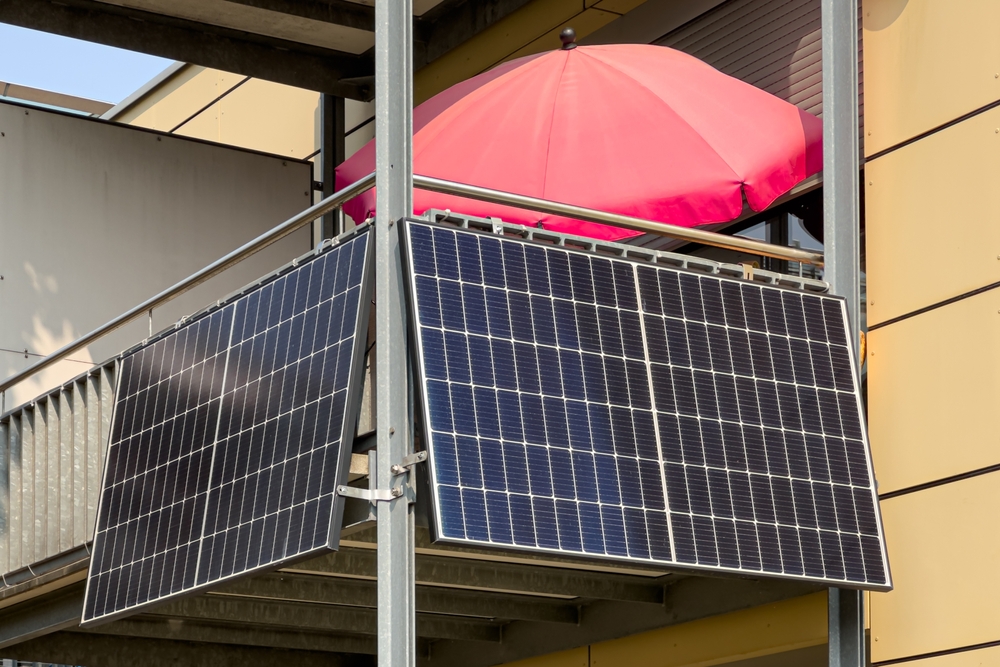
Plug-in solar panels will be rolled out in UK stores over the coming months, accelerating the government’s commitment to clean, home-grown energy in the wake of the Iran war.
Plug-in solar will help more UK households save money on their energy bills.
The current conflict highlights that the only path to energy security and sovereignty for the UK is to end dependence on fossil fuel markets and accelerate the promotion of clean domestic power generation, new renewables and nuclear power.
In response to the conflict, governments have already taken important steps to accelerate the transition to clean energy.
Last week, the government’s annual renewable energy tender was brought forward to July. The latest auction is the largest ever, and combined with previous auctions, enough clean energy has been confirmed to power 23 million homes.
How do plug-in solar panels work?
Plug-in solar panels are widely used across Europe, with around 500,000 installed each year in Germany.
Free solar power can be used through an electrical outlet with no installation costs, reducing the amount of electricity drawn from the grid and reducing overall costs.
Retailers such as Lidl and Amazon, along with manufacturers such as EcoFlow, are working with the government to enable them to enter the UK market.
Energy Secretary Ed Miliband said: “We are determined to deploy clean power to give our country energy sovereignty, whether it’s through solar panels fitted as standard on new homes or by enabling people to buy plug-in solar in stores.”
Making UK energy cleaner and cheaper
The Government is taking decisive action to protect the cost of living for consumers and businesses in response to the Middle East conflict, and is accelerating plans to increase UK-controlled, clean, indigenous energy to ensure energy sovereignty and security.
This comes into effect today alongside new rules introducing the Future Homes Standard, which includes common sense measures to ensure the majority of new homes are built to be cheap to run, with solar panels and clean heating as standard.
These measures for new homes could save families up to £830 a year on energy bills compared to a standard home with an EPC rating of C.
“Building 1.5 million new homes also means building high-quality homes that are cheaper to run and more livable,” Housing Secretary Steve Reid explained.
“With the switch to clean, home-grown energy, today’s standards will become what the future of housing can and should be. These changes will not only protect hard-working families from overseas shocks, but will also save hundreds of pounds on energy bills each year.”
This makes them more comfortable and affordable, and has at least a 75% lower carbon footprint than those manufactured to 2013 standards.
Use windy days to generate more wind energy
Additionally, an innovative approach will be launched just in time for winter, allowing energy companies to offer customers discounted energy bills on windy days.
It will primarily benefit Scotland and the east of England, where bills will be reduced in exchange for continuing the old practice of paying to shut down wind turbines.
Historical underinvestment in the UK electricity grid means wind farms in these regions are being paid to stop generating electricity on windy days when they are unable to transmit all the clean electricity they produce.
The government is now aiming to introduce new legislation to give consumers discounts on clean, home-grown electricity during times like these.
Source link
