

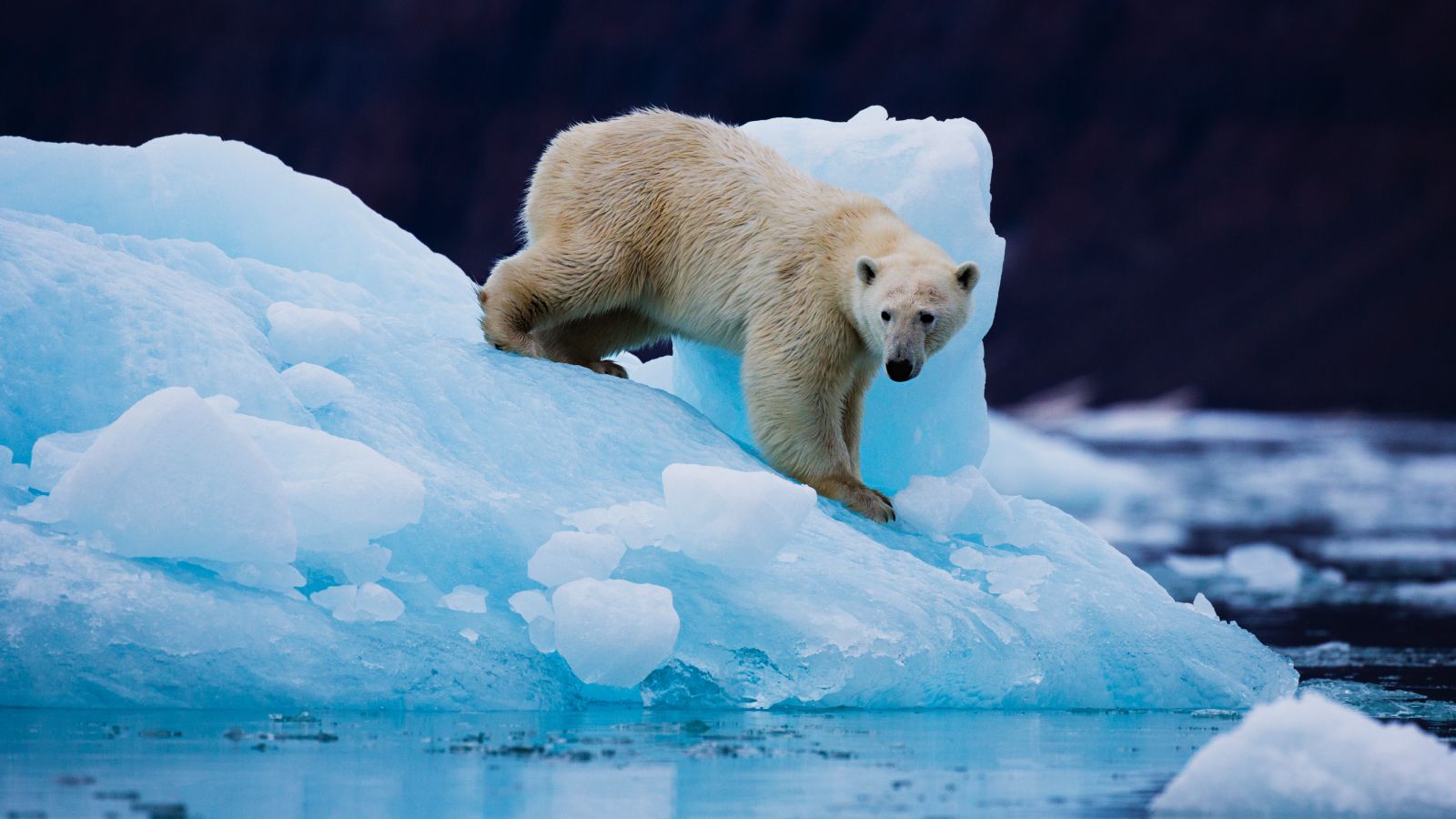
Temperature stress may be causing genetic mutations in southern Greenland’s polar bears, a new study reports.
This species is struggling in the face of global climate change. Global sea ice levels fell to record lows in February, with sea levels rising due to global warming. These changes threaten polar bears, which live and hunt on shrinking ice sheets.
you may like
The study, published Dec. 12 in the journal Mobile DNA, “shows for the first time that a unique group of polar bears in the warmest regions of Greenland use ‘jump genes’ to rapidly rewrite their DNA. This may be a desperate survival mechanism against melting sea ice,” lead author Alice Godden, a senior research fellow at the University of Anglia, UK, said in a statement.
Jumping genes, also known as transposons or transposable elements, are pieces of DNA that move from one location on the genome to another. Depending on where they are inserted into an organism’s genetic code, transposons can change the way other genes are expressed. More than a third of the polar bear genome is made up of transposable elements, while in plants this proportion can reach 70%. In contrast, transposons make up about 45% of the human genome.
Transposons appear to be helping polar bears adapt to climate change, the authors of a new study claim.

A 2022 study published in the journal Science describes an isolated polar bear population in southern Greenland, which is less dependent on sea ice. The group split from a bear community in northern Greenland about 200 years ago, and its DNA was different from that of northern bears. The new study builds on these previous findings.
Researchers analyzed the DNA of 17 adult polar bears in Greenland. Twelve of the animals were from the cool northeastern group, and five were from the warmer southeastern group. They compared transposon activity in the two populations and correlated it with climate data.
In the southeastern population, there were changes in genes related to heat stress, aging, metabolism, and even fat processing, which is important when food is scarce. According to the study, this suggests that bears “may be adapted to warmer environments.”
“When we compared active genes in these bears with local climate data, we found that rising temperatures appear to dramatically increase the activity of jump genes in the DNA of bears in southeastern Greenland,” Godden said. “Essentially, this means that different groups of bears are changing different parts of their DNA at different rates, and this activity appears to be related to their particular environment and climate.”
Despite bears’ potential to adapt to warmer climates and less ice, climate change remains a real threat to polar bears, Godden warned.
“We cannot be complacent. This gives us some hope, but it does not mean that the risk of extinction for polar bears is diminished in any way,” she said. “We need to do everything we can to reduce global carbon emissions and slow temperature rise.”
Source link
