

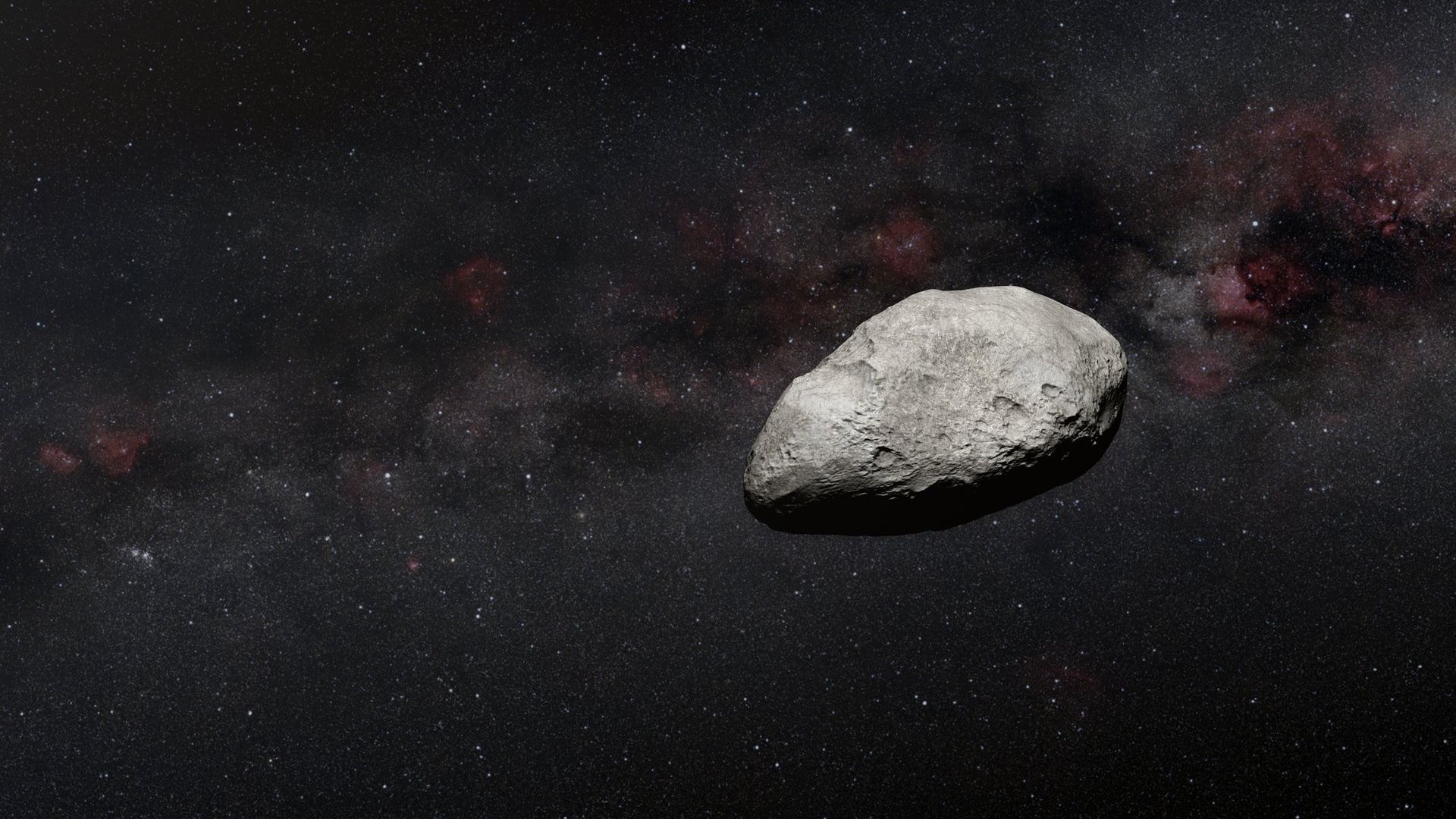
At this point in history, astronomers and engineers who grew up watching “Deep Impact” and “Armageddon,” two movies depicting the destructive power of asteroid impacts, are likely to hold relatively high positions in space agencies. Don’t Look Up also offered a more modern, but more pessimistic (or unfortunately realistic?) look at what could potentially happen if a “killer” asteroid were discovered on its approach to Earth. So far, life has not imitated art when it comes to what could be the most catastrophic event in human history, but most space enthusiasts agree it’s worth preparing for when it happens. A new paper by Maxime Devogèle and colleagues from ESA’s Near Earth Object (NEO) Coordination Center, available as a preprint on arXiv, analyzes a dry run that occurred about a year ago with the discovery of asteroid 2024 YR4.
This paper traces the process of discovery, classification, escalation, scientific response, and ultimately de-escalation that this asteroid underwent over several months. Although the asteroid early warning system worked pretty much as intended, it’s worth considering this first-ever scenario for this particular type of asteroid. This is definitely not the last time.
you may like
One important aspect of this paper is the discussion of the Turin scale. This scale, originally developed in 1995 by Dr. Richard Binzel of MIT and subsequently updated at a conference held in Turin, Italy, in June 1999, is specifically designed to classify asteroid impact threats into one of 11 categories. Importantly, each category is based on a risk assessment of both the probability of impact and the potential damage it could cause. The categories are:
Scale 0 (white) – no danger – the asteroid will miss us or burn up in the atmosphere. Scale 1 (green) – Normal – Classified when most asteroids are first discovered. Shocks are “very unlikely” and are typically downgraded to scale 0 within a few days. Scale 2 (yellow) – noteworthy – usually not a threat to the “near”, but the chance of impact is very low. This is relatively rare Scale 3 (Orange) – Concern – They have a greater than 1% chance of impacting the Earth and causing ‘local’ destruction. A similar example is the Tuskunga incident in the early 20th century. This is the rating the 2024 YR4 ultimately grew to. Scale 4 (orange) – Threat – still likely to exceed 1%, but with “regional” rather than localized devastation. Scale 5-7 (Red) – Threat – A “credible threat” of local to global destruction. No asteroid has ever been classified so highly. Scale 8-10 (red) – Certain Impact – At this level, astronomers are confident that the asteroid will hit us. Each scale number simply increases the potential destruction caused during a collision.
On January 27, 2025, 2024 YR4 was officially listed as a 3 on the Turin scale, finally ending on February 18 with an impact probability of 3.1%, making it the first asteroid in history to reach that level of scale. It’s important to note that technically this is not the highest rank ever on this scale. That distinction applies to the asteroid Apophis, which famously reached level 4 on the Turin scale in 2004. In fact, Apophis could never be classified as a 3 on the Turin scale. Because its large size would have caused regional rather than local destruction – but it’s also important to note that the threat level was brought down much more quickly than the Turin-scale level. April 2024.
watch on
Even a Scale 3 rating was enough to trigger the International Asteroid Warning Network’s first-ever official notification. This network did not exist when Apophis was discovered in 2004, but came into existence in 2014 following the 2013 Chelyabinsk asteroid explosion. Once the scale was this high, the discussion about 2024 YR4 has moved from pure scientific fact-finding to a broader consideration of the potential threat to a large portion of humanity.
The system worked as intended and attracted attention. It is true that many opinions have been received from the public and some policy makers. But perhaps more importantly, it attracted the attention of more astronomers. The increased interest has led to additional resources, including significant “Director’s discretionary time” on some of the world’s most powerful telescopes.
As these telescopes, including the Catalina Sky Survey, Gran Telescopio Canarias, and the Very Large Telescope, began to direct their optics toward the potential threat, the threat began to become less impressive. By early March, these giants had characterized many of the asteroid’s key features, including rotation and classification. It spun much faster than a typical “rubble heap” asteroid, with a rotation period of just 19.5 minutes. The asteroid was then classified as either an Sq-type or a K-type asteroid, although this remains a matter of debate as the albedo appears to vary depending on the observation platform used.
This final clarification will be an important feature, since although the threat of impact to Earth has decreased, the threat of impact to the moon has actually increased over the course of observations earlier this year. Currently, there is about a 4% chance that 2024 YR4 will collide with the Moon in 2032, which could cause widespread destruction by a debris cloud of Earth-orbiting satellites. So the planetary defense community’s job is not done yet, but so far it seems to be working as intended. One day, it will really be needed to mount a serious international response to threatening asteroids. And hopefully, the response will be better than what is depicted in the movie.
A version of this article originally appeared on Universe Today.
watch on
Source link
