

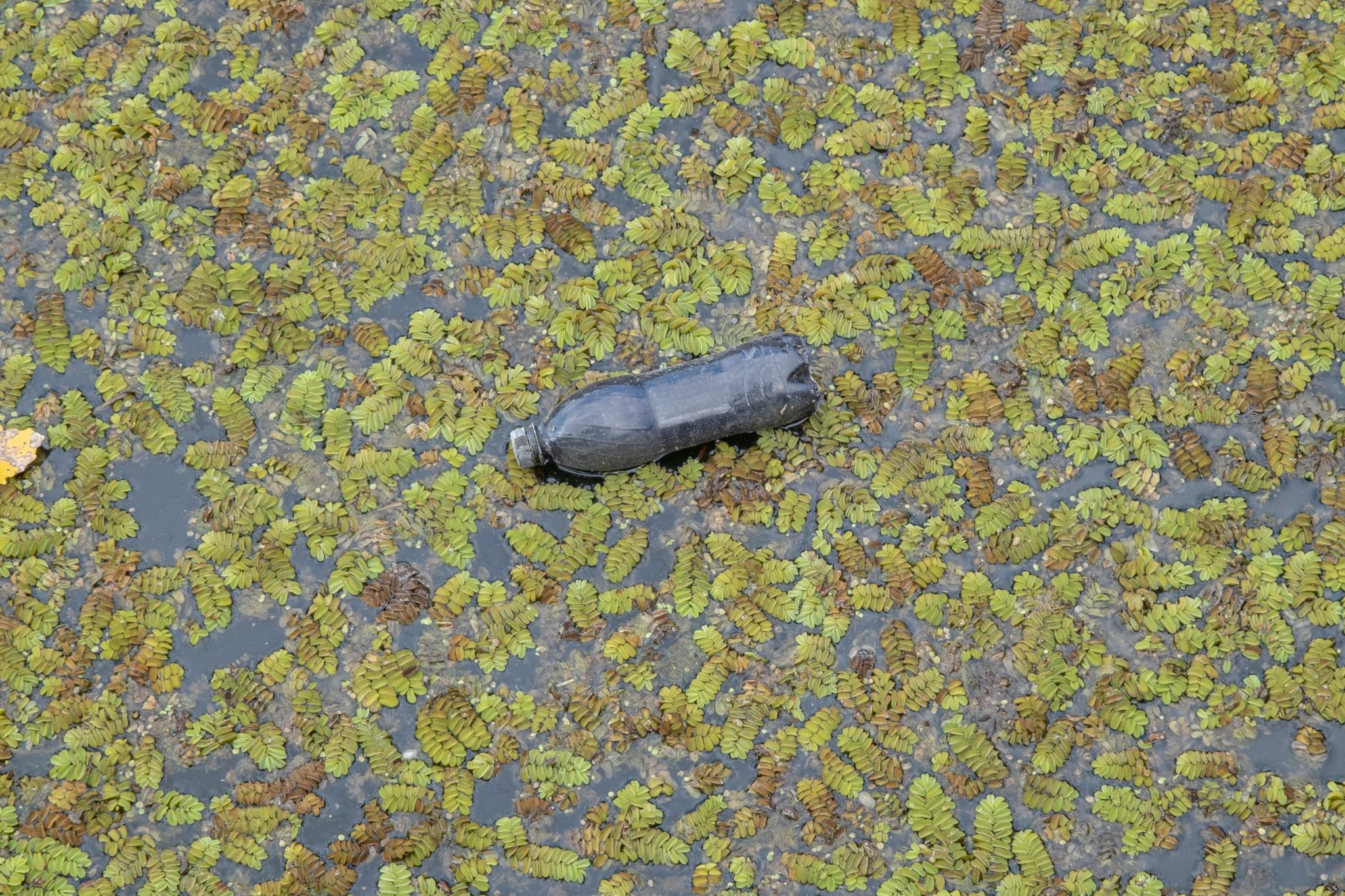
From drones and smart cameras to biodegradable packaging, EU-funded researchers are working to remove plastic from rivers before it reaches the ocean.
Gerd Everard often watched the Scheldt River flow by from his desk in his bedroom in the Belgian town of Dendermonde. Barges and small boats were adrift. Birds were fishing. However, this river was not very picturesque either. There has been a constant flow of garbage and plastic waste.
“Cars stopped and people were just throwing trash into the water,” he recalls. “There was all kinds of trash floating around. It always made me feel very sad.”
Now Everaert is doing more than just watching. As Deputy Director of Research at the Flemish Institute of Marine Research, he currently leads INSPIRE, a major EU-funded research initiative that brings together scientists and innovators from 13 EU countries plus Serbia and Thailand.
Their goal is ambitious but simple: to stop plastic in rivers before it reaches the ocean and prevent it from entering waterways in the first place.
The INSPIRE team is developing a range of new tools to help clean up Europe’s rivers. From smart detection systems using drones and AI-powered cameras to cleaning processes that can capture even the smallest plastic particles. They are also working upstream, trying to stop plastic at the source before it reaches the river.
Why are rivers important?
When people think of waterborne plastic pollution, they often think of vast masses of trash swirling in the open ocean or beaches covered in debris. But much of that plastic has started moving inland.
“Most of the plastic pollution in the ocean comes from rivers,” Everert explains. “The longer it takes to collect, the more it breaks down into microplastics and spreads out. Cleaning rivers is the most efficient way to deal with pollution, as well as preventing it in the first place.”
INSPIRE is part of Europe’s broader efforts to reduce plastic pollution. The EU aims to reduce plastic waste in the oceans by 50% and microplastics released into the environment by 30% by 2030. To achieve these goals, rivers will be central to the solution.
Unlike ocean cleanup projects, which treat waste that has already spread widely, the river-based approach allows researchers to intervene closer to the source, before plastic breaks down into smaller, harder-to-remove particles.
Please stop with the source
When it comes to contamination, prevention is even more important than removal. Once plastic enters the river system, it begins to break down. Eventually, it breaks down into tiny particles that are very difficult, and in some cases impossible, to recover.
Everaert cites packaging as one of its target areas.
“Currently, vegetables are often packaged in plastic to keep them fresh longer. We are testing whether we can replace that with chitosan, a biodegradable film derived from shellfish.”
Another target is agricultural plastics. Farmers widely use plastic films to mulch the soil to protect crops and retain moisture. However, debris often remains in the soil long after use. INSPIRE researchers are testing bio-based polymers to replace these materials that can degrade naturally rather than accumulate.
These alternatives are being tested on agricultural sites across Europe. The idea is not just to invent new materials, but to ensure they work in real-world conditions.
From the Danube to the Douro
INSPIRE researchers are developing and testing 20 different technologies on six European rivers, including the Scheldt in Belgium, the Rhine in the Netherlands, the Danube in Romania and the Douro in Portugal.
Diversity is intentional.
“Plastic pollution contains many types of polymers, and they come in many different shapes and sizes,” Everert said. “The pollution situation on the Danube is different than on the Scheldt. There is no one-size-fits-all solution.”
Some rivers may have large floating objects flowing into them. Others include more fragmented plastic waste and industrial plastic waste. Weather, transportation, urbanization, and local waste systems all influence what ends up in our waters.
To better understand and track pollution, researchers are deploying drones and AI-powered cameras that can automatically detect and classify plastic waste on riverbanks and water surfaces. These systems will help authorities identify hotspots and quickly tackle plastic removal in rivers.
Removal of plastic smaller than a hair
Researchers are also developing technology to remove plastics of all shapes and sizes from water. Microplastics and nanoplastics, one of the most challenging sources of pollution, are also the least visible.
Microplastics are particles smaller than 5 millimeters. Nanoplastics are even smaller, less than 1 micrometer in diameter. For comparison, a human hair is approximately 70 micrometers in diameter.
These particles are now present almost everywhere: in water, soil, air, and even inside the human body. Although scientists are still investigating the full health effects, early research suggests a possible link to inflammation and other health concerns, including cancer, allergies, and immune system disorders.
Delvec, a Greek nanomaterials company involved in INSPIRE, is developing a way to remove the tiniest plastic particles from water.
“I think microplastics and nanoplastics are to us what asbestos was to previous generations,” said George Deligianakis, CEO of Delbec. “We are just beginning to understand the risks, but we need to learn how to eliminate them.”
Delvec has created a prototype filter that captures nanoplastics without interfering with water flow. The filter is coated with a specially designed nanomaterial that binds to plastic particles.
“It’s like a reactive powder on the surface of the filter,” Deligiannakis explained. “It traps plastic nanoparticles as the water passes through them.”
A prototype is already being tested in Slovenia. However, it still needs to be scaled up to handle the much larger volumes handled by wastewater treatment plants.
“The next step is industrialization,” Delijanakis said. “It needs to be robust enough to withstand a full-scale treatment facility.”
Close the plastic tap in the river
INSPIRE researchers will continue their collaboration until spring 2027. By then, the team hopes to have not only delivered individual technologies, but also a practical blueprint for removing plastic from rivers, which can be rolled out across Europe.
“We need to turn off the tap on plastic,” Everard said. “Most plastic waste accumulates in rivers and can eventually be washed into the ocean.”
At the same time, he points out that rivers are more than just waterways. They are ecosystems in their own right, rich in biodiversity and essential to human communities.
For Everart, this mission remains deeply personal. The river he saw as a boy is now part of a Europe-wide effort to rethink the way plastics are used, managed and prevented.
If INSPIRE is successful, the sight of trash washing downstream may become a thing of the past. Instead of dumping plastic into the ocean, Europe’s rivers could become clean again.
Source link
