

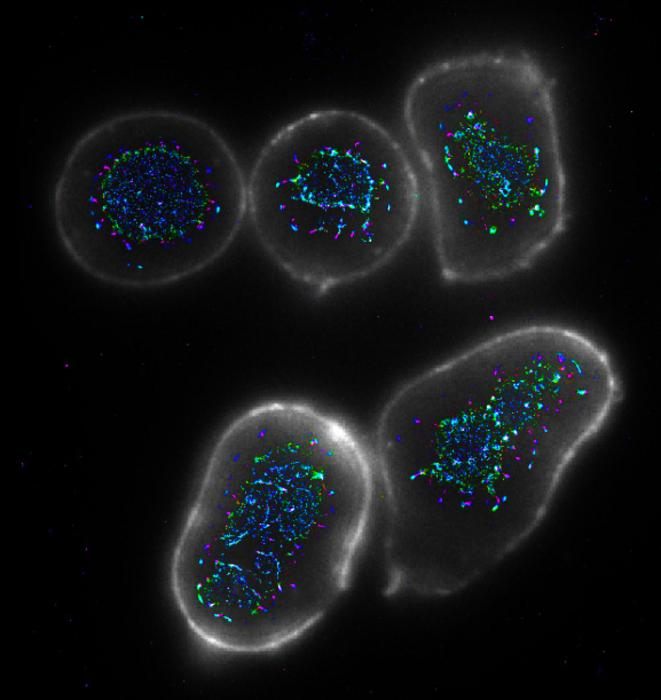
Researchers at the University of Southampton have developed a promising new way to boost the body’s immune system’s response to cancer.
They used a specially designed multifaceted antibody to make the immune response more active against cancer-killing T cells.
Antibodies work by “capturing” and “clustering” multiple immune cell receptors, thereby boosting the signal that tells T cells to attack cancer.
They achieved this by focusing on an immune receptor called CD27, which requires a matching key (ligand) to activate T cells. This ligand is naturally produced in response to infection, but cancers lack this signal, and T cells are able to elicit only a weak response against cancer cells.
Tetraantennary antibodies revolutionize immune responses
Antibodies act like master keys, but the most commonly used antibodies are Y-shaped molecules with two prongs, meaning they can only bind to two receptors at the same time.
Antibodies have revolutionized cancer treatment, but some cancers don’t respond because T cells don’t receive all the signals they need to fully activate.
The antibody the researchers developed has four prongs, allowing it to capture more receptors and improve the body’s immune response.
They also force all the CD27 receptors they hold together to clump together with the help of a second cell. This amplifies the signal and mimics the body’s natural activation of CD27.
Professor Aymen Al Shamkhani from the University of Southampton, who led the study, explains:
“Antibodies are reliable molecules that make for great drugs. But the natural antibody form wasn’t powerful enough, so we needed to create a more effective version.”
New antibodies target T cells more effectively
In laboratory studies using mouse and human immune cells, the new antibody was more effective than standard Y-shaped antibodies at activating CD8+ T cells, the “special power” of the immune system, resulting in stronger anti-tumor responses.
By increasing CD27’s responsiveness to therapeutic targets, the findings provide a blueprint for developing next-generation immunotherapies that harness the immune system to more effectively fight cancer.
Professor Al Shamkhani concluded: “This approach could help improve cancer treatments in the future by enabling the immune system to reach its full potential.”
Source link
