

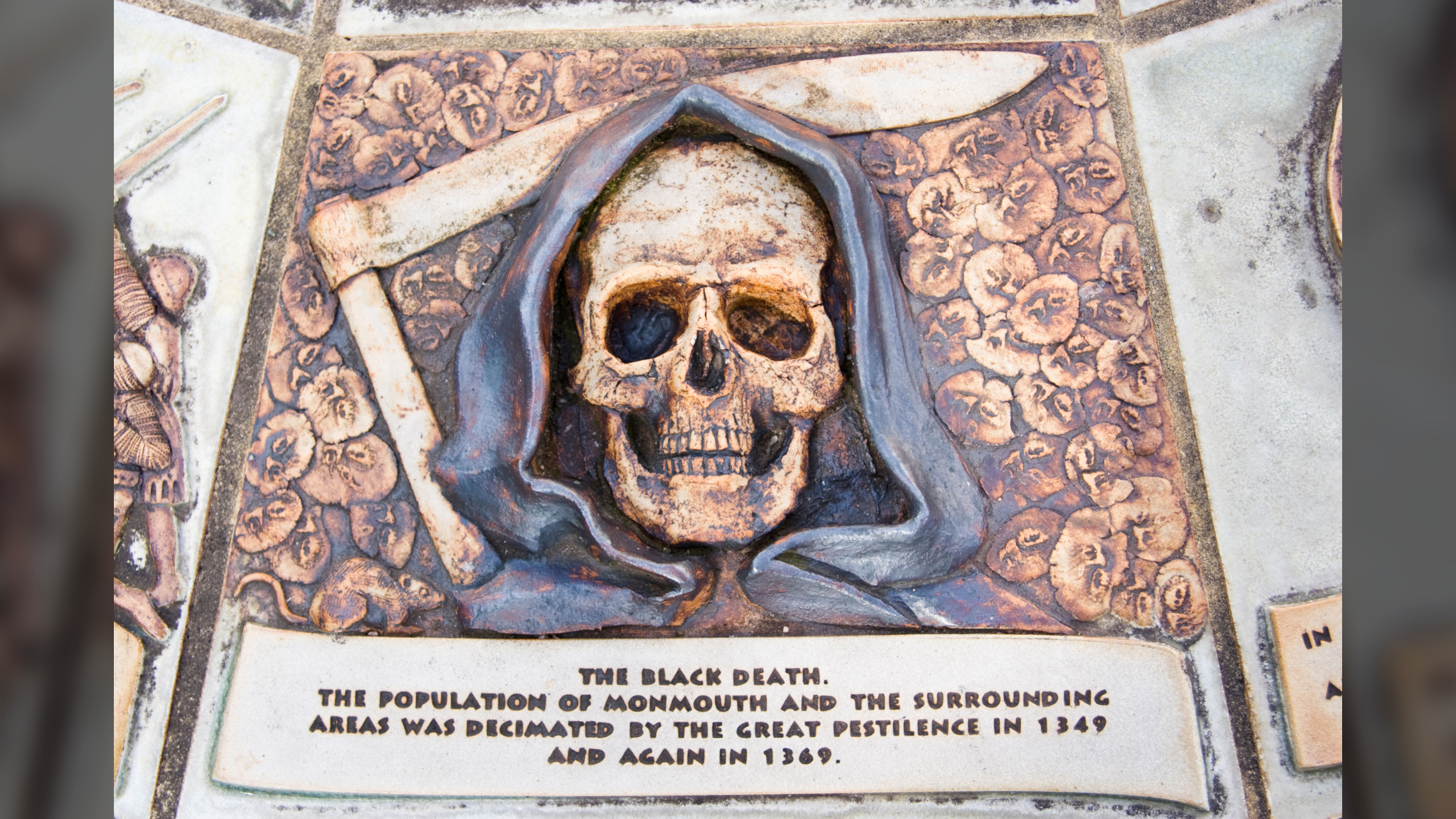
An unknown volcanic eruption in the mid-14th century may have set the stage for the spread of the Black Death in Europe, according to new research. The eruption caused a period of cool and cloudy weather in the Mediterranean Sea, setting off a domino effect that led to a decline in agricultural production. Merchants therefore had to import grain and the Yersinia pestis bacteria that causes bubonic plague via the Black Sea.
The bubonic plague pandemic, commonly known as the Black Death, reached Europe in 1347 and quickly affected the port cities of Italy. The plague then spread across Europe over several years, killing between 30% and 60% of the population.
you may like
To answer this question, Bauch and Cambridge University geographer Ulf Bungen investigated climate changes in the Mediterranean that might explain the sudden appearance of the Black Death in 1347. Their research was published Thursday (December 4) in the journal Communication, Earth & Environment.
When reviewing contemporary historical accounts, the researchers noticed reports of decreased sunlight, increased cloudiness, and darker lunar eclipses reported independently by some observers in Asia and Europe from 1345 to 1349. All of these astronomical and meteorological phenomena can be attributed to large volcanic aerosol layers, and sulfate aerosols are known to reflect sunlight back into space, causing cold waves.
Paleoclimate data gave researchers a clue: The presence of large amounts of sulfur in polar ice cores suggested that a previously unknown volcano erupted at least once around 1345.
“You can’t say much about volcanic eruptions,” Bauch said. “Ice cores detected similar concentrations of sulfate in both the Arctic and Antarctic ice, indicating that the eruption must have occurred in the tropics.”
The researchers also looked at tree-ring data from across Europe and found that the summers of 1345, 1346, and 1347 were much colder than usual, and the autumns were much wetter, causing soil erosion and flooding. Historical records confirm that environmental changes reduced the yields of many crops, including grape harvests and grain production in Italy, forcing merchants to start importing products from the Black Sea region to prevent starvation.
“However, the returning Italian trading fleets in late 1347 AD not only brought grain back to Mediterranean ports, but also carried the plague bacterium Yersinia pestis, probably via fleas that fed on grain dust during their long journey,” the researchers wrote in their study.
Just a few weeks after the last grain ship arrived, the first case of plague in humans was reported in Venice. “This starts a typical infection cycle,” Bauch said. “The rodent population is infected first, but once the rodent population dies, the fleas move on to other mammals and eventually humans.”
you may like
Therefore, the study authors proposed that grain imports after several years of volcanic climate change prevented famine across the Mediterranean but brought the Black Death to Europe.
“This study brings new information about the 1345 volcano and helps explain why the Black Death, a well-documented plague from 1346 to 1350, actually occurred,” Monica H. Green, an independent scholar and Black Death expert who was not involved in the study, told Live Science in an email. “But this happened even though the rodent and insect vector ‘epidemic infrastructure’ was already established, because local sources of infection were already established.”
The onset of the Black Death was caused by a unique but random combination of short-term factors, such as climate, and long-term factors, such as Italy’s grain distribution system, the researchers said in the study.
Even though the Black Death was caused by a rare combination of environmental and social factors, it is important to better understand the causes of past pandemics, the researchers wrote. This is because “a globalized world and a warmer world are likely to increase the probability that zoonotic diseases will emerge and lead to pandemics.”
Source link
