

Close Menu
  • Home
  • Identity
  • Inventions
  • Future
  • Science
  • Startups
  • Spanish
What's Hot

Google is trying to tackle long-standing RCS spam in India, but it’s not alone

OpenAI reveals details about agreement with Department of Defense

Honor launches new slim foldable Magic V6 with 6,600 mAh battery

Facebook X (Twitter) Instagram
  • Home
  • About Us
  • Advertise with Us
  • Contact Us
  • DMCA
  • Privacy Policy
  • Terms & Conditions
  • User-Submitted Posts
Facebook X (Twitter) Instagram
Fyself News
  • Home
  • Identity
  • Inventions
  • Future
  • Science
  • Startups
  • Spanish
Fyself News
Home » ‘Revolutionary’: Vera C. Rubin Observatory discovers 800,000 interesting objects in one night
Science

‘Revolutionary’: Vera C. Rubin Observatory discovers 800,000 interesting objects in one night

userBy userFebruary 26, 2026No Comments3 Mins Read
Share Facebook Twitter Pinterest Telegram LinkedIn Tumblr Email Copy Link
Follow Us
Google News Flipboard
Share
Facebook Twitter LinkedIn Pinterest Email Copy Link

The newly commissioned Vera C. Rubin Observatory issued 800,000 astronomical alerts in just one night. This is a staggering number of nighttime discoveries and is expected to increase almost tenfold by the end of this year.

Representatives from the US National Science Foundation (NSF) said in a statement that the telescope, which scans the entire sky from its perch atop Chile’s Cerro Pachón mountain, issued an alert to alert scientists to “new asteroids, star explosions, and other changes in the night sky.”

And Rubin is just getting started, as scientists expect it to eventually issue 7 million alerts each night.

you may like

“By connecting scientists to a vast and continuous flow of information, [the observatory] Luca Rizzi, NSF program director for research infrastructure, said in a statement that it will be possible to track cosmic events as they unfold, from the most explosive to the most faint and ephemeral.

Capturing supernovae, asteroids, and interstellar objects
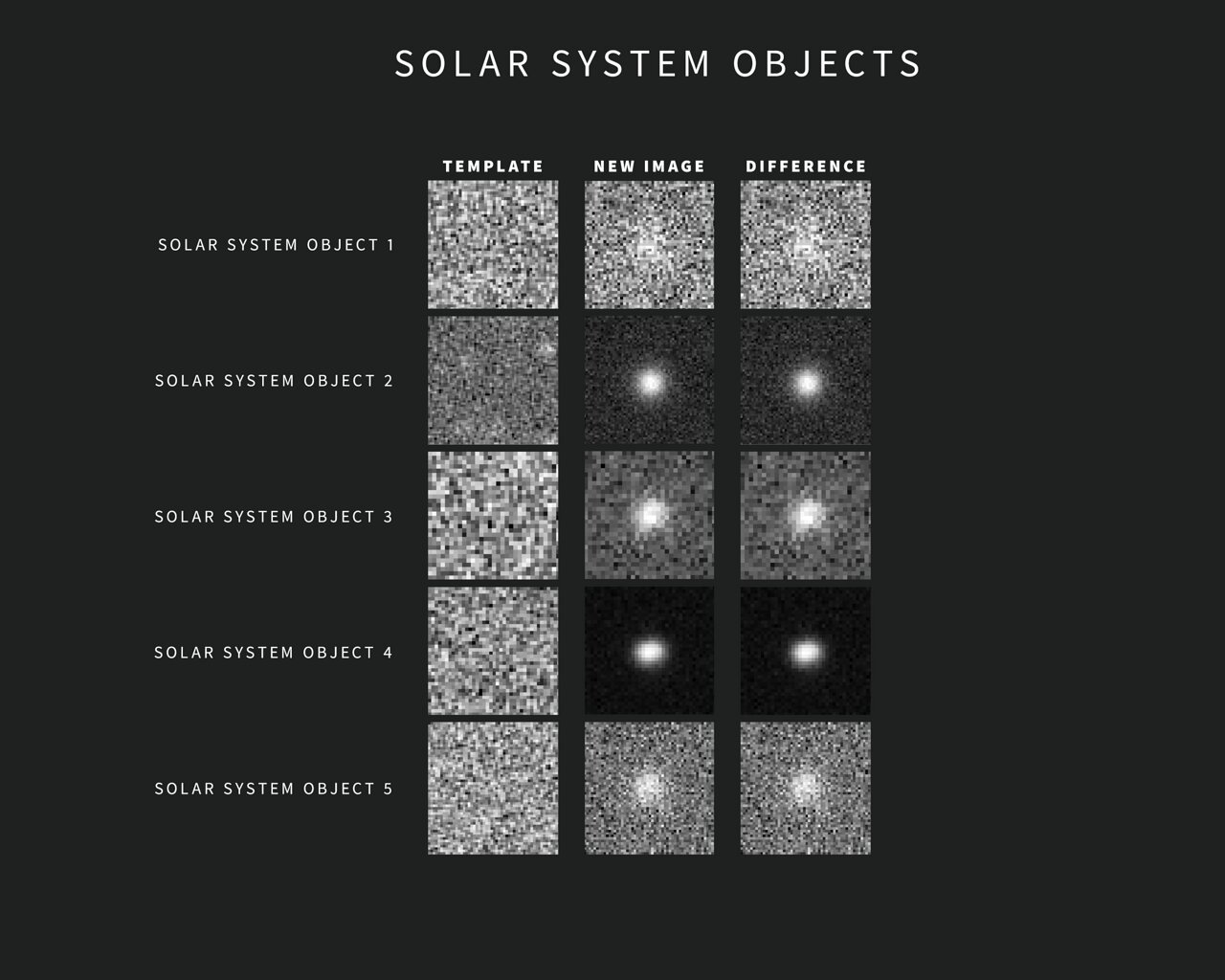
Table showing changes in the five celestial bodies of the solar system overnight

A sample of five solar system objects whose brightness and position changed during Rubin’s night observations. According to the NSF, “As new images are taken, Rubin Observatory’s advanced software automatically compares each image to a template image. The template image, built by combining previous images of the same area taken by Rubin with the same filter, is subtracted from the new image, leaving only the changes.” (Image credit: NSF–DOE Vera C. Rubin Observatory/NOIRLab/SLAC/AURA)

NSF noted that these alerts will allow scientists to collaborate at an unprecedented level, as Rubin quickly finds information that can be followed up with other telescopes on the ground and in space. Rubin’s alert could also shed light on ongoing astronomical mysteries that require quick pathfinding to gather more information.

“Scientists will have an improved ability to catch supernovae in their early stages, discover and track asteroids to assess potential threats to Earth, and discover rare interstellar objects racing through our solar system,” NSF representatives said in a statement. “Scientists will be able to use these data to better understand the nature of dark matter, dark energy, and other unknown aspects of the universe.”

Rubin’s warning system is activated just before the observatory begins a 10-year program known as the Legacy Survey of Space and Time (LSST) later this year. Using the largest digital camera ever built, Rubin will generate images of the entire Southern Hemisphere sky every few nights, scanning the sky each night to identify changes in the landscape overhead.

Get the world’s most fascinating discoveries delivered straight to your inbox.

“The innovation of Rubin is its ability to capture both rapid changes and long-term evolution of the sky,” Rosalia Bonito, a researcher at Italy’s National Institute of Astrophysics and co-chair of the Rubin LSST Transients and Variable Stars Scientific Cooperation, said in a statement.

The observatory’s debut images, released in June 2025, revealed more than 10 million galaxies in and around the Virgo cluster, many of which had never been studied before, and 2,000 undiscovered asteroids discovered after just a few nights of observation.

According to NSF, in the first year of the LSST program alone, it is expected to image more objects in the night sky than all other optical observatories combined throughout human history. Each nightly LSST observation generates 10 terabytes of data, but achieving this milestone also required background engineering in image processing, databases, and data distribution.

All of the observatory’s alerts can be viewed for free on the alert broker website ANTARES.

Editor’s note: This article was updated on Feb. 26 at 2:50 p.m. with additional images and quotes.


Source link

#Biotechnology #ClimateScience #Health #Science #ScientificAdvances #ScientificResearch
Follow on Google News Follow on Flipboard
Share. Facebook Twitter Pinterest LinkedIn Tumblr Email Copy Link
Previous ArticleBumble adds AI-powered photo feedback and profile guidance tools
Next Article Read AI launches email-based “digital twin” to help with scheduling and answers
user
  • Website

Related Posts

History of Science: Discovery of Carbon-14 Opens Window on Past Civilizations — February 27, 1940

March 1, 2026

This week’s science news: Spider webs on Mars, tigers returned to Kazakhstan, 2,000-year-old skull with permanently blackened teeth

February 28, 2026

Passing this new AI exam (which its creators say is the world’s most difficult) could show the first signs of AGI

February 27, 2026
Add A Comment
Leave A Reply Cancel Reply

Latest Posts

Google is trying to tackle long-standing RCS spam in India, but it’s not alone

OpenAI reveals details about agreement with Department of Defense

Honor launches new slim foldable Magic V6 with 6,600 mAh battery

SaaS inflow, SaaS outflow: Here’s what drives SaaSpocalypse

Trending Posts

Subscribe to News

Subscribe to our newsletter and never miss our latest news

Please enable JavaScript in your browser to complete this form.
Loading

Welcome to Fyself News, your go-to platform for the latest in tech, startups, inventions, sustainability, and fintech! We are a passionate team of enthusiasts committed to bringing you timely, insightful, and accurate information on the most pressing developments across these industries. Whether you’re an entrepreneur, investor, or just someone curious about the future of technology and innovation, Fyself News has something for you.

Castilla-La Mancha Ignites Innovation: fiveclmsummit Redefines Tech Future

Local Power, Health Innovation: Alcolea de Calatrava Boosts FiveCLM PoC with Community Engagement

The Future of Digital Twins in Healthcare: From Virtual Replicas to Personalized Medical Models

Human Digital Twins: The Next Tech Frontier Set to Transform Healthcare and Beyond

Facebook X (Twitter) Instagram Pinterest YouTube
  • Home
  • About Us
  • Advertise with Us
  • Contact Us
  • DMCA
  • Privacy Policy
  • Terms & Conditions
  • User-Submitted Posts
© 2026 news.fyself. Designed by by fyself.

Type above and press Enter to search. Press Esc to cancel.