
Close Menu
  • Home
  • Identity
  • Inventions
  • Future
  • Science
  • Startups
  • Spanish
What's Hot

Resolve AI, a startup led by former Splunk executives, reaches $1 billion Series A valuation

Establish a venture-backable company in a highly regulated field

Cursor continues acquisition spree with deal with Graphite

Facebook X (Twitter) Instagram
  • Home
  • About Us
  • Advertise with Us
  • Contact Us
  • DMCA
  • Privacy Policy
  • Terms & Conditions
  • User-Submitted Posts
Facebook X (Twitter) Instagram
Fyself News
  • Home
  • Identity
  • Inventions
  • Future
  • Science
  • Startups
  • Spanish
Fyself News
Home » Russian-linked hackers use Microsoft 365 device code phishing to take over accounts
Identity

Russian-linked hackers use Microsoft 365 device code phishing to take over accounts

userBy userDecember 19, 2025No Comments3 Mins Read
Share Facebook Twitter Pinterest Telegram LinkedIn Tumblr Email Copy Link
Follow Us
Google News Flipboard
Share
Facebook Twitter LinkedIn Pinterest Email Copy Link

December 19, 2025Ravi LakshmananCyber ​​security/cloud security

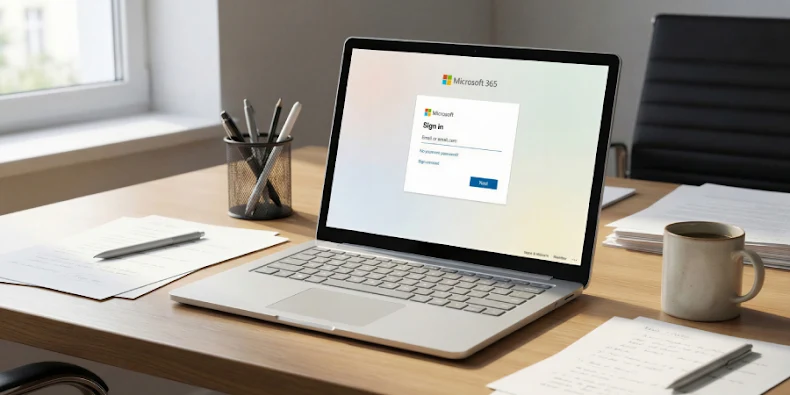
A group believed to be affiliated with Russia is believed to be behind a phishing campaign that uses device code authentication workflows to steal victims’ Microsoft 365 credentials and conduct account takeover attacks.

This activity, which has been ongoing since September 2025, is tracked by Proofpoint under the name UNK_AcademicFlare.

This attack involves attacks on organizations within the government, think tanks, higher education, and transportation sectors in the United States and Europe using compromised email addresses belonging to government and military organizations.

“Typically, these compromised email addresses are used for innocuous activities and rapport building related to the target’s field of expertise in order to ultimately arrange fictitious meetings or interviews,” the enterprise security firm said.

cyber security

As part of these efforts, the attackers claim to share links to documents containing questions and topics that email recipients can review before the meeting. This URL points to a Cloudflare Worker URL that mimics the compromised sender’s Microsoft OneDrive account and instructs victims to copy the provided code and click “Next” to access the supposed document.

However, upon doing so, the user is redirected to a legitimate Microsoft device code login URL, and once the previously provided code is entered, the service generates an access token, which the three attackers then recover to take control of the victim’s account.

Device code phishing was well documented by both Microsoft and Volexity in February 2025, and the use of this attack technique has been attributed to Russian-aligned clusters including Storm-2372, APT29, UTA0304, and UTA0307. For the past few months, Amazon Threat Intelligence and Volexity have warned of continued attacks by Russian threat actors exploiting device code authentication flows.

Proofpoint said UNK_AcademicFlare was likely a Russian-aligned threat actor, given its targeting of Russian experts at multiple think tanks, the Ukrainian government, and energy sector organizations.

The company’s data shows that several state-aligned and financially motivated attackers are using phishing tactics to trick users into granting access to their Microsoft 365 accounts. This includes an electronic crime group named TA2723 that uses payroll-related phishing emails to lure users to fake landing pages and trigger device code verification.

cyber security

The October 2025 campaign is credited with being facilitated by the ready availability of crimeware products such as the Graphish phishing kit and red team tools such as SquarePhish.

“Like SquarePhish, this tool is designed to be easy to use and does not require advanced technical expertise, lowering the barrier to entry and allowing even less skilled attackers to conduct sophisticated phishing campaigns,” Proofpoint said. “The ultimate goal is unauthorized access to sensitive personal or organizational data, which can be used for credential theft, account takeover, and further security breaches.”

The best option to combat the risk posed by device code phishing is to create a conditional access policy with an authentication flow condition to block device code flow for all users. If that’s not possible, we recommend using a policy that allows device code authentication for authorized users, operating systems, or IP ranges using an allow list approach.


Source link

#BlockchainIdentity #Cybersecurity #DataProtection #DigitalEthics #DigitalIdentity #Privacy
Follow on Google News Follow on Flipboard
Share. Facebook Twitter Pinterest LinkedIn Tumblr Email Copy Link
Previous ArticleKnown uses voice AI to support more direct dating
Next Article Netflix is ​​betting that podcasts will become the new daytime talk show
user
  • Website

Related Posts

Cracked software and YouTube videos spread CountLoader and GachiLoader malware

December 19, 2025

WatchGuard warns of active exploitation of critical Fireware OS VPN vulnerability

December 19, 2025

Nigeria arrests RaccoonO365 phishing developer involved in Microsoft 365 attack

December 19, 2025
Add A Comment
Leave A Reply Cancel Reply

Latest Posts

Resolve AI, a startup led by former Splunk executives, reaches $1 billion Series A valuation

Establish a venture-backable company in a highly regulated field

Cursor continues acquisition spree with deal with Graphite

Elon Musk’s $56 billion Tesla pay package reinstated by Delaware Supreme Court

Trending Posts

Subscribe to News

Subscribe to our newsletter and never miss our latest news

Please enable JavaScript in your browser to complete this form.
Loading

Welcome to Fyself News, your go-to platform for the latest in tech, startups, inventions, sustainability, and fintech! We are a passionate team of enthusiasts committed to bringing you timely, insightful, and accurate information on the most pressing developments across these industries. Whether you’re an entrepreneur, investor, or just someone curious about the future of technology and innovation, Fyself News has something for you.

Castilla-La Mancha Ignites Innovation: fiveclmsummit Redefines Tech Future

Local Power, Health Innovation: Alcolea de Calatrava Boosts FiveCLM PoC with Community Engagement

The Future of Digital Twins in Healthcare: From Virtual Replicas to Personalized Medical Models

Human Digital Twins: The Next Tech Frontier Set to Transform Healthcare and Beyond

Facebook X (Twitter) Instagram Pinterest YouTube
  • Home
  • About Us
  • Advertise with Us
  • Contact Us
  • DMCA
  • Privacy Policy
  • Terms & Conditions
  • User-Submitted Posts
© 2025 news.fyself. Designed by by fyself.

Type above and press Enter to search. Press Esc to cancel.