

Close Menu
  • Home
  • Identity
  • Inventions
  • Future
  • Science
  • Startups
  • Spanish
What's Hot

Consumer watchdog warns about Google’s AI agent shopping protocols — Google says she’s wrong

Ring founder details camera company’s ‘intelligent assistant’ era

Doctors think AI can play a role in medicine, but maybe not as chatbots

Facebook X (Twitter) Instagram
  • Home
  • About Us
  • Advertise with Us
  • Contact Us
  • DMCA
  • Privacy Policy
  • Terms & Conditions
  • User-Submitted Posts
Facebook X (Twitter) Instagram
Fyself News
  • Home
  • Identity
  • Inventions
  • Future
  • Science
  • Startups
  • Spanish
Fyself News
Home » Scientists placed moss on the outside of the International Space Station for nine months and then continued to grow it on Earth
Science

Scientists placed moss on the outside of the International Space Station for nine months and then continued to grow it on Earth

userBy userNovember 20, 2025No Comments3 Mins Read
Share Facebook Twitter Pinterest Telegram LinkedIn Tumblr Email Copy Link
Follow Us
Google News Flipboard
Share
Facebook Twitter LinkedIn Pinterest Email Copy Link

Scientists have found that moss spores can survive long-duration space travel. The spores spent nine months outside the International Space Station (ISS) before returning to Earth, where more than 80% of the spores were still able to reproduce.

The discovery deepens our understanding of how plant species survive in extreme conditions, the researchers said in a study published Thursday (Nov. 20) in the journal iScience.

Mosses thrive in some of the harshest environments on Earth, from the cold peaks of the Himalayas to the dry, scorched sands of Death Valley. Moss’s resilience to adverse conditions makes it an ideal candidate for surviving in the harsh environment of outer space, where extreme temperature fluctuations, changes in gravity, and high radiation exposure push life to its limits.

you may like

Previous experiments have investigated how plants might cope in space, but so far they have focused on larger organisms such as bacteria and crops. Now, researchers have shown that samples of the moss Physcomitrium patens (P. Patens) can not only survive, but thrive in space.
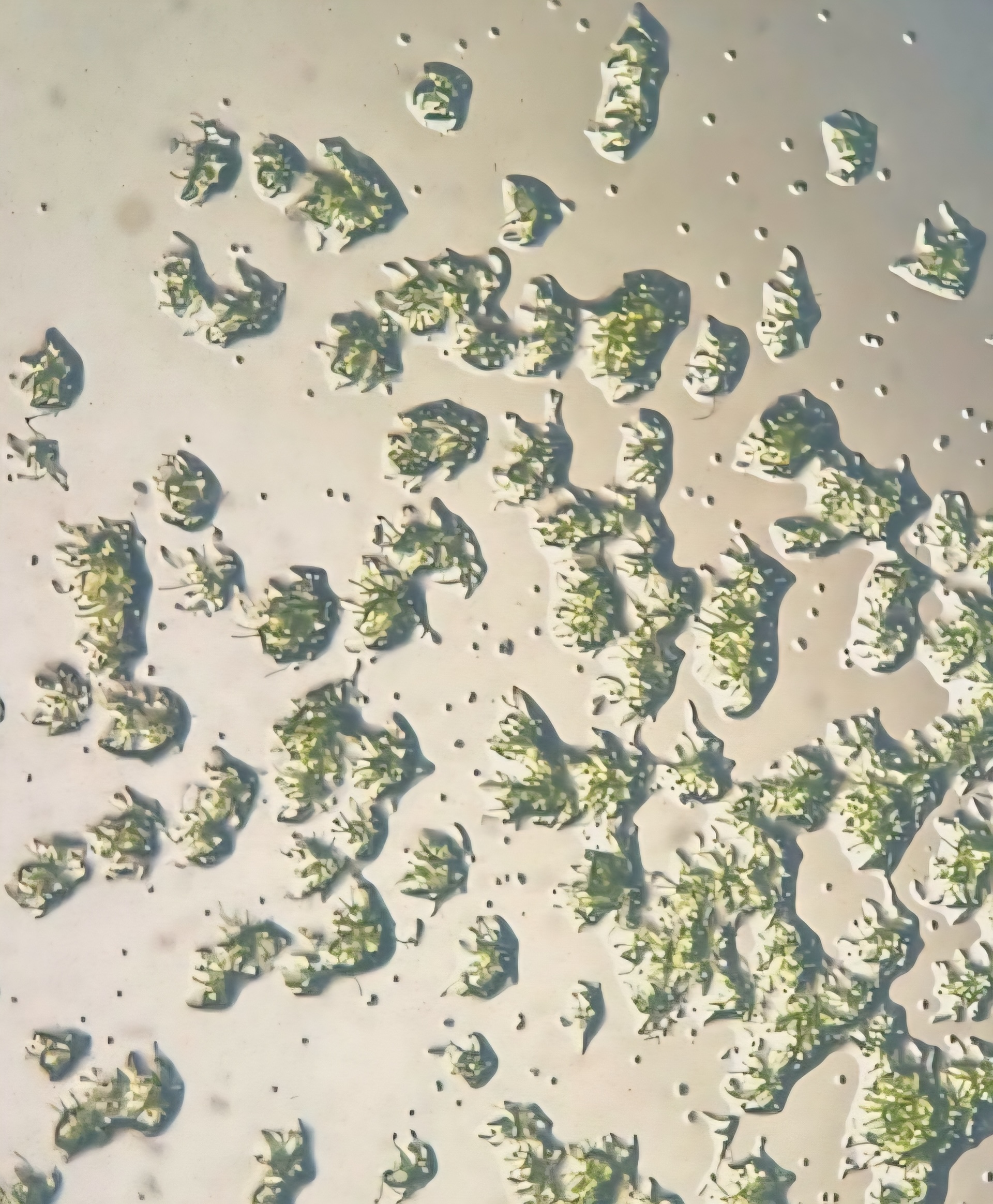
Microscopic image of moss spores

About 80% of the moss spores continued to germinate even after returning to Earth. (Image credit: Dr. Chang-hyun Meng and Maika Kobayashi)

First, the researchers tested three types of P. patens cells from different stages of the moss’ reproductive cycle. They found that the sporophyte (the cellular structure that encases the spore) exhibits the greatest stress resistance when exposed to ultraviolet (UV) light, freezing, and heat.

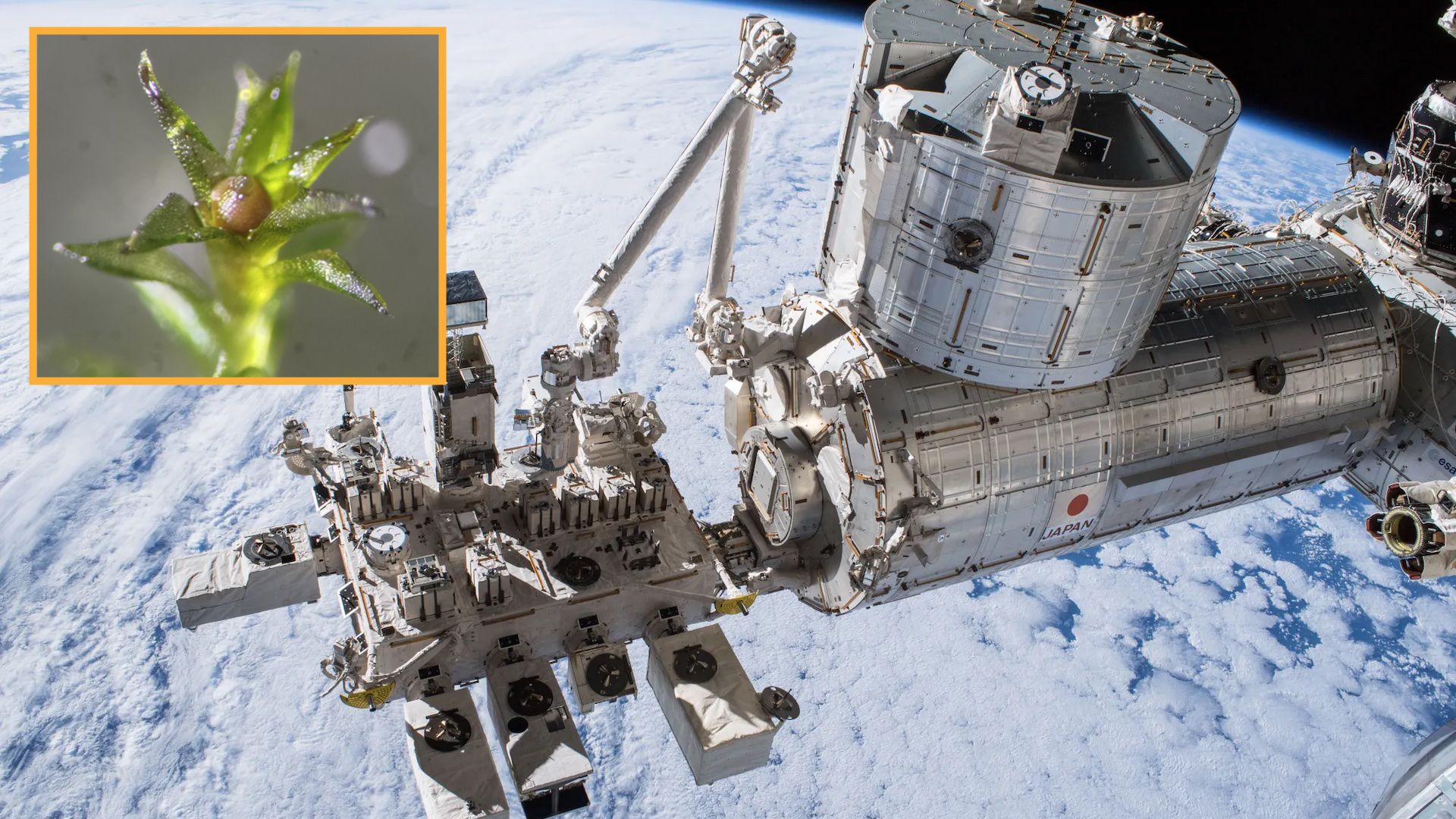
The sporophyte samples were then placed outside the ISS in a special exposure facility attached to Japan’s Kibo module, where they survived for about nine months in 2022. After this period, the samples were returned to Earth.

“Surprisingly, more than 80% of the spores survived and many germinated normally,” study lead author Tomomichi Fujita, a professor of plant biology at Hokkaido University in Japan, told Live Science in an email. From this research, Fujita and his team developed a model that suggests moss spores can actually survive in space for up to 5,600 days, or about 15 years.

Get the world’s most fascinating discoveries delivered straight to your inbox.

Back on Earth, the team found that most conditions, including the vacuum of space, microgravity, and extreme temperature fluctuations, had a limited effect on moss spores. However, samples exposed to light, especially UV light at high-energy wavelengths, did not fare as well. Levels of pigments such as chlorophyll a, which mosses use for photosynthesis, were significantly reduced as a result of photodamage, which affected subsequent moss growth.

Although some moss samples faced damage from the space environment, P. patens tolerated much better than other plant species previously tested under similar conditions. Fujita suspects that the protective spongy shell that surrounds the spores may help protect it from UV rays and dehydration.

“This protective role may have evolved early in the history of land plants to help mosses colonize terrestrial habitats,” he says.

While this may seem like an experiment testing the limits of a single species, “spore success in space could be a biological stepping stone for building extraterrestrial ecosystems,” Fujita said. In the future, they hope to test other species to better understand how these resilient cells survive such stressful conditions.


Source link

#Biotechnology #ClimateScience #Health #Science #ScientificAdvances #ScientificResearch
Follow on Google News Follow on Flipboard
Share. Facebook Twitter Pinterest LinkedIn Tumblr Email Copy Link
Previous ArticleTsundere botnet scales with gaming lures on Windows and Ethereum-based C2
Next Article Comet 3I/ATLAS Gallery: See images of NASA’s much-anticipated interstellar visitor
user
  • Website

Related Posts

Ethereal ice structures swirl next to Chicago during extreme cold waves accelerated by the polar vortex — Earth seen from space

January 13, 2026

DNA from ancient viral infections aids embryo development, mouse study finds

January 12, 2026

Metal compound identified as potential new antibiotic thanks to robot performing ‘click chemistry’

January 12, 2026
Add A Comment
Leave A Reply Cancel Reply

Latest Posts

Consumer watchdog warns about Google’s AI agent shopping protocols — Google says she’s wrong

Ring founder details camera company’s ‘intelligent assistant’ era

Doctors think AI can play a role in medicine, but maybe not as chatbots

Long-running web skimming campaign steals credit cards from online checkout pages

Trending Posts

Subscribe to News

Subscribe to our newsletter and never miss our latest news

Please enable JavaScript in your browser to complete this form.
Loading

Welcome to Fyself News, your go-to platform for the latest in tech, startups, inventions, sustainability, and fintech! We are a passionate team of enthusiasts committed to bringing you timely, insightful, and accurate information on the most pressing developments across these industries. Whether you’re an entrepreneur, investor, or just someone curious about the future of technology and innovation, Fyself News has something for you.

Castilla-La Mancha Ignites Innovation: fiveclmsummit Redefines Tech Future

Local Power, Health Innovation: Alcolea de Calatrava Boosts FiveCLM PoC with Community Engagement

The Future of Digital Twins in Healthcare: From Virtual Replicas to Personalized Medical Models

Human Digital Twins: The Next Tech Frontier Set to Transform Healthcare and Beyond

Facebook X (Twitter) Instagram Pinterest YouTube
  • Home
  • About Us
  • Advertise with Us
  • Contact Us
  • DMCA
  • Privacy Policy
  • Terms & Conditions
  • User-Submitted Posts
© 2026 news.fyself. Designed by by fyself.

Type above and press Enter to search. Press Esc to cancel.