

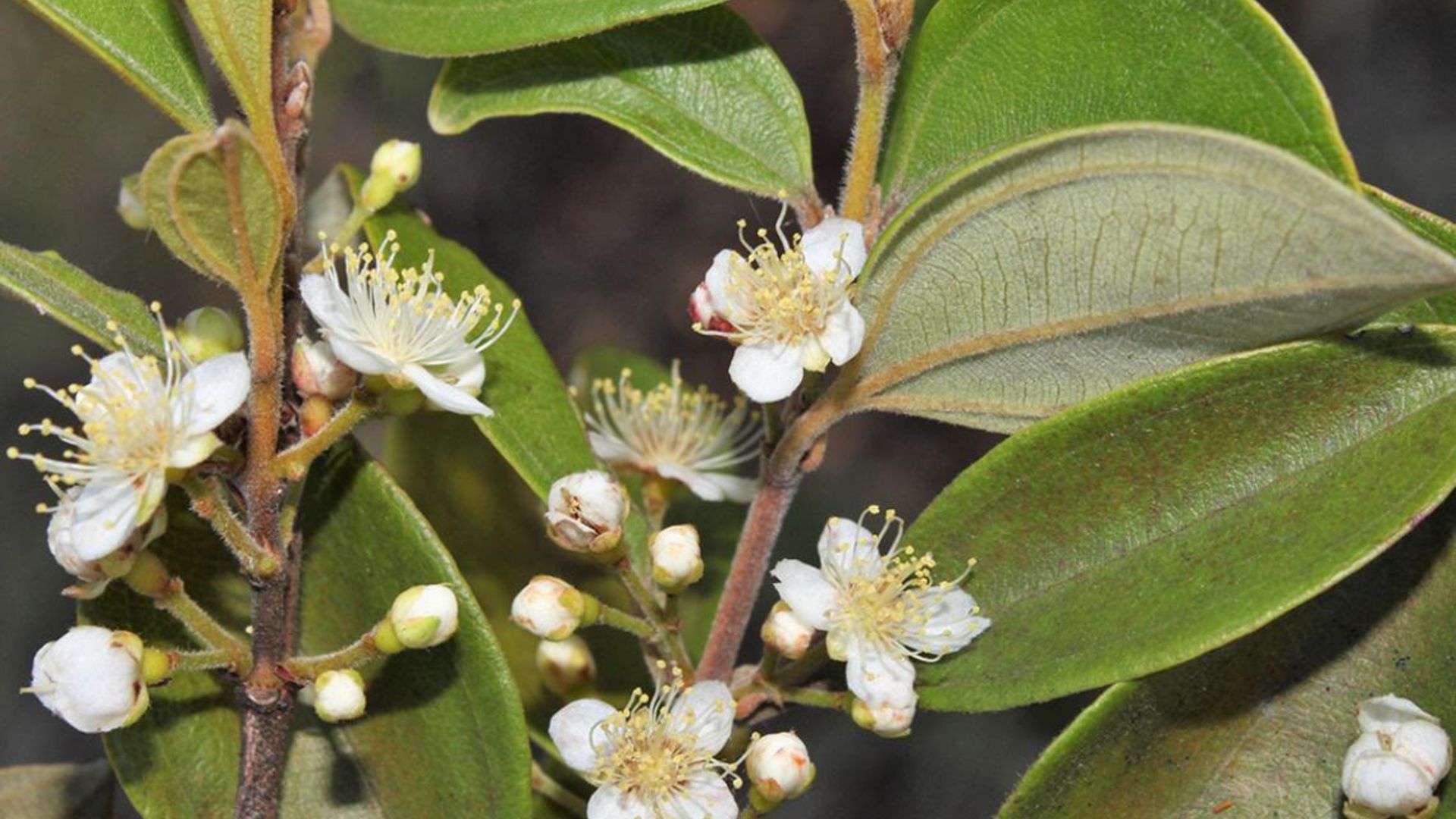
Australian scientists are in a desperate race to save a newly identified ‘zombie tree’ from Queensland’s rainforest before it disappears.
Researchers discovered that the tree, Rodamnia zombie, can no longer produce flowers, fruit or seeds, and although it remains viable, it is unable to reproduce on its own in the wild. Only discovered in 2020 and described as a new species last year, the zombie tree suffers from a fast-spreading fungal disease called myrtle rust.
Article continues below
you may like
In a study published in the journal Austral Ecology on December 11, 2025, researchers warned that R. zombie and 16 other rainforest tree species are under attack by this fungal pathogen and could become extinct within a generation without appropriate intervention.
Number of deaths caused by fungi
Myrtle rust is caused by the fungus Austropuccinia psidii and was first detected in Hawaii in 2005 and Australia in 2010. Since then, its spores have spread widely, carried by wind, birds, people, machines, and insects.
“There’s very little that can be done to stop the spread,” Fensham told Live Science. “The Achilles heel of myrtle rust is that you need a certain kind of environment. It has to be a humid, not too cold world… where I live in central Brisbane is the perfect environment for that.”
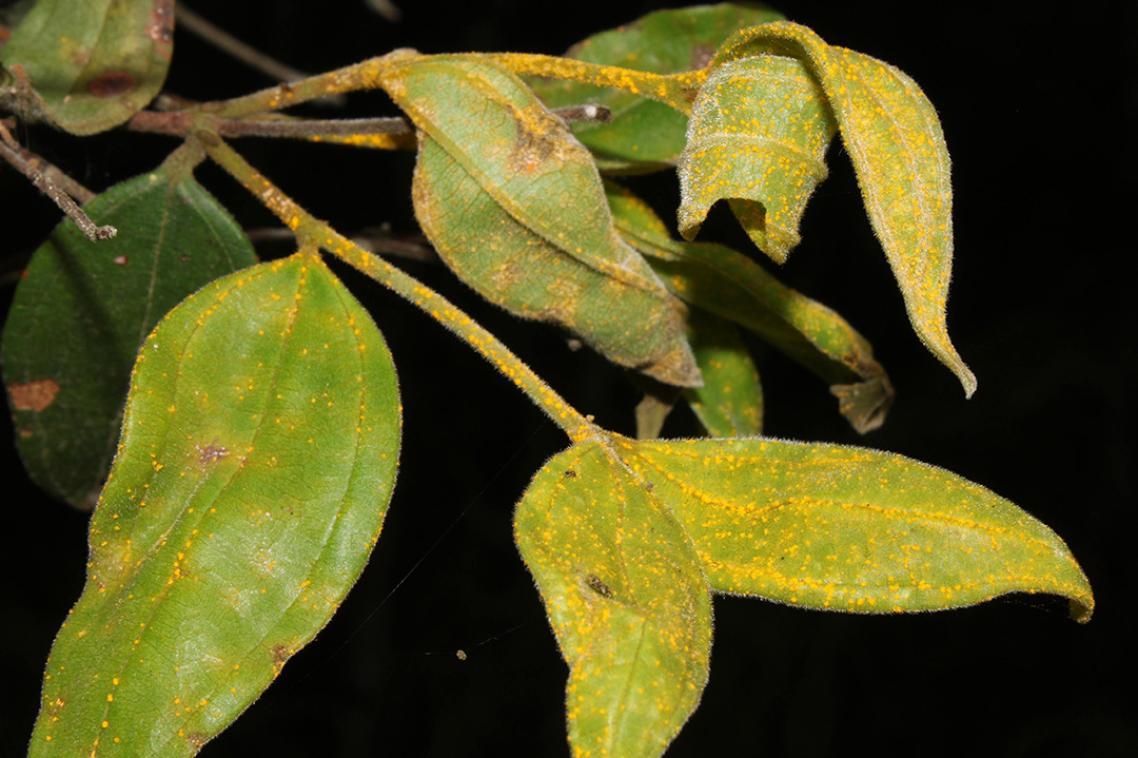
Myrtle rust is native to South America, and native plants that coevolved with this fungus developed resistance to myrtle rust. The disease is called myrtle rust because the fungus attacks plants in the myrtaceae family, including eucalyptus, tea tree and other Australian rainforest species. Myrtle rust produces powdery yellow, orange, or brown sporangia (which looks like rust) on infected plant tissue, depleting nutrients and slowly killing the plant.
Fensham calls the Australian species “naive hosts” because they have evolved little or no resistance to the pathogen. “Humans have been innocent hosts for coronaviruses, and this is no different,” he said.
To find out how widespread myrtle rust has spread, researchers reexamined fragile rainforest populations in the wild. The researchers surveyed regions across eastern Australia, tracking which species were still producing flowers and fruit, which had stopped breeding, and which populations had gone extinct.
Those species also included zombie trees. When the researchers reexamined known wild populations of R. zombie, they found that about 10% of the population had already died, and the remaining infected trees were not producing flowers or fruit.
What to read next
“Myrtaceae is a scary family in Australia. [and] “We’re starting to see that only a small number of plants are severely affected by this disease,” Fensham said. “So I think it could get even worse if intolerance becomes more widespread in this huge group of plants.” But it’s bad enough as it is. ”
how to rescue zombies
Infected wild trees can no longer reliably produce seeds, so scientists are using cuttings to clone surviving plants, which can be grown in nurseries and then moved to safer areas where the climate is less susceptible to myrtle rust.
Another option is to use a fungicide to keep the trees in the infected area alive long enough for the plants to produce seeds. Scientists may then be able to identify seedlings that are more resistant to myrtle rust. In the best-case scenario, those hardier plants may someday be returned to the forest.
“It’s quite possible,” Fensham said. “But in reality, all the steps have been taken…over the past few years by dedicated people. There is a real will and ability to save these trees.”
Fensham said researchers are looking into tree-saving treatments that are as effective as vaccines. “There are several attempts to develop RNA vaccines,” he said. “Various variations [are] It’s evolving as we speak, and tolerances may vary. ”
But he said a more realistic plan is to focus on growing cuttings from surviving plants in a safe environment. “This species needs time and space to develop some resistance without being constantly challenged by myrtle rust,” he said in a statement.
Fensham, R. J., Butler, D., Espe, B., Paxton, I. J., Radford-Smith, J., and Shaw, S. (2025). Myrtle Rust continues to kill trees in the subtropical rainforest: Strategies for resurrecting the living dead. Austral Ecology, 50(12). https://doi.org/10.1111/aec.70155
Source link
