


Solar power represents an innovative alternative to traditional power sources in terms of enhancing safety and control through remote monitoring systems and its important applications in security and defense.
Is it possible that tiny electronic devices made of semiconductor layers just a few micrometers thick could protect people and property? Yes, but in a completely unconventional way. By providing electrical energy in a quiet, undetectable and sustainable manner where other sources cannot do this. Today we invite you to a very special world of applications where solar power is the unspoken hero of our daily safety.
Remote monitoring enhances safety and control
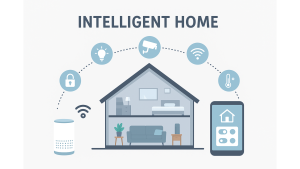
Recently, we have seen that remote monitoring digital systems have become increasingly popular in the private real estate sector, commercial buildings, roads, airports, border surveillance, etc. Thanks to the rapid development of electronic cameras and sensor systems, we now have control over an astonishing number of parameters. It starts with simple motion detectors, moves through velocity measurements with RADAR and LIDAR (Light Detection and Ranging) systems, and continues to very advanced infrared passive and active detection of people, animals, and surrounding objects. Using high-resolution digital cameras connected to a security network can be very effective by transmitting recordings via an Internet Protocol (IP) network to a PC server with special artificial intelligence (AI) video management software installed. There, a rapid analysis of the situation is automatically performed to detect potential threats and potentially identify suspects through facial recognition or registration number identification. Alternatively, smoke detectors and heat sensors can help prevent wildfires in rural and highly urbanized areas. Carbon monoxide sensors continue to alert many homes that are on fire, and afterdump detectors are saving lives in mines and refineries.
Overcoming field challenges: The potential of solar power
The details of all these systems are that the power consumption within the monitored area is extensive, often far from the energy supply lines, and that remote control and wireless communication are required. Very often, this type of equipment is installed on site as a temporary object (for example, during the construction process of a building or road) and must be constantly in operation during the designed period. Additionally, the specifics of the work often require these systems to be invulnerable to power outages through traditional cables, whether caused by natural accidents or the actions of intentional intruders. Additionally, it should be kept in mind that the cost of transformers and cables required for distribution systems in rural areas can often significantly exceed the price of sensors and small cameras.
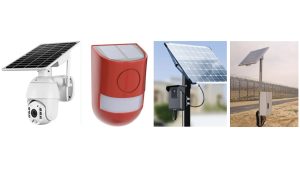
Meanwhile, the electronics used to operate all these cameras and sensors are regularly supplied with low-voltage DC (direct current). Considering this, it appears that sustainable power supply requires modern battery solutions. Nevertheless, even highly efficient lithium-ion (Li-Ion) batteries are sensitive to environmental conditions, heavy, cumbersome, and above all, time-limited as an energy source. Therefore, solar power is entering the competition. Low-cost, small, and possibly flexible solar cells, integrated with charge controllers and small battery systems, create great opportunities for monitoring systems. Now, we may be able to observe the early stages of these devices featuring first-generation single-crystal silicon micromodules. They are relatively effective. However, integration levels, durability, and work requirements still need to be optimized.
Application in defense field
Another important field of application concerns modern war equipment. The use of electronics and electrical equipment is critical to almost every aspect of modern warfare. From communications, enemy detection, and weapons guidance systems to charging and controlling drones, the provision of electrical energy is the backbone of all military capabilities.

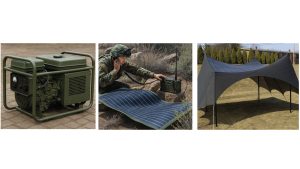
Traditional liquid-fueled generators, widely used around the world, are completely miserable in this role. Not only are they heavy and must always be equipped with hectoliters of gasoline, they are also noisy and produce more heat than electricity as a by-product of their operation. This, of course, makes it an easy target for enemy missile guidance systems.
Promoting PV for new applications
Thin-film flexible PV modules can be much more effective in such applications. For example, thin-film, lightweight, rollable, and portable PV modules can provide long-term power for a wide range of combat missions. Experiments are currently underway aimed at reducing visibility in both the optical and radar spectrum. Irregular module shapes and effective anti-reflection coatings are possible solutions. This type of device can also be easily integrated into the structure of backpacks and tents, and prototypes reach peak outputs of up to 1 kW.

All these applications require thin-film PV structures that are inexpensive, efficient, and stable. One potential candidate for this type of material is the Sb2S3 semiconductor compound, which is currently being studied at Taltec’s Thin Film Energy Materials Laboratory. The semiconductor can be deposited by an inexpensive and effective spray pyrolysis technique and promises higher conversion efficiencies than traditional silicon. This manufacturing technique and material structure allows for a higher level of integration of elements of different shapes and dimensions. Because these layers are translucent, they can be uniformly deposited on windows, visors, binocular lenses, and other optical devices. Let’s take a look at what the future holds for security systems when equipped with a robust and stable solar power energy source in the near future.
understand
This work was supported by EU Horizon 2020 project 952509-5GSOLAR.
This article will also be published in the quarterly magazine issue 25.
Source link
