

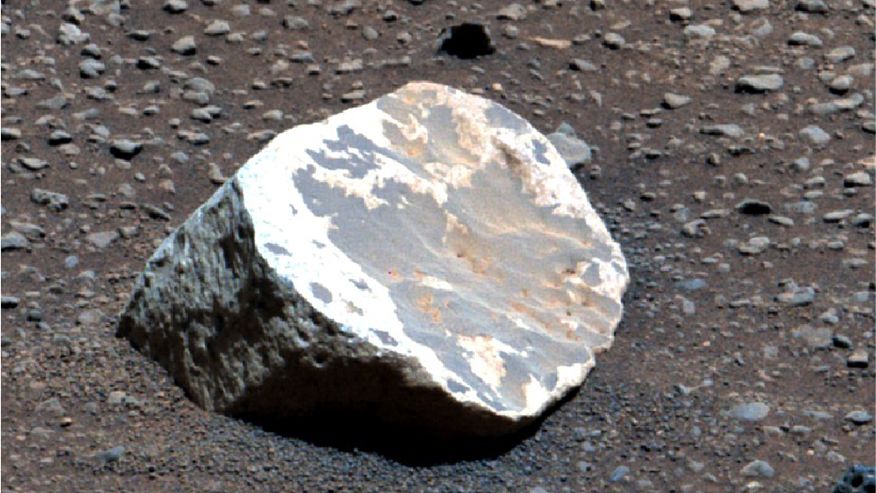
A new study of unusually bleached rocks suggests Mars once had humid regions with heavy rainfall, similar to Earth’s tropical regions.
Researchers were intrigued by a unique, brightly colored rock that NASA’s Perseverance rover discovered on the surface of Mars. Upon closer examination, the rock was found to be kaolinite, a type of clay rich in aluminum, the scientists reported in the study, published Dec. 1 in the journal Communication Earth & Environment.
you may like
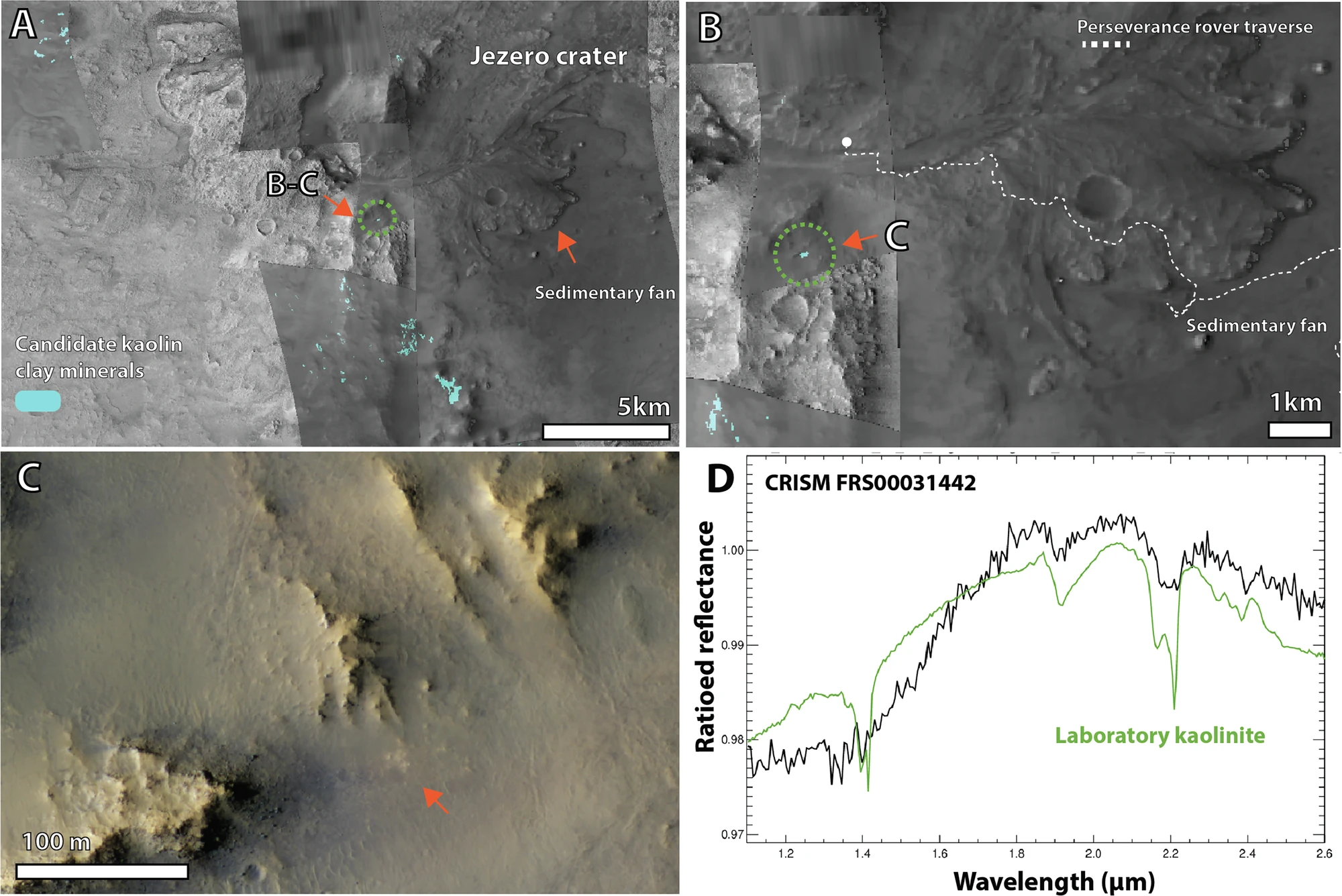
“Until we can actually reach these large outcrops with rovers, these small rocks are the only evidence that they are on the ground,” Bryony Hogan, a planetary scientist at Purdue University and a co-author of the study, said in a statement.
The presence of kaolinite on Mars lends weight to the hypothesis that Mars was a wet oasis at some point in its distant past, although exactly when and how it became dry is still debated.
A leading hypothesis suggests that at some point between 3 and 4 billion years ago, the planet lost its water because its magnetic field weakened enough that the solar wind stripped away its atmosphere. However, this process was likely complex and multifaceted. Studying these ancient clays could give scientists more insight into how and when Mars lost its water, the researchers said.
It could also provide clues about Mars’ potential habitability, Broz said, since “all life uses water.”
Source link
