

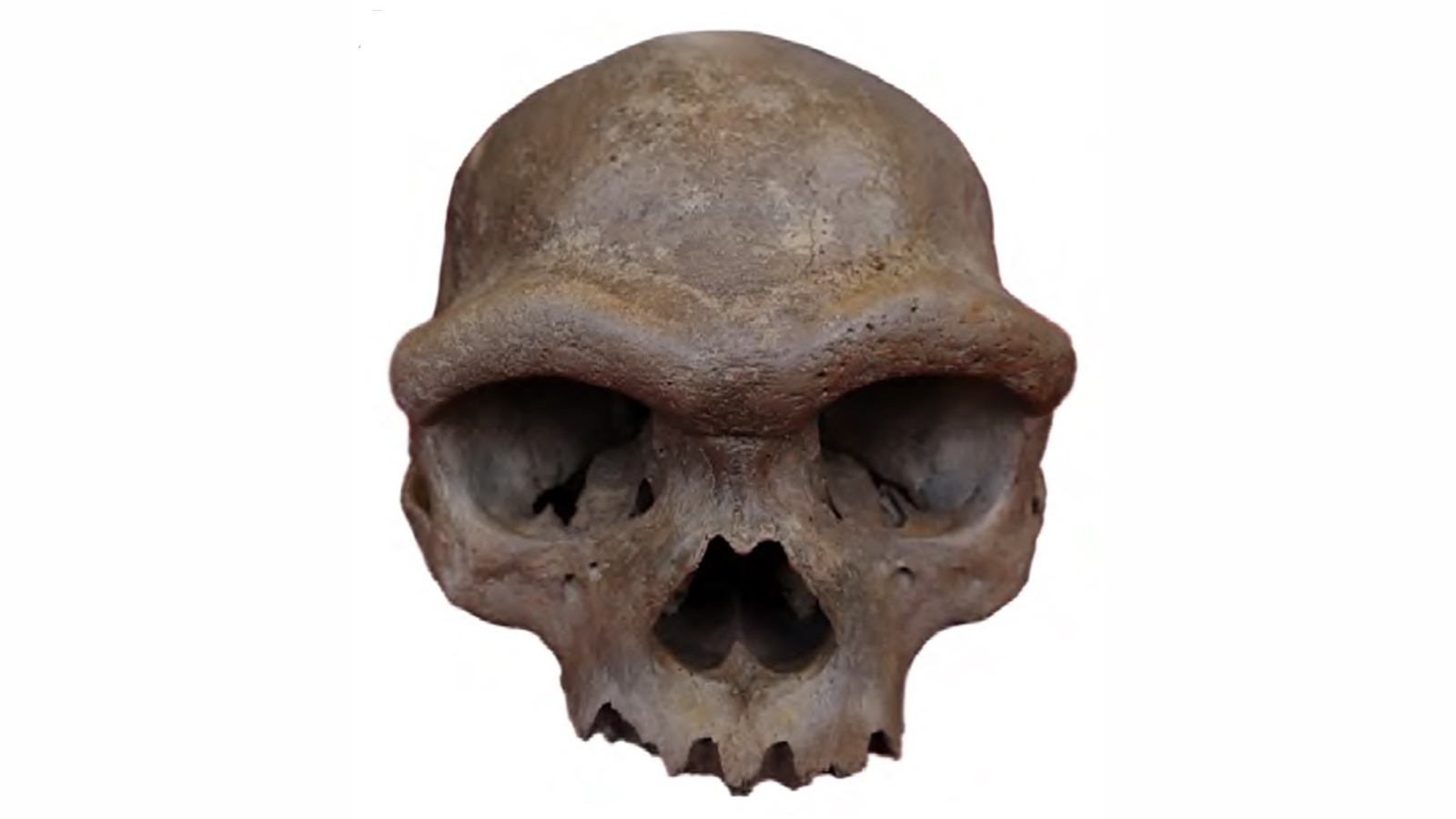
The Jomon people of prehistoric Japan had “little or no” Denisovan DNA, suggesting their ancestors may have had no contact with this now-extinct Eurasian human group, a new study reports.
The discovery was part of a study of hundreds of ancient and modern genomes to determine when and where modern humans (Homo sapiens) interbred with their mysterious Denisovan cousins.
you may like
Additionally, the researchers found that ancient East Asian mainland peoples, such as China and Mongolia, had more Denisovan genes than other Eurasian peoples. The researchers found that these early East Asians derived large amounts of Denisovan ancestry from multiple Denisovan populations before the coldest period of the Last Ice Age, the Last Glacial Maximum (about 26,500 to 19,000 years ago).
On the other hand, ancient West Eurasians such as Iran and Georgia had the least amount of Denisovan ancestry, the researchers reported.
The discovery is helping scientists understand early human migrations and how different groups mixed. “Denisovan DNA represents a powerful marker for reconstructing the history of a population,” study co-author Stephan Peyregne, an evolutionary geneticist at Germany’s Max Planck Institute for Evolutionary Anthropology, said in a statement.
The mysterious Denisovan
Little is known about the Denisovans, who lived in Eurasia about 200,000 to 30,000 years ago, but researchers have found a small number of their remains and DNA traces among modern-day Oceanians, East Asians, Southeast Asians, and Native Americans.
To trace when and where Denisovan DNA entered modern human genomes, the researchers analyzed the genetic makeup of 115 Homo sapiens whose ancient remains were discovered in the United States, South America, Western Eurasia, Siberia, and East Asia. The oldest remains belonged to a person who lived in what is now Bulgaria some 45,000 years ago, and the latest remains belonged to someone who lived in what is now Siberia 766 years ago. They also analyzed the genomes of 279 modern humans whose data are recorded in the Simmons Genome Diversity Project.
Researchers found that the remains of a 40,000-year-old human called Tianyuan excavated from China had the most Denisovan ancestry, with 0.25% of the genome derived from Denisovans. Analysis revealed that Tianyuan’s DNA comes from several different Denisovan groups.
Researchers were surprised to discover that prehistoric Jomon Japanese had very little Denisovan ancestry, and that one person who lived 3,755 years ago had one-sixth to one-eighth of the Denisovan DNA found in modern-day East Asians. (Modern East Asians have about 0.1% Denisovan DNA).
you may like
However, Denisovan genes eventually made their way to Japan. People from the Kofun period (c. 300 to 710 A.D.) in Japan had more Denisovan DNA than Jomon people, and these genes may have entered their genomes after mass migration of East Asians to Japan during this period.
For now, it’s unclear why the Jomon people had so little Denisovan ancestry, but the research team has an idea.
It may be “some kind” [modern human] “During their early dispersal into East Asia, the groups followed different paths. Alternatively, the Denisovans were very sparsely distributed, and interactions with them were rare,” Jia-Chi Yang, the study’s lead author and a postdoctoral fellow in evolutionary genetics at the Max Planck Institute for Evolutionary Anthropology, said in a statement.
Due to limited data available, researchers cannot be sure of the exact scenario. Currently, the oldest Jomon genome is only about 9,000 years old, but there is evidence that modern humans have been living on the Japanese archipelago for about 32,000 years. The missing 23,000 years of genetic data “may help elucidate the region’s early population history,” the authors say in their study.
Source link
