
Close Menu
  • Home
  • Identity
  • Inventions
  • Future
  • Science
  • Startups
  • Spanish
What's Hot

Anduril has invented a novel drone flying contest where work is the prize

Android smartphones are getting more anti-theft features

Indian states consider Australian-style ban on social media for children

Facebook X (Twitter) Instagram
  • Home
  • About Us
  • Advertise with Us
  • Contact Us
  • DMCA
  • Privacy Policy
  • Terms & Conditions
  • User-Submitted Posts
Facebook X (Twitter) Instagram
Fyself News
  • Home
  • Identity
  • Inventions
  • Future
  • Science
  • Startups
  • Spanish
Fyself News
Home » The 480,000-year-old ax sharpener is the oldest elephant bone tool ever discovered in Europe.
Science

The 480,000-year-old ax sharpener is the oldest elephant bone tool ever discovered in Europe.

userBy userJanuary 24, 2026No Comments4 Mins Read
Share Facebook Twitter Pinterest Telegram LinkedIn Tumblr Email Copy Link
Follow Us
Google News Flipboard
Share
Facebook Twitter LinkedIn Pinterest Email Copy Link

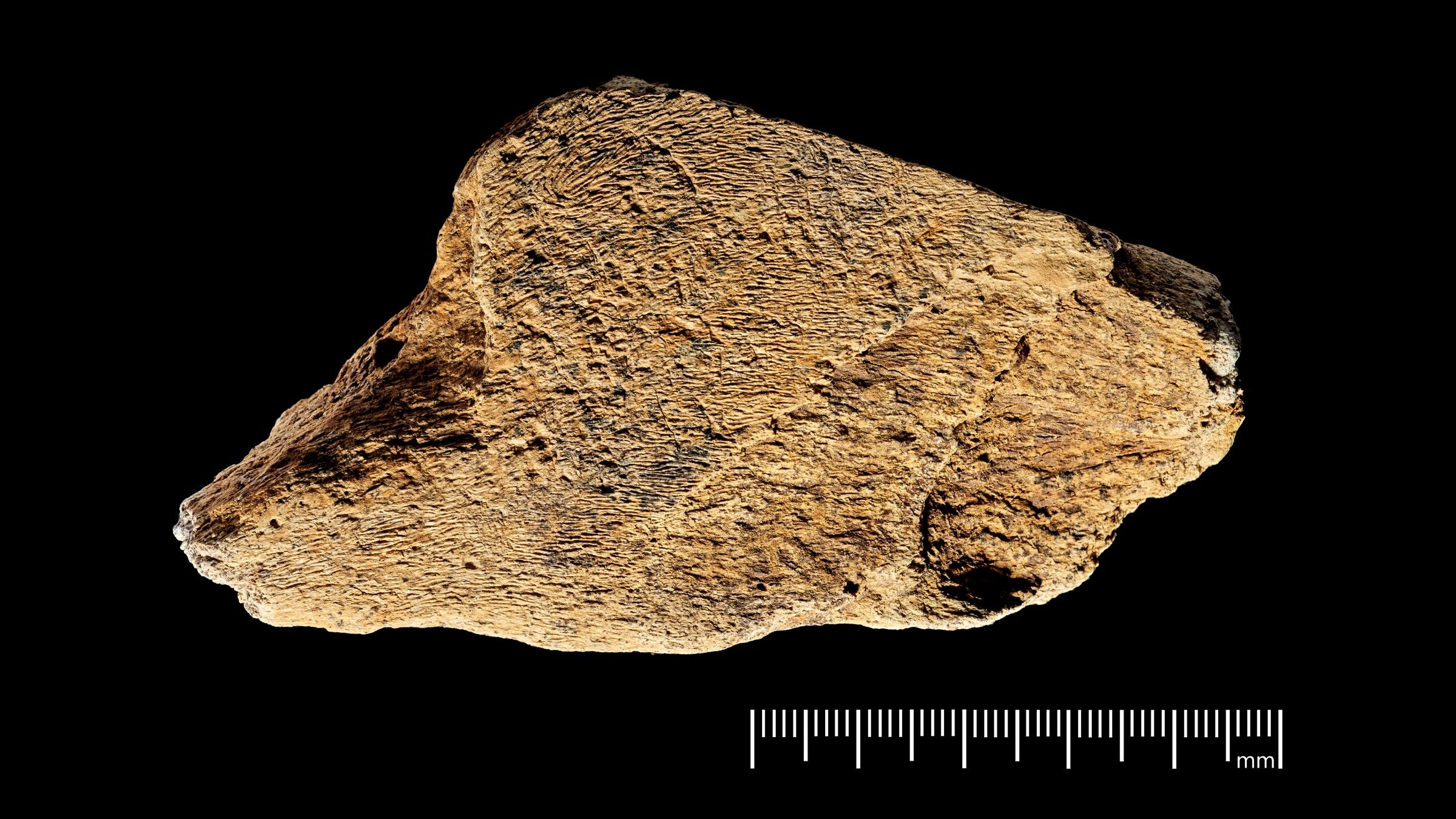
A triangular artifact made from elephant bone was used to sharpen hatchets by relatives of ancient humans in what is now Britain some 480,000 years ago, new analysis reveals.

Measuring approximately 4.3 by 2.3 inches (10.9 by 5.8 centimeters), it represents the oldest elephant bone tool ever discovered in Europe, and demonstrates the high level of resourcefulness and ability to adapt to new environments when our relatives settled in northern climates, according to the study published Wednesday (January 21) in the journal Science Advances.

Evidence suggests that early human relatives used elephant bones and tusks for a wide range of purposes throughout the Paleolithic period, but finding elephant bone tools from this period or earlier anywhere in the world is “extremely rare,” said study co-author Sylvia Bello, a paleoanthropologist at the Natural History Museum in London.

you may like

The “unexpected” discovery of the world’s oldest elephant bone tools indicates a relatively high level of technological development and thus highlights the innovation, resourcefulness and craftsmanship of our ancient human relatives from around 500,000 years ago, researchers said in a study paper.

Researchers are unsure which group of human relatives used elephant tools, but given the age of the tools and where they were found, the two candidates are early Neanderthals or Homo heidelbergensis, Bello told Live Science in an email.

The tool “gives us a glimpse into the ingenuity of our early human ancestors who created it,” Bello said.

This fossilized bone remains was originally discovered during excavations at the Boxgrove site in southern England in the early 1990s. This internationally famous site has yielded many discoveries that reveal Paleolithic life some 500,000 years ago. These include a variety of bones and stone tools, numerous animal remains showing signs of slaughter, and even the oldest human remains ever found in Britain.

Get the world’s most fascinating discoveries delivered straight to your inbox.

A map of Africa and Eurasia showing where prehistoric elephant bone tools have been discovered. These include locations in Europe, the Middle East, Africa, and one in China.

Map showing Stone Age sites with known elephant bone tools. (Image credit: Parfitt et al., Sci. Adv. 12, eady1390)

The significance of the bone artifact was not immediately apparent. However, recent analysis of the artifact by Bello and her co-author, archaeologist Simon Parfitt of the Institute of Archaeology, University College London, reveals that the artifact is a fragment of elephant bone that was intentionally shaped into a “retoucher” tool.

I used a retoucher to reshape and repolish the edges of the handshaft. Elephant bone modifiers may have contributed to the production of the “finely crafted” hand axes typical of box gloves, which were likely used primarily as cutting tools, according to the study.

“Elephant bone tools show evidence that they were shaped while the bones were still fresh and used to twist and sharpen stone tools, suggesting that these hominins knew that elephant bone was an excellent material for that purpose,” Bello said.

you may like

Researchers say the discovery marks the only documented case of elephant bone being used to make retouchers. Knapping tools made from organic materials such as bone, antlers, and wood were essential tools for early humans, but are largely absent from the archaeological record.
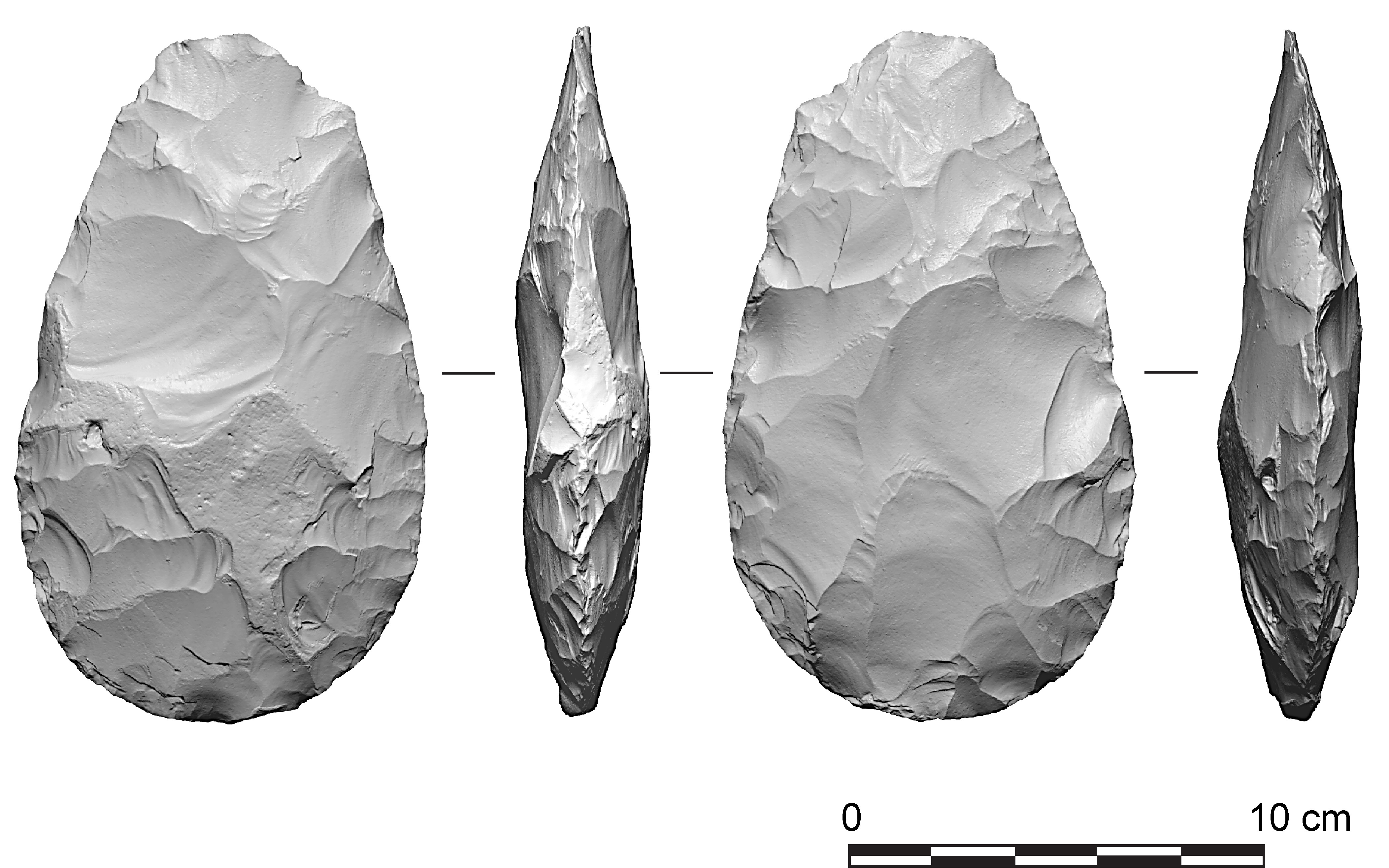
Four views of a single tool made from elephant bone

Four views of a hatchet from the British Boxglove (Image credit: Parfitt et al., Sci. Adv. 12, eady1390)

Furthermore, prehistoric elephant bone remains are “extremely rare” in Boxgrove, suggesting that ancient humans in the region rarely encountered this resource, the study authors noted. Nevertheless, the tool’s creators seem to have recognized the usefulness of this material.

“This surprising discovery shows the resourcefulness of our ancient relatives,” Parfitt told Live Science via email. “Not only did they have a deep knowledge of the local materials around them, but they also had a sophisticated understanding of how to make highly sophisticated stone tools.”

“Elephant bones would have been a rare but highly useful resource, and were likely tools of considerable value,” he said in a statement.

Parfitt, SA, Bello, SM Europe’s oldest elephant bone tools: an unexpected raw material for precision knapping of the Acheulean handaxe. Science Advances 12(4) (2026). https://doi.org/10.1126/sciadv.ady1390


Source link

#Biotechnology #ClimateScience #Health #Science #ScientificAdvances #ScientificResearch
Follow on Google News Follow on Flipboard
Share. Facebook Twitter Pinterest LinkedIn Tumblr Email Copy Link
Previous ArticleResearch shows that AI can spontaneously develop a “personality” with minimal stimulation. What does that mean for our usage?
Next Article How PopWheels helped food carts eliminate generators for e-bike batteries
user
  • Website

Related Posts

Shark attacks in Hawaii spiked in October, and scientists think they know why.

January 27, 2026

In vitro fertilization hormones could one day be administered via painless ‘microneedle’ patches, early research suggests

January 27, 2026

A 1,400-year-old Zapotec tomb discovered in Mexico has a giant owl sculpture symbolizing death

January 26, 2026
Add A Comment
Leave A Reply Cancel Reply

Latest Posts

Anduril has invented a novel drone flying contest where work is the prize

Android smartphones are getting more anti-theft features

Indian states consider Australian-style ban on social media for children

WhatsApp deploys lockdown-style security mode to protect targeted users from spyware

Trending Posts

Subscribe to News

Subscribe to our newsletter and never miss our latest news

Please enable JavaScript in your browser to complete this form.
Loading

Welcome to Fyself News, your go-to platform for the latest in tech, startups, inventions, sustainability, and fintech! We are a passionate team of enthusiasts committed to bringing you timely, insightful, and accurate information on the most pressing developments across these industries. Whether you’re an entrepreneur, investor, or just someone curious about the future of technology and innovation, Fyself News has something for you.

Castilla-La Mancha Ignites Innovation: fiveclmsummit Redefines Tech Future

Local Power, Health Innovation: Alcolea de Calatrava Boosts FiveCLM PoC with Community Engagement

The Future of Digital Twins in Healthcare: From Virtual Replicas to Personalized Medical Models

Human Digital Twins: The Next Tech Frontier Set to Transform Healthcare and Beyond

Facebook X (Twitter) Instagram Pinterest YouTube
  • Home
  • About Us
  • Advertise with Us
  • Contact Us
  • DMCA
  • Privacy Policy
  • Terms & Conditions
  • User-Submitted Posts
© 2026 news.fyself. Designed by by fyself.

Type above and press Enter to search. Press Esc to cancel.