
Close Menu
  • Home
  • Identity
  • Inventions
  • Future
  • Science
  • Startups
  • Spanish
What's Hot

Microsoft warns that VBS malware distributed by WhatsApp can hijack Windows via UAC bypass

Casbaneiro Phishing targets Latin America and Europe using dynamic PDF lures

New Chrome zero-day CVE-2026-5281 in active exploitation – patch released

Facebook X (Twitter) Instagram
  • Home
  • About Us
  • Advertise with Us
  • Contact Us
  • DMCA
  • Privacy Policy
  • Terms & Conditions
  • User-Submitted Posts
Facebook X (Twitter) Instagram
Fyself News
  • Home
  • Identity
  • Inventions
  • Future
  • Science
  • Startups
  • Spanish
Fyself News
Home » The first ‘smart’ drug to fight cancer cells
Inventions

The first ‘smart’ drug to fight cancer cells

By April 1, 2026No Comments3 Mins Read
Share Facebook Twitter Pinterest Telegram LinkedIn Tumblr Email Copy Link
Follow Us
Google News Flipboard
Share
Facebook Twitter LinkedIn Pinterest Email Copy Link

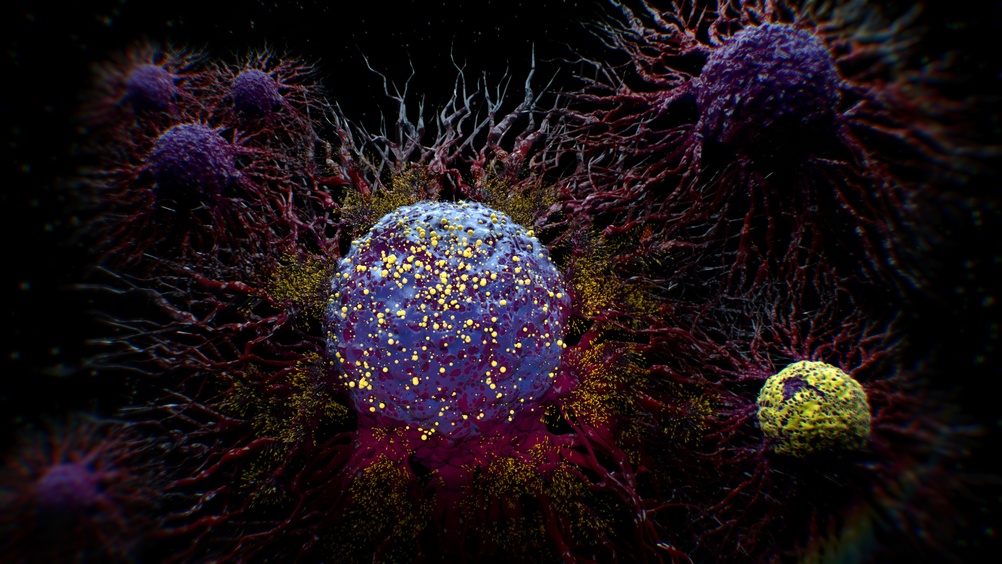
A team at the University of Geneva has designed a molecular system that identifies and neutralizes cancer cells with unprecedented precision, paving the way for autonomous, self-regulating drugs.

Using synthetic DNA strands, this smart system recognizes cancer cells with great precision and releases powerful drugs only where they are needed.

Beyond cancer treatment, this research paves the way for “smart” medicines and programmable drug delivery.

A paper corresponding to this research is published in Nature Biotechnology.

Directly targeting cancer cells could change treatments

The ability to directly target tumor cells with drugs could transform cancer treatment, preserve healthy tissue, and reduce the severe side effects associated with chemotherapy.

Among the most promising approaches in recent decades are antibody-drug conjugates (ADCs), which use monoclonal antibodies to precisely deliver therapeutic agents to cancer cells.

Despite their remarkable success, ADCs still face significant limitations, such as poor tumor tissue penetration and limited ability to deliver drug payloads.

DNA strands help overcome difficulties

In this new system, independent DNA strands carry different components, including two different cancer target binding agents and a cytotoxic drug.

When two specific cancer markers bind to their respective DNA-binding binders, the components self-assemble precisely at the tumor site.

This assembly allows multiple DNA fragments to be amplified by joining together at desired locations, allowing for the delivery of higher concentrations of drug.

Similar to two-factor authentication for banking websites, this process only occurs if both cancer markers are present. If either marker is missing, the hybridization chain reaction cannot be initiated and the drug remains inactive.

“This could be an important step in the evolution of medicine by introducing self-actuating drug systems,” explains Professor Nicholas Winsinger of the Department of Organic Chemistry, Faculty of Chemistry and Biochemistry, Faculty of Science, UNIGE.

“Historically, computers and AI have helped design new drugs. What is new here is that the drugs themselves can ‘compute’ biological signals in a simple way and respond intelligently.”

The future of autonomous drugs

Just as computers are built on the simple logical operations of “and,” “or,” and “not,” this technology applies the same principles at the molecular level.

In this first demonstration, an “and” logic gate ensures activation only in the presence of two cancer biomarkers, resulting in high drug selectivity.

In the future, future systems may integrate additional logical operations to create medicines that behave like programmable systems and can make complex decisions within the body.

This opens the door to truly “smart” medicines that adapt to the environment and tailor treatment to each patient’s unique physiology while minimizing side effects.

These innovations do not replace human surveillance, but aim to make treatments more targeted and effective, bring new hope to personalized care, and transform the way we fight disease.


Source link

#CreativeSolutions #DigitalTransformation. #DisruptiveTechnology #Innovation #Patents #SocialInnovation
Follow on Google News Follow on Flipboard
Share. Facebook Twitter Pinterest LinkedIn Tumblr Email Copy Link
Previous ArticleNASA prepares moon mission
Next Article EU investigates state aid for six new French nuclear reactors

Related Posts

Small particle accelerators that open up new scientific fields

April 1, 2026

EU investigates state aid for six new French nuclear reactors

April 1, 2026

NASA prepares moon mission

April 1, 2026
Add A Comment
Leave A Reply Cancel Reply

Latest Posts

Microsoft warns that VBS malware distributed by WhatsApp can hijack Windows via UAC bypass

Casbaneiro Phishing targets Latin America and Europe using dynamic PDF lures

New Chrome zero-day CVE-2026-5281 in active exploitation – patch released

3 Reasons Why Attackers Will Use Trusted Tools Against You (And Why You Don’t See It Coming)

Trending Posts

Subscribe to News

Subscribe to our newsletter and never miss our latest news

Please enable JavaScript in your browser to complete this form.
Loading

Welcome to Fyself News, your go-to platform for the latest in tech, startups, inventions, sustainability, and fintech! We are a passionate team of enthusiasts committed to bringing you timely, insightful, and accurate information on the most pressing developments across these industries. Whether you’re an entrepreneur, investor, or just someone curious about the future of technology and innovation, Fyself News has something for you.

Castilla-La Mancha Ignites Innovation: fiveclmsummit Redefines Tech Future

Local Power, Health Innovation: Alcolea de Calatrava Boosts FiveCLM PoC with Community Engagement

The Future of Digital Twins in Healthcare: From Virtual Replicas to Personalized Medical Models

Human Digital Twins: The Next Tech Frontier Set to Transform Healthcare and Beyond

Facebook X (Twitter) Instagram Pinterest YouTube
  • Home
  • About Us
  • Advertise with Us
  • Contact Us
  • DMCA
  • Privacy Policy
  • Terms & Conditions
  • User-Submitted Posts
© 2026 news.fyself. Designed by by fyself.

Type above and press Enter to search. Press Esc to cancel.