
Close Menu
  • Home
  • Identity
  • Inventions
  • Future
  • Science
  • Startups
  • Spanish
What's Hot

Consumer watchdog warns about Google’s AI agent shopping protocols — Google says she’s wrong

Ring founder details camera company’s ‘intelligent assistant’ era

Doctors think AI can play a role in medicine, but maybe not as chatbots

Facebook X (Twitter) Instagram
  • Home
  • About Us
  • Advertise with Us
  • Contact Us
  • DMCA
  • Privacy Policy
  • Terms & Conditions
  • User-Submitted Posts
Facebook X (Twitter) Instagram
Fyself News
  • Home
  • Identity
  • Inventions
  • Future
  • Science
  • Startups
  • Spanish
Fyself News
Home » The gulf separating Africa and Asia continues to pull them apart 5 million years after scientists thought they had stopped.
Science

The gulf separating Africa and Asia continues to pull them apart 5 million years after scientists thought they had stopped.

userBy userNovember 17, 2025No Comments3 Mins Read
Share Facebook Twitter Pinterest Telegram LinkedIn Tumblr Email Copy Link
Follow Us
Google News Flipboard
Share
Facebook Twitter LinkedIn Pinterest Email Copy Link

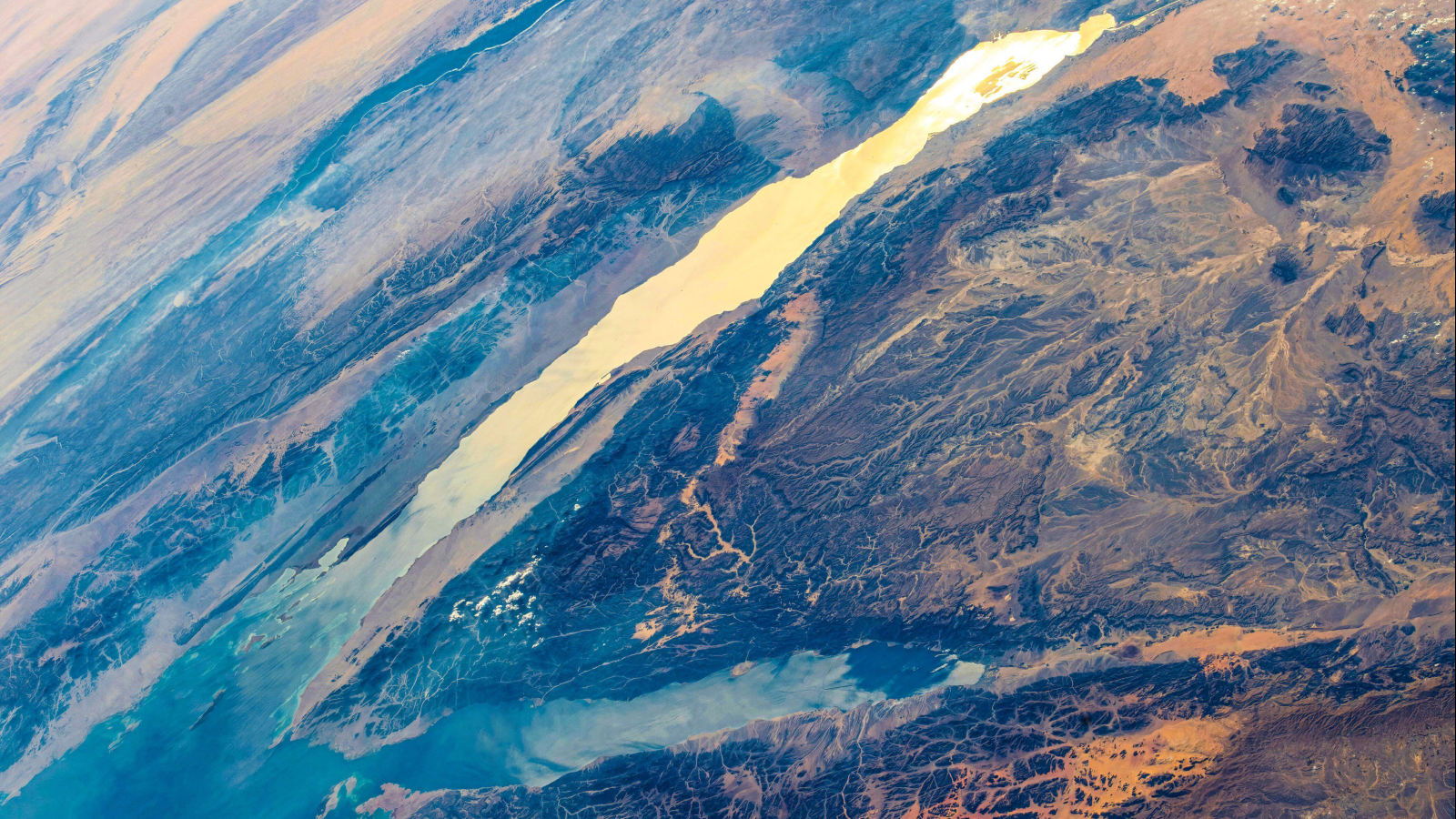
Researchers have found that the Gulf of Suez, which partially separates Africa and Asia, may still be expanding.

Starting about 28 million years ago, the Arabian Plate separated from the African Plate, opening up what is today the Gulf of Suez. This type of rift would lead to the birth of a new ocean, but about 5 million years ago the rift stopped, leaving Suez a bay rather than an ocean.

Anyway, that’s the conventional story. But the Suez Rift rift never stopped cracking, according to a new study. Instead, it just slowed down. A new paper published Nov. 3 in the journal Geophysical Research Letters reveals that the Suez Rift is still tearing apart at a rate of about 0.02 inches (0.5 millimeters) per year.

you may like

“We believe our study fundamentally changes the way we think about the evolution of rift valleys,” study lead author David Fernandez-Blanco, a geoscientist at the Institute of Deep Sea Science and Technology at the Chinese Academy of Sciences, told Live Science via email. “Current conceptual models are quite binary. Either the rift succeeds (new ocean basins like the Red Sea form) or it fails (goes completely inactive). We show that there is a middle path that can slow down the rift without truly rupturing.”

Fernández Blanco said that although the Suez Gulf is usually considered a textbook example of a fissure gone wrong, the region is still littered with hints that a fissure may still exist. In some places along the bay, ancient coral reefs have been lifted out of the sea. Small earthquakes sometimes shake the area. And there are signs that the fault is lifting parts of the ground.

“What struck us was the disconnect between the traditional story of complete tectonic quiescence and hints of ongoing activity,” Fernández-Blanco said.

In the new study, researchers surveyed a 186-mile (300-kilometer) stretch of the rift valley, studying the terrain and the paths of rivers that cut through the rock. This could reveal unusual contours that cannot be explained by erosion alone and must be caused by tectonic movements. They also investigated the elevation of coral reefs that formed near the ocean surface during warm interglacial periods but now tower up to 60 feet (18.5 meters) above the bay.

Get the world’s most fascinating discoveries delivered straight to your inbox.

Together, this evidence indicates that the rate of continuous rifting slowed 5 million years ago, when plate movements changed and tectonic deformation shifted to the Dead Sea, where a new plate boundary was forming between the African and Arabian plates.

But the cracks didn’t stop. It continues to pull apart the Gulf of Suez at a rate similar to the current extension of the western United States. This expansion of the western United States has created a series of mountains and valleys known as the Basin and Range states.

“Changing plate boundary conditions does not necessarily stop cracking,” Fernández-Blanco said. “The forces that cause the cracks are more persistent and complex than simple plate movement would suggest.”

The discovery could mean areas like the Gulf of Suez are more susceptible to damage from earthquakes than previously thought, he added. It also suggests that other cracks that have reportedly failed may be worth reexamining using modern tools to see if they have indeed stopped, he said.

“Earth’s crustal structure may turn out to be more dynamic and permanent than previously thought,” he says.


Source link

#Biotechnology #ClimateScience #Health #Science #ScientificAdvances #ScientificResearch
Follow on Google News Follow on Flipboard
Share. Facebook Twitter Pinterest LinkedIn Tumblr Email Copy Link
Previous ArticleLuminal raises $5.3 million to build a better GPU code framework
Next Article PowerLattice attracts investment from former Intel CEO Pat Gelsinger for power-saving chiplets
user
  • Website

Related Posts

Ethereal ice structures swirl next to Chicago during extreme cold waves accelerated by the polar vortex — Earth seen from space

January 13, 2026

DNA from ancient viral infections aids embryo development, mouse study finds

January 12, 2026

Metal compound identified as potential new antibiotic thanks to robot performing ‘click chemistry’

January 12, 2026
Add A Comment
Leave A Reply Cancel Reply

Latest Posts

Consumer watchdog warns about Google’s AI agent shopping protocols — Google says she’s wrong

Ring founder details camera company’s ‘intelligent assistant’ era

Doctors think AI can play a role in medicine, but maybe not as chatbots

Long-running web skimming campaign steals credit cards from online checkout pages

Trending Posts

Subscribe to News

Subscribe to our newsletter and never miss our latest news

Please enable JavaScript in your browser to complete this form.
Loading

Welcome to Fyself News, your go-to platform for the latest in tech, startups, inventions, sustainability, and fintech! We are a passionate team of enthusiasts committed to bringing you timely, insightful, and accurate information on the most pressing developments across these industries. Whether you’re an entrepreneur, investor, or just someone curious about the future of technology and innovation, Fyself News has something for you.

Castilla-La Mancha Ignites Innovation: fiveclmsummit Redefines Tech Future

Local Power, Health Innovation: Alcolea de Calatrava Boosts FiveCLM PoC with Community Engagement

The Future of Digital Twins in Healthcare: From Virtual Replicas to Personalized Medical Models

Human Digital Twins: The Next Tech Frontier Set to Transform Healthcare and Beyond

Facebook X (Twitter) Instagram Pinterest YouTube
  • Home
  • About Us
  • Advertise with Us
  • Contact Us
  • DMCA
  • Privacy Policy
  • Terms & Conditions
  • User-Submitted Posts
© 2026 news.fyself. Designed by by fyself.

Type above and press Enter to search. Press Esc to cancel.