

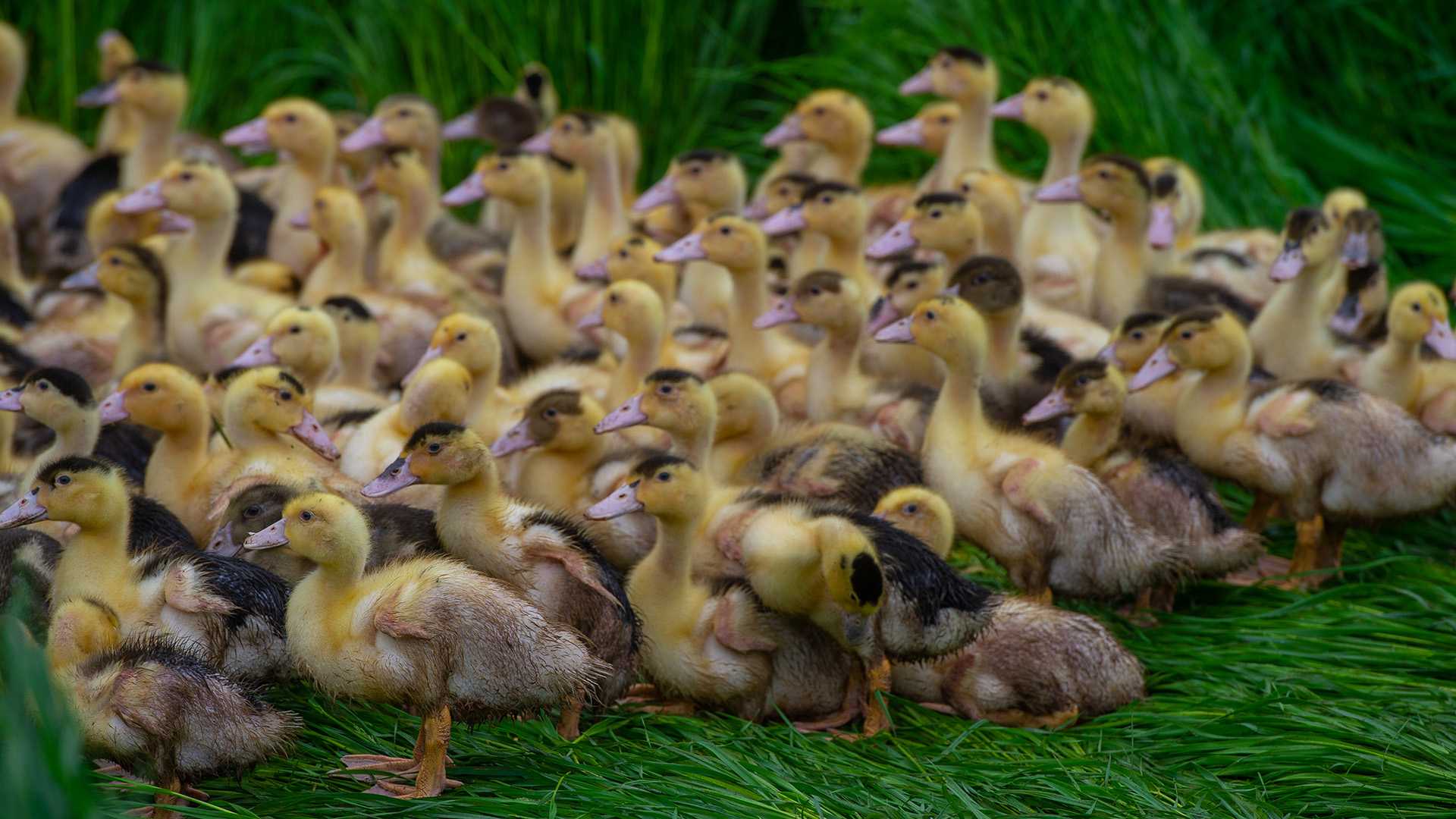
Ceva Animal Health highlights why vaccine development is important to address the growing threat of avian influenza.
Avian influenza is endemic around the world, threatening poultry production and food security, as well as posing a potential risk to human health. Animal health company Ceva Animal Health believes vaccination can be a powerful tool to support the global effort.
Vaccination not only reduces outbreaks and slows spread between herds, but also reduces the likelihood of human infection. This provides an alternative to the devastating practice of depopulation and supports animal welfare and higher levels of sustainability. This not only improves animal health but also contributes to a broader ‘One Health’ approach.
As part of our One Health vision, Ceva invests in research and development to develop practical alternatives to existing biosecurity measures. Ceva has been effectively vaccinating chickens against avian influenza for over 10 years. Innovation Platform spoke to the company to learn more about what it is doing to prevent the spread of bird flu.
How serious a threat is avian influenza to the world’s population?
Avian influenza has serious implications not only for animal health, but also for food security and, at some point, human health. Therefore, it is essential to strengthen protective measures such as enhanced biosecurity and strong surveillance programs. Enhanced surveillance and early detection protocols in both wild birds and poultry can help stop outbreaks quickly.
Since last October 2024, the past year has again been very intense in terms of the number of H5 infections, especially in Northern and Central Europe (UK, Netherlands, Germany, PL, Human University, IT) and North America. (Source FAO: October 10, 2024 to October 10, 2025).
The significant impact of avian influenza on the European poultry industry highlights the urgent need for effective preventive measures. Recent successes in vaccination strategies highlight the potential of preventive medicine to reduce the impact of such outbreaks and restore stability to the field.

Ceva is contributing to global strategies to minimize the risk of viral mutations and reassortment that could lead to human infection by promoting integrated disease management that combines vaccination, surveillance and biosecurity where possible. Furthermore, preventing animal diseases not only reduces the likelihood of disease transmission but also improves animal welfare. Healthier animals live in better environments, experience less stress and require less treatment, supporting both ethical farming and the broader goals of the One Health initiative.
The World Health Organization (WHO) continues to closely monitor the situation and recommends maintaining vigilance and strengthening global surveillance systems to detect the spread of avian influenza viruses as early as possible.
What is the current scientific and regulatory landscape regarding the prevention of avian influenza? Does it need to change?
The current scientific and regulatory landscape is not monolithic, but very multi-layered, with biosecurity, surveillance, culling and depopulation strategies, and increasingly vaccination converging.

However, these vary widely depending on region and regulatory system.
Government authorities in the UK and abroad are actively implementing measures to suppress outbreaks of avian influenza. If a positive case occurs, movement restrictions and poultry gathering restrictions may be imposed in affected areas, as well as strict cleaning and disinfection measures. Authorities are strengthening biosecurity by expanding surveillance to more bird habitats and strengthening regional collaboration. Early warning systems and rapid response teams are part of a rapid containment plan. Cooperation at European level is also important to monitor migratory routes and prevent cross-border spread. Biosecurity and surveillance remain at the forefront. On-farm measures (wild bird exclusion, hygiene, flock monitoring and movement control) are standard around the world. Monitoring of wild bird and livestock herds and reporting to agencies such as the World Organization for Animal Health (WOAH) continues. Ceva emphasizes the importance of epidemiological surveillance. Vaccination may be an important additional tool to implement. Recent vaccination successes demonstrate the power of preventive medicine to manage outbreaks and stabilize the sector. A campaign in France focused on ducks has particularly reduced outbreaks, with French poultry production increasing by 12.1% in 2024, above 2019 levels. Based on this success, France has made this an annual campaign, held every October. The combination of vaccination and strong biosecurity measures will help secure the future of global poultry production, food security and human health. A customized, risk-based approach ensures your program meets the specific needs of your variety and production system.
How is Ceva Animal Health helping manage avian influenza outbreaks?
Because this virus is endemic in wild birds, seasonal spikes are typically observed in the fall and winter due to migration and increased prevalence of respiratory disease. The number of cases is expected to increase each fall and winter as migratory activity intensifies, adding to the risks already posed by sedentary wild birds. Therefore, it is essential to maintain a strict focus on biosecurity, surveillance, and rapid control strategies.
For many years, Ceva has been at the forefront of developing vaccines to reduce outbreaks and slow spread between herds, contributing to ongoing research and development. As part of our One Health vision, Ceva invests in research and development to develop practical alternatives to existing biosecurity measures. As the historic world leader in vector vaccines for poultry and the world leader in broiler vaccination, Ceva prioritizes reducing the impact of disease in animals.
Ceva has been effectively vaccinating chickens against avian influenza for over 10 years. The company has used the innovative technology of its 50-year-old Marek’s disease vaccine to develop a practical vaccine for laying hens and broilers. It also overcomes maternal antibodies that prevent vaccine absorption in day-old chicks, ensuring early immunity. Additionally, Ceva became the first company in Europe to register a next-generation vaccine for ducks in France. Ceva vaccines provide hatchery primary vaccination, improving quality and reducing biosecurity risks. It includes a 28-day booster within the regular vaccination schedule and features a DIVA design that distinguishes between infected and vaccinated animals, aiding in disease surveillance and outbreak control. Additionally, its small package is suitable for different farm sizes and minimizes dose wastage.
How can vaccination of poultry and domestic birds help manage influenza outbreaks in broader avian populations, including wild birds?
Vaccination of poultry and poultry can play an important role in managing avian influenza beyond individual farms. By reducing infection and virus shedding in domestic populations, vaccination reduces environmental virus pressure and therefore the risk of spillover to wild birds, while at the same time interrupting the reinforcement cycle.
How does Ceva manage bird disease surveillance?
Although surveillance is primarily the purview of governments, veterinary authorities, and research institutions, Ceva plays a supporting and reinforcing role in disease surveillance through multiple means, including:
Ceva uses DIVA-enabled vaccines to enable serological identification of vaccinated and infected birds. This means that when outbreak investigations and monitoring are carried out, veterinarians and authorities can more easily identify whether a bird has been exposed to a field virus or has just been vaccinated. This improves surveillance accuracy and infection tracking. Ceva participates in academic/industry partnerships, including research centers and further collaborations with academia. The company supports wildlife programs, such as the Ceva Wildlife Research Fund, which supports vaccination and monitoring of zoo birds. Ceva is investing in vaccine delivery and monitoring systems. Our focus on vaccination at the hatchery means we are also getting closer to early monitoring of chick immunity and vaccine uptake. The ‘Less is More’ approach for the population focuses on training, services and monitoring as part of vaccination.
Can you elaborate on Ceva’s ‘One Health’ vision and what the company is doing to prevent future avian influenza outbreaks?
Ceva’s ‘One Health’ vision recognizes that animal health, human health and environmental health are inseparable. In other words, protecting animal populations, especially those that are closely connected to humans and ecosystems, helps protect human health and ecosystem integrity. This becomes even more important when we know that more than 70% of new human infectious diseases originate from animals.
Ceva’s mission includes feeding a growing human population through healthy animal production, preventing zoonotic diseases, and promoting positive human-animal-environment interactions.
This article will be published in an upcoming Special Focus Publication on Animal Health.
Source link
