

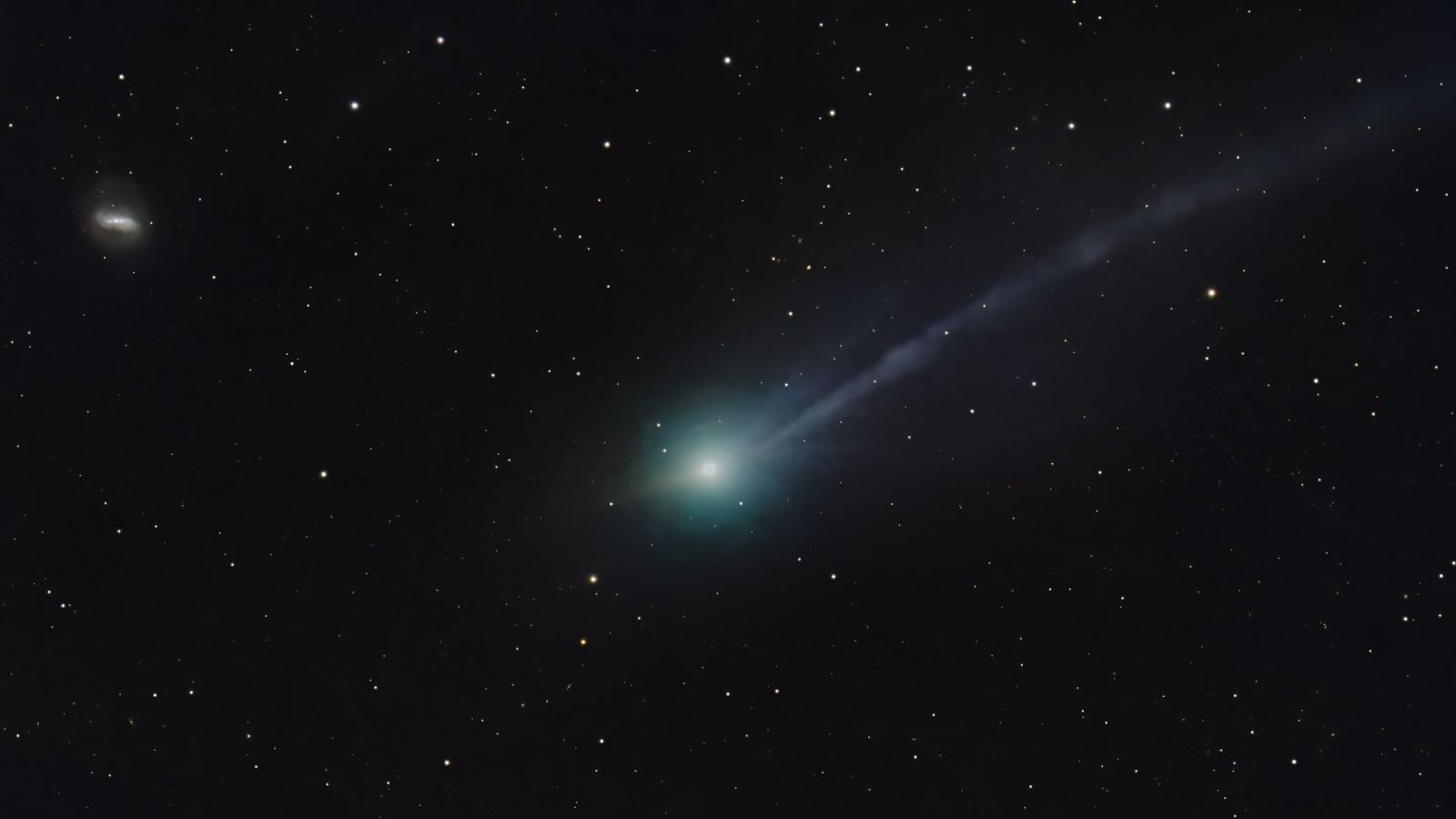
Interstellar comet 3I/ATLAS is up to 12 billion years old, unlike anything found in our solar system, new James Webb Space Telescope (JWST) observations suggest.
Comet 3I/ATLAS became a celestial celebrity last year after an interstellar visitor was discovered hurtling through space near us. Soon after, speculation spread online that the space rock could be an alien spacecraft. However, most astronomers are convinced that 3I/ATLAS is a comet from an unknown star system.
Article continues below
you may like
Researchers already knew from the comet’s speed and orbit that it could be the oldest comet ever observed. Previous estimates put the comet’s age between 3 billion and 11 billion years old. The new discovery further narrowed down the comet’s age and origin by examining isotope measurements taken by JWST when it passed Earth in December 2025.
“They show that the isotopic composition of 3I/ATLAS is very different from solar system comets, suggesting that it probably formed 10 to 12 billion years ago,” Romain Maggiolo, a research scientist at the Royal Belgian Institute for Astronautics and Aeronautics who was not involved in the study, told Live Science in an email. “In other words, 3I/ATLAS formed not only elsewhere in the universe, but also much earlier in the Milky Way’s history, in a stellar environment different from our own.”
Comet 3I/ATLAS is only the third interstellar object ever recorded in our solar system. The space rock, which Hubble Space Telescope observations suggest is between 1,400 feet (440 meters) and 3.5 miles (5.6 kilometers) wide, zoomed into the solar system last year at about 137,000 miles per hour (221,000 kilometers per hour) before spinning around the sun.
The comet made its closest approach to the star, known as perihelion, on October 29, 2025, and then to Earth on December 19, bringing it within about 168 million miles (270 million kilometers) of Earth. A few days later, on December 22, JWST published the observations analyzed in a new study.
Relics from ancient space
As the comet approaches the star, it heats up, causing the ice on its surface to sublimate and turn into gas. By studying the composition of this gas, researchers can begin to understand what it is made of and under what conditions it formed.
The authors of the new preprint investigated the proportions of isotopes, or versions of elements, in the material outgassed by 3I/ATLAS. They found that the comet’s water contains more of the heavier hydrogen isotope, deuterium, than any other comet studied to date, and also has a proportion of carbon isotopes that exceeds levels normally found in the solar system.
This result provides clues to what conditions were like in the ancient planetary systems that formed comets in the early days of the Milky Way.
What to read next
“If 3I/ATLAS is indeed as old as this study suggests, the large amount of volatile molecules it contains indicates that rich prebiotic chemistry may already have occurred in star-forming regions very early in the galaxy’s history,” Maggiolo said.
The findings also show that the comet likely formed in an environment as cold as about 30 Kelvin (-406 degrees Fahrenheit, or -243 degrees Celsius), and that it likely formed in a dense, well-shielded protoplanetary disk.
The study is still in the preprint stage, but Maggiolo, who has studied Comet 3I/ATLAS as part of his own research, didn’t have any major concerns about it. The new measurements will help researchers “better understand this interstellar messenger,” he said.
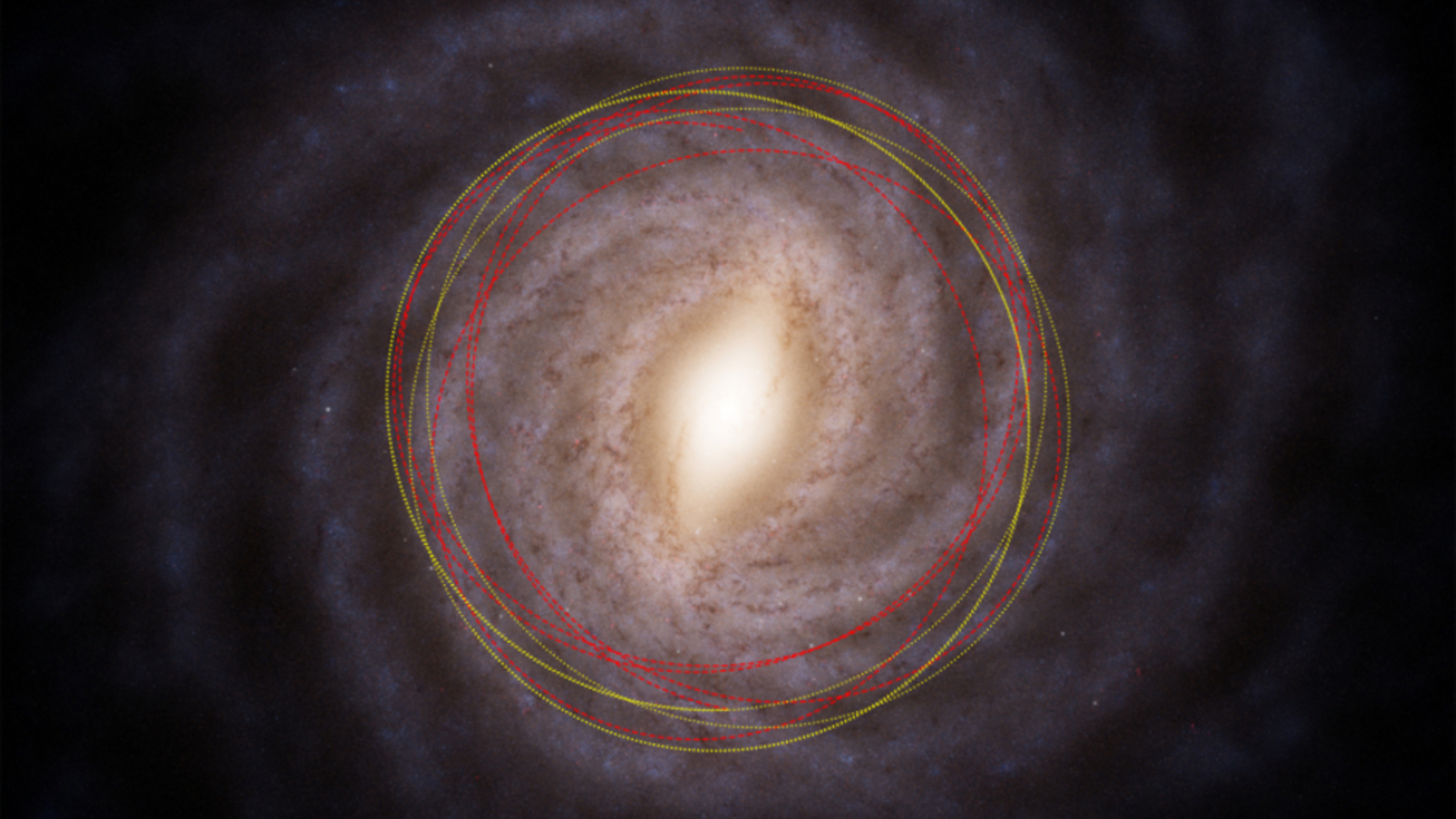
Josep Trigo Rodríguez, chief scientist at Spain’s Asteroids, Comets and Meteorite Research Group at Spain’s Institute of Space Sciences (CSIC/IEEC), who previously identified an erupting “cryovolcano” on Comet 3I/ATLAS, said the new discovery is an excellent culmination of scientific work by renowned experts using a variety of techniques.
“This manuscript illustrates that interstellar comets are unique objects that can sample remote regions of the Milky Way,” Trigo Rodriguez told Live Science in an email.
It’s entirely possible that researchers will never know which star system gave birth to comet 3I/ATLAS. This comet has probably been traveling through space for billions of years and has come a very long way in that time. Maggiolo’s own research has found evidence that the objects have been exposed to cosmic rays all the time in space, making them so highly irradiated that their chemical composition may have fundamentally changed, making their origins more difficult to decipher.
“The isotopic composition of the material outgassed by 3I/ATLAS provides an important new piece of the puzzle,” Maggiolo said. “But the puzzle is far from complete!”
Finding these pieces of the puzzle is a race against time for astronomers, as comet 3I/ATLAS is currently hurtling out of the solar system. It is currently passing Jupiter and is expected to make its closest approach on Sunday (March 15). The comet will come within about 33 million miles (54 million kilometers) of the gas giant, much closer than it will ever reach Earth.
The interstellar traveler will then continue its journey away from us, crossing the orbit of Saturn in July, passing the orbit of Uranus in April 2027, and passing the orbit of Neptune in March 2028. You can track comet trajectories using NASA’s Eyes on the Solar System simulation.
Source link
