


Dr. Harry J Barraza, COO of PFxBiotech, talks about the role of alternative proteins and precision fermentation in securing Europe’s future food system.
Europe’s protein systems are under simultaneous pressure from extreme climate, geopolitical and demographic changes. A diverse “portfolio” of protein sources, including plants, algae, fungi/mycoproteins, insects, fermentable raw materials, and, in the long term, cultured meat, provides the strongest hedge against supply, land use, and emissions risks. Precision fermentation (PF) is a vital tool because it decouples protein production from land and animals, allowing consistent quality of raw materials at factory scale while significantly reducing the footprint under many scenarios. With the introduction of the EU’s 2025 Bioeconomy Strategy, EFSA’s updated new food guidance and the UK FSA’s precision fermentation business support services, Europe is on the right footing for faster and safer deployment.
Why you need an alternative protein portfolio
The resilience of protein supply is statistical, and diversity reduces variability. Our portfolio across plants, microorganisms and emerging cell-based sources reduces correlated risks across weather, disease and trade while preserving food choices and local agriculture. A visionary European study concludes that scaling up algae, insects, microbial fermentation and cultured meat can significantly reduce land-use pressures and greenhouse gas (GHG) emissions compared to regular protein demand.
For example, PF programs microorganisms as cellular factories to produce specific proteins (such as whey, casein, and egg protein) with strict quality and functional specifications. This is based on decades of safe use in other industries (insulin, food enzymes, etc.), but recent tool chain advances (genome editing, high-throughput screening, in silico process optimization) have enabled multi-product “foundries”. Importantly, PF transfers at least a portion of the protein supply from pasture to the bioreactor, allowing for land conservation and supply stabilization. LCAs of PF whey and casein published under defined boundaries report orders of magnitude land savings and significant GHG and water reductions, with results sensitive to energy mix, feedstock origin, and downstream separation.
In summary, engineering biology enables companies to innovate by transforming strain engineering, modular downstream processing (DSP), and digital twins into reusable toolchains. Once the chassis strain and downstream steps are qualified, the addition of new proteins is done step by step. This platform effect compresses designs down to tank cycles, reduces capital expenditures, and supports revenue diversification across nutrition and ingredient categories.
Policy monitoring: Europe and the UK lower barriers to scale-up
The European Commission’s 2025 Bioeconomy Strategy (COM(2025) 960) positions advanced fermentation as a growth engine and proposes:
Technical support and regulatory sandbox for small and medium-sized enterprises under the upcoming Biotechnology Act. A bioeconomy investment development group offering the first-ever blended financing for biorefineries and fermentation plants. Improving standards and the environmental footprint of our products. Improved access to pilot and demo infrastructure. EFSA has updated its new food guidance (September 2024) to clarify the dossier of PF-derived ingredients while continuing the QPS assessment of food/feed microorganisms. In the UK, the FSA’s 2025 Innovation Research Program has launched a Precision Fermentation Business Support Service, providing pre-submission guidance and RFI support, alongside a new Guidance Hub.
For many startups in the bioeconomy field, it is an experience that capital intensity and shipping uncertainty create two valleys of death: demo → first commercialization and first sales → industrial scale. European strategies respond with de-risking and demand signals, but execution depends on accessible pilot assets and skills. This situation was also highlighted by the UK’s National Alternative Protein Innovation Center (NAPIC) in a recent report produced from workshops with start-ups, suggesting that a combination of pilot facilities, regulatory roadmaps, shared methodologies and upskilling of employees, from data-savvy food technologists to bioprocess engineers and culinary scientists, could accelerate the transformation of advanced fermentation technologies from laboratory successes to market-ready products.
PFx Biotech: European leader in precision fermentation
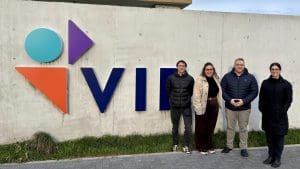
PFx Biotech has emerged as the European leader in precision fermentation by combining a clear product theory (bioactive specialty proteins, including breast milk proteins) with platform capabilities spanning strain engineering, process development and regulatory compliance. In addition to the Nutrition and Applications Lab established in Lisbon’s Tagus Park (supporting regulatory submissions and product development), the company has established a new protein discovery lab operated at the VIB Bio Incubator in Ghent, Belgium.
Leveraging local expertise and collaboration across one of Europe’s strongest biotech corridors, our team in Ghent aims to strengthen PFx Biotech’s innovation output by:
Accelerate discovery to scale platform readiness. We establish our leadership in strain engineering and precision fermentation and demonstrate a pipeline designed to move candidates from protein identification to pilot and technology transfer. Strengthening the company’s scale-up potential through cooperation with one of the largest pilot plants in Europe (i.e. Bio Base Europe Pilot Plant, BBEU).
All of the above is aimed at providing PFxBiotech with tools to reduce time-to-demonstration, supporting rapid iterations on titer, yield, and DSP.
The story behind the numbers: Resilience through diversity
Recent STOA and OECD research shows that replacing some traditional animal protein with alternative sources can reduce land use and agriculture, forestry and other land use (AFOLU) emissions without limiting dietary protein availability. The rationale is simple. Different protein sources utilize different resource bases and shock profiles.
PF’s Land Savings Promise
Several LCAs of PF milk proteins show that land occupancy, greenhouse gas emissions, and water usage per unit of functional protein can be significantly reduced when clean energy inputs and efficient downstream processes are in place. Although not a panacea, PF creates selectivity. By relocating some of its protein production to managed biomanufacturing, Europe can free up land for biodiversity restoration and high-value crops, while mitigating climate-induced feed fluctuations and livestock disease risks.
Things to look out for in the near future (2026-2028):
Development of the Commission on the Bioeconomy Investment Development Group and the first regulatory sandbox under the Biotechnology Act. EFSA’s new food opinion on PF-derived proteins and harmonized methods based on the Product Environmental Footprint (PEF) review. Test and demonstration capacity utilization in Ghent and other EU hubs and the emergence of a profitable offtake model for the first PF plants. PFx Biotech pipeline disclosure (additional HMProtein classes, techno-functional data) and early partnerships in infant and performance nutrition.
Please note: This is a commercial profile
References
European Commission. Strategic Framework for a Competitive and Sustainable EU Bioeconomy (COM(2025) 960). 27 November 2025 GFI Europe / FoodBev coverage on EU bioeconomy strategy support for fermentation innovators (27-28 November 2025) EFSA. Updated Guidance on Novel Foods (30 September 2024) and QPS Update (2024-2025) EFSA. Safety of Cell Culture-Derived Foods – Scientific Colloquium (10 May 2023) Overview of EU Novel Food Applications: Komagataella fafii (Lemilk) Beta-lactoglobulin manufactured by the Food Authority of Singapore. Overview of Health Canada’s Premarket Approval Framework for Novel Foods. New food information: Komagataella phaffii yRMK 66 Knychala MM et al. β-lactoglobulin protein precision fermentation as an alternative to animal protein: a review. Fermentation (MDPI) 2024;10:315 OECD. Alternative Meat Proteins – Opportunities and Challenges European Parliament (STOA). Alternative protein sources for food and feed. April 2024 NAPIC. Partner Engagement Workshop Report (2025) VIB Facility – VIB Bio Incubator, Tech Lane Ghent Science Park. Ghent City Special Feature PFx Biotech
This article will be published in an upcoming Special Focus Publication on Food.
Source link
