

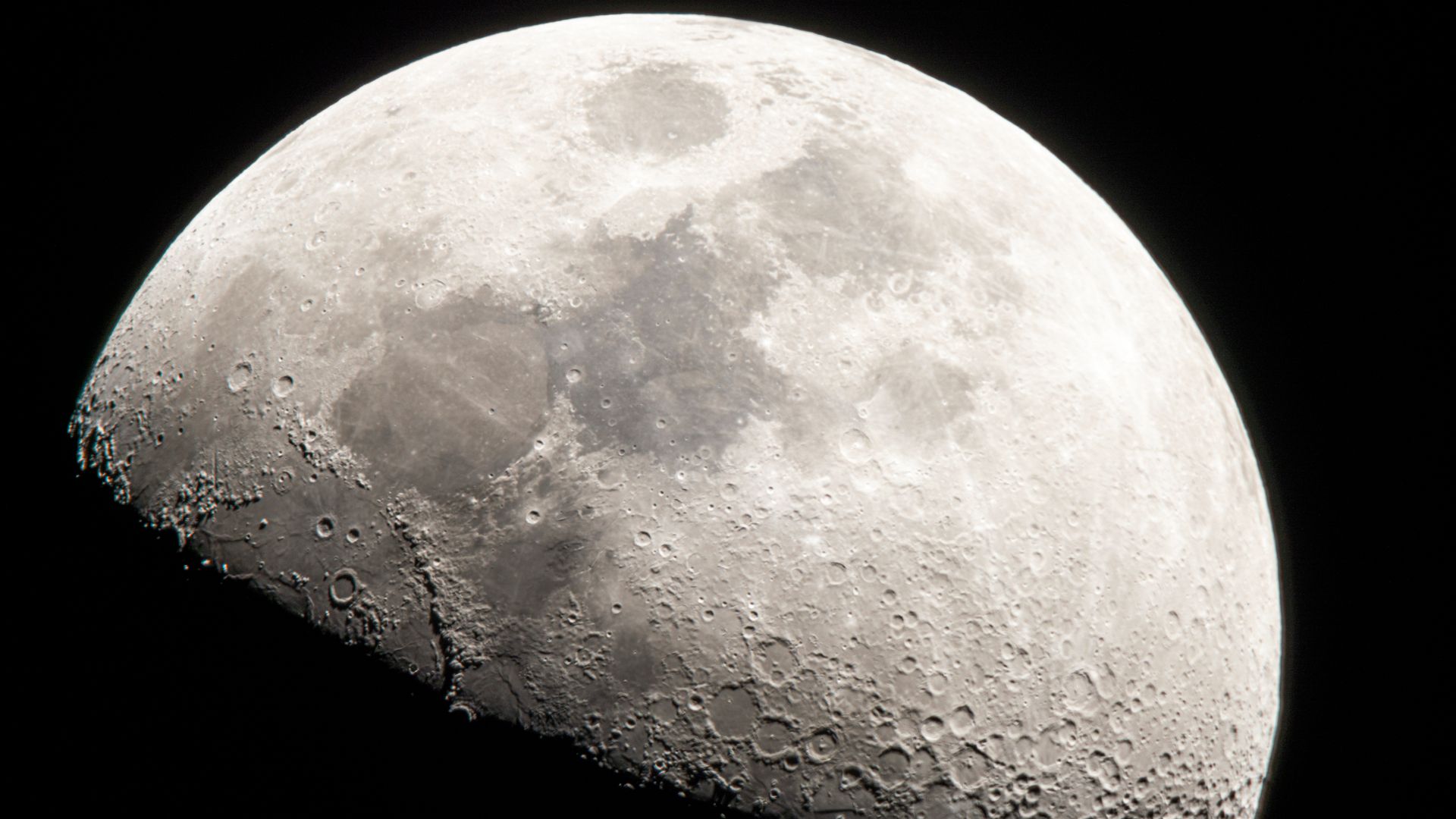
For most of human history, the moon was more than a distant object in the night sky. It has served as a clock, a guide, a god, and a focus for science. Now that NASA’s Artemis II mission has returned astronauts to the lunar system for the first time in more than 50 years, humanity’s relationship with its celestial neighbor may never be the same.
In her book Our Moon: How Earth’s Celestial Companion Transformed the Planet, Guided Evolution, and Made Us Who We Are (Penguin Random House, 2025), science writer Rebecca Boyle traces that deep connection and shows how the moon helps us understand not just Earth itself but our place in the universe. In this book, Boyle takes us on a journey through history through the lens of the moon, interweaving science with civilization and culture.
you may like
Kenna Hughes-Castleberry: What has changed significantly in the way humans view the moon over the centuries?
Rebecca Boyle: This is what I did in the book, trying to figure out what humanity’s earliest relationship with the moon was. As far as I can find, and as far as there are records, I think our oldest relationship with the moon is through timekeeping. So being useful for this practical use of telling us how much time has passed and, importantly, helping us plan for future time, is a very unique human trait as far as we know.

People developed calendars using the moon on every continent on Earth. We still use some of them. The Hebrew calendar is still a lunar calendar. The Islamic calendar is still a lunisolar calendar. Clocks are still the primary timekeeping system in Asia, which is why Chinese New Year is celebrated.
Soon after, we also used it as a guardian of this kind. The personification of the moon is one of the oldest religious figures on earth, in every culture we have traced back in time. And I think that’s definitely changed since Apollo, in my opinion. But I hope people still think about those old ways, because we went there and found it to be an authentic place.
KHC: Why is the moon both an object of science and a symbol of culture?
RB: It’s the most obvious thing in the sky besides the sun. You may wonder why the moons are the same size in the sky. Why is it always there and why does it provide so much lighting? So it’s definitely something that’s important.
If we find out that other planets have satellites, [we were] We also wonder why they are different, what makes ours unique, why it is so important to Earth, and what it tells us about Earth.
What to read next
KHC: How did the Apollo era shape the way we view the moon compared to previous generations?
RB: I think now, more than 50 years later, it has become a reality for the first time in a way that is difficult for us to recognize. And I think that was a really transformative moment for the moon and our understanding of it. The fact that we actually reached the moon and brought back pieces of the moon. We learn a lot about the moon’s composition and how it differs from our expectations, and the moon tells us all the stories about Earth’s history. I think that’s an ongoing story.
KHC: How do you think the Artemis II mission will change the way we view the moon?
RB: This is a moment in our generation to understand the relationship between the moon and our planet in new ways and to reframe its importance in human history. This is the only moon like it that we have discovered so far. Because it is a huge object, [and] It’s really far away. And that combination of facts plays a very important role in Earth’s climate, Earth’s geological history, and the history of life.
I think there’s a very solid argument that we wouldn’t be here without it. Mars’ moons have nothing to do with Mars. They’re just there, like potatoes flying around Mars…Our moon, on the other hand, is like a companion world, but I don’t think people think of it that way—and I think Artemis is an opportunity for people to rebuild that relationship.
KHC: From a cultural perspective, what does it mean for us to go back to the moon and talk about future lunar missions and even lunar bases?
RB: One of the things that has been on my mind this week is that we often take space for granted. [and] We take NASA for granted. This mission this week is proof that this work is being done on very long schedules by incredibly dedicated and intelligent people who truly care, and they deserve our admiration, our respect, our taxpayers’ money…and our moral support.
I think just getting off the earth in that rocket is such an accomplishment that people take it for granted. And I hope this is like a wake-up call. These missions that suddenly appeared in the national consciousness have actually been years and decades in the making. Whatever the reason people are paying attention to Artemis, I hope they also understand what it takes to do so.
Editor’s note: This interview has been condensed and edited for clarity.
Our Moon: How Earth’s celestial friends transformed the planet, guided evolution, and shaped us.
Boyle’s book was a national bestseller in 2025.
Test your knowledge of the moon with our moon quiz!
Source link
