

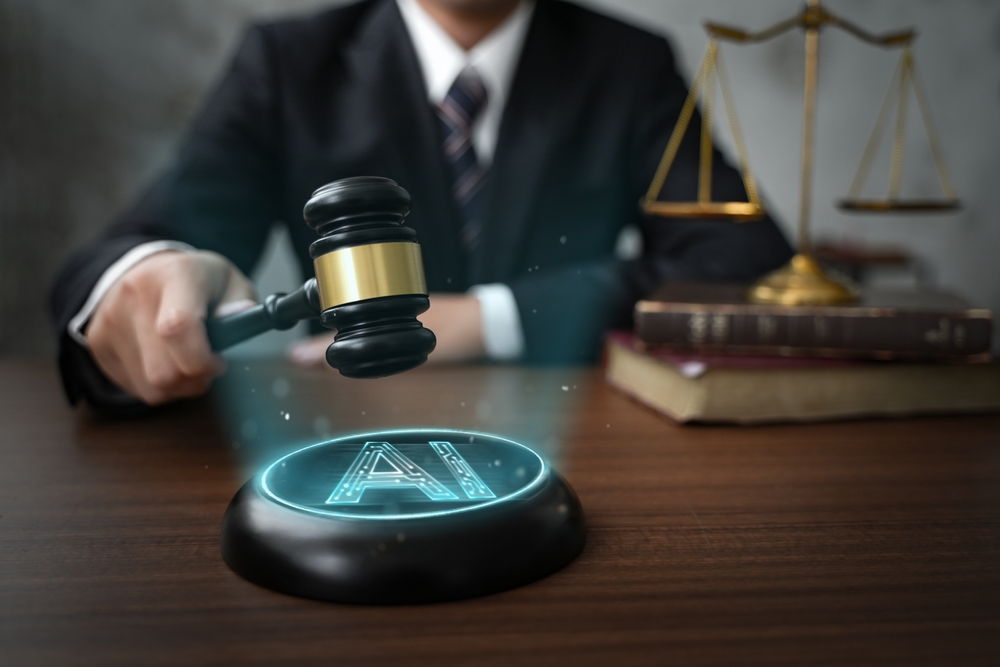
As artificial intelligence (AI) continues to transform industries and daily life, governments and regulators around the world are rushing to create frameworks that protect society and enable innovation.
The term AI regulation has rapidly transitioned from a future concept to a current mandate, with major legislation coming into force, new policies being debated, and new governance models taking shape.
In 2026, this balance between innovation and safety will become one of the defining challenges of the digital age.
AI at a crossroads: Innovation soars, but regulation lags
AI technologies, particularly large-scale language models, autonomous systems, and advanced analytics, are now embedded in everything from banking and healthcare to legal services and the creative industries.
However, the speed of AI adoption often outpaces the regulatory frameworks in place to govern it. As AI systems influence real-world decisions and outcomes, complex questions about transparency, bias, accountability, and risk become increasingly urgent.
Experts argue that without thoughtful regulation, public trust and safety can be undermined, while overly strict rules can stifle growth and competitiveness.
This tension is at the heart of the 2026 debate. It’s about how to protect the public without stifling innovation.
Global AI rules are on the horizon
Around the world, different jurisdictions are taking different approaches to AI regulation.
European Union: The EU’s landmark AI law has been in the works for years and is scheduled for full enforcement in stages from 2026 to 2027. The law adopts a risk-based model and targets high-risk AI applications (such as biometrics, critical infrastructure, and medical diagnostics) with strict compliance obligations. United States: There is no comprehensive federal AI law, so states act independently. California passed a strict AI safety and transparency law requiring public reporting of safety incidents and risk assessments, and other states, including New York, are pursuing similar regulatory frameworks. Asia: South Korea is scheduled to implement an AI Basic Law in early 2026, potentially becoming the first country to operate binding AI governance. China continues to advocate for a global AI governance dialogue and multilateral security framework.
This patchwork of regulations highlights the urgency and complexity of managing AI around the world.
Ensuring AI respects human rights
At the heart of AI regulation is aligning cutting-edge technology with fundamental ethical principles. Regulators are increasingly focusing on protecting human rights, privacy, fairness and non-discrimination.
For example, the EU regulatory ecosystem has integrated AI law, the General Data Protection Regulation (GDPR), and other directives to set standards for transparent and ethical AI design.
These frameworks aim not only to reduce risks such as algorithmic bias and privacy violations, but also to strengthen public trust.
Similarly, the Framework Convention on Artificial Intelligence, an international treaty supported by the Council of Europe, aims to ensure that AI is developed in line with democratic values and human rights.
As AI systems play a growing role in hiring, lending, and policing, ethical governance will continue to be at the center of regulatory discussions.
A high-stakes sector: The most important AI regulations
AI regulation is not a panacea. Certain areas require tighter monitoring.
Financial services: AI-driven trading, credit scoring, and fraud detection pose risks such as system instability, opaque decision-making, and discriminatory lending. Legal research highlights the need for adaptive regulatory frameworks that balance innovation and consumer protection. Healthcare and medical devices: Diagnostic or therapeutic AI tools fall into the high-risk category and will be subject to strict compliance checks under frameworks such as the EU AI Act. Public safety: Surveillance systems, predictive policing tools, and self-driving cars raise complex debates around civil liberties and public accountability.
By 2026, regulators, often in collaboration with industry stakeholders, will increasingly tailor AI requirements based on sector-specific risks.
Accelerate innovation without stifling growth
One of the central challenges of AI regulation is striking the right balance between accountability and innovation.
Overly prescriptive rules can slow technological progress, force startups out of the market, or concentrate power in the hands of a few powerful players.
Industry leaders and policymakers alike are emphasizing the importance of adaptive, innovation-enabled frameworks that encourage creativity while managing risk responsibly.
Some experts argue for principles-based AI regulation and voluntary safety initiatives that complement formal legal requirements.
But critics warn that voluntary measures alone are insufficient to address systemic harms such as misinformation, privacy violations and algorithmic discrimination.
A hybrid model that combines basic legal standards with flexible sector-specific guidelines may offer the most realistic path forward.
Enforcement and Compliance: Preparing for a new regulatory era
As AI regulations become more specific, enforcement mechanisms and compliance strategies are moving to the forefront.
Penalties and oversight: Under the AI Act, companies operating in the EU can face significant fines for non-compliance and are encouraged to adjust to regulatory standards early. Transparency and incident reporting: Laws in US states such as California require public disclosure of safety practices and critical AI failures, shifting accountability to developers and adopters. AI literacy and governance structures: Companies increasingly require cross-functional teams that include legal, technical, and ethical experts to manage regulatory compliance and risk. Training programs and internal oversight bodies are quickly becoming standard practice.
Investors and board members are also paying attention. Good governance and compliance are now seen as critical elements of corporate strategy, not just regulatory burdens.
AI regulation status after 2026
The evolution of AI regulation will not stop in 2026; it will continue to change, adapt, and expand.
Global engagement: High-level summits like the AI Impact Summit (scheduled for February 2026 in Delhi) aim to move the discussion beyond safety to measurable implementation outcomes and international cooperation. Harmonization efforts: As multiple regulatory regimes proliferate, there will be increasing pressure to harmonize standards across borders. This is an essential step for global innovation and trade. Sector expansion: As regulators gain experience, sector-specific rules will emerge in areas such as autonomous transportation, digital content moderation, and AI-powered biotechnology.
In 2026, AI regulation is at a critical crossroads. Well-designed policies can protect societies, foster trust, and unleash the next generation of technological breakthroughs. But failure, whether through overreach or inertia, risks undermining the very innovation they seek to govern.
For policymakers, industry leaders, and innovators alike, the goal is clear: to create a safe, ethical, and future-proof AI ecosystem. Doing so requires courage, collaboration, and a willingness to evolve along with the technology itself.
Source link
