

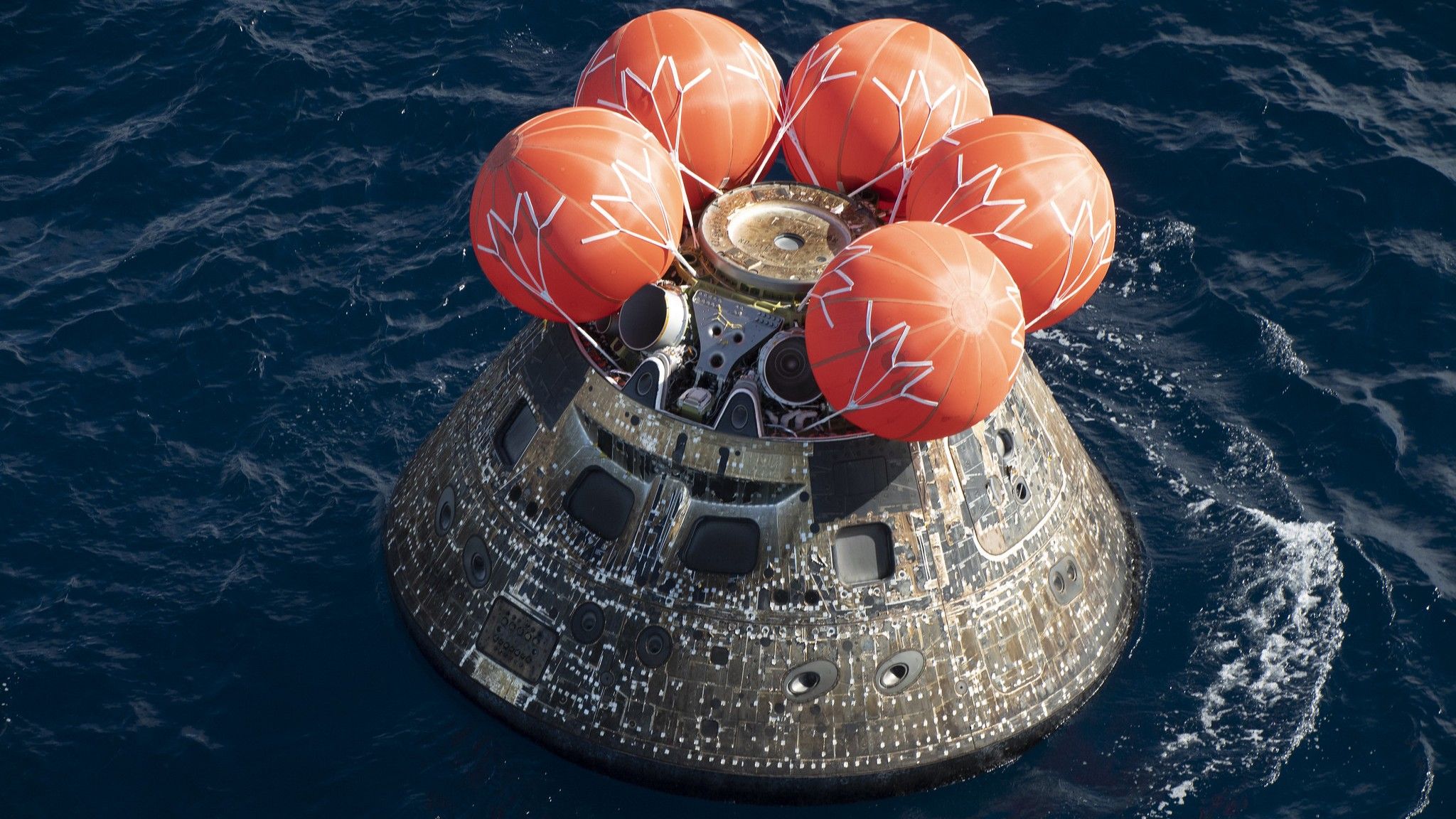
The Artemis II astronauts are returning home from a record-setting journey around the moon, but will the Orion spacecraft’s heat shield be safe to bring them home? NASA and the astronauts say yes, but not everyone agrees.
The Artemis II mission, which launched on April 1, is scheduled to end with a dramatic splashdown in the Pacific Ocean late Friday (April 10). NASA’s first manned flight to the moon since 1972 resulted in some amazing footage and touching human moments. But re-entry, which will take place at speeds of more than 25,000 miles per hour (40,000 km/h), will make the crew the fastest in human history, but also the most dangerous hurdle yet.
you may like
Ed Macaulay, a lecturer in physics and data science at Queen Mary University of London, told Live Science: “The capsule will re-enter at a temperature close to about half that of the solar surface.” “The heat shield is essential to protect the capsule from the scorching heat of atmospheric reentry. Without it, the capsule would completely melt and burn up.”
The shield is made of a material called Avcoat, and is thought to be gradually eroded upon entry into the atmosphere. But during the Artemis I mission, an unmanned 2022 predecessor to Artemis II, Orion’s heat shield lost chunks of material and suffered far more damage than expected.
However, NASA has not replaced the heat shield to address this issue. After an investigation, authorities concluded that the crew’s safety could be ensured by tweaking the flight path instead.
In the case of Artemis II, Orion will not fly as high as its predecessor during reentry. Instead, make a slightly “lofted” motion. The spacecraft will enter at a steeper angle, meaning it will spend less time in the atmosphere, where Artemis 1 had problems.
NASA is confident that the modifications are sufficient to protect the safety of astronauts. But NASA Administrator Jared Isaacman acknowledged that this approach is “not the right way to do things long term” and that there is no Plan B.
“The heat shield has to work,” Isaacman said in an interview shared by the Free Press on Tuesday, April 7. “I’m always going to think about that until they get back in the water.”
“There’s no question the team did the right analysis on this,” Isaacman added. “We have changed the mission profile. The entire atmospheric reentry profile is significantly different than Artemis I and takes into account what I describe as the ‘shortcomings’ of that vehicle’s current heat shield.”
What to read next
It is important to note that Artemis I’s heat shield did not fail. There was enough Avcote left. Data collected inside the capsule also revealed that the internal temperature remained normal. If the astronauts had been on board Artemis I, they would have been fine.
What happened to the Artemis I heat shield?
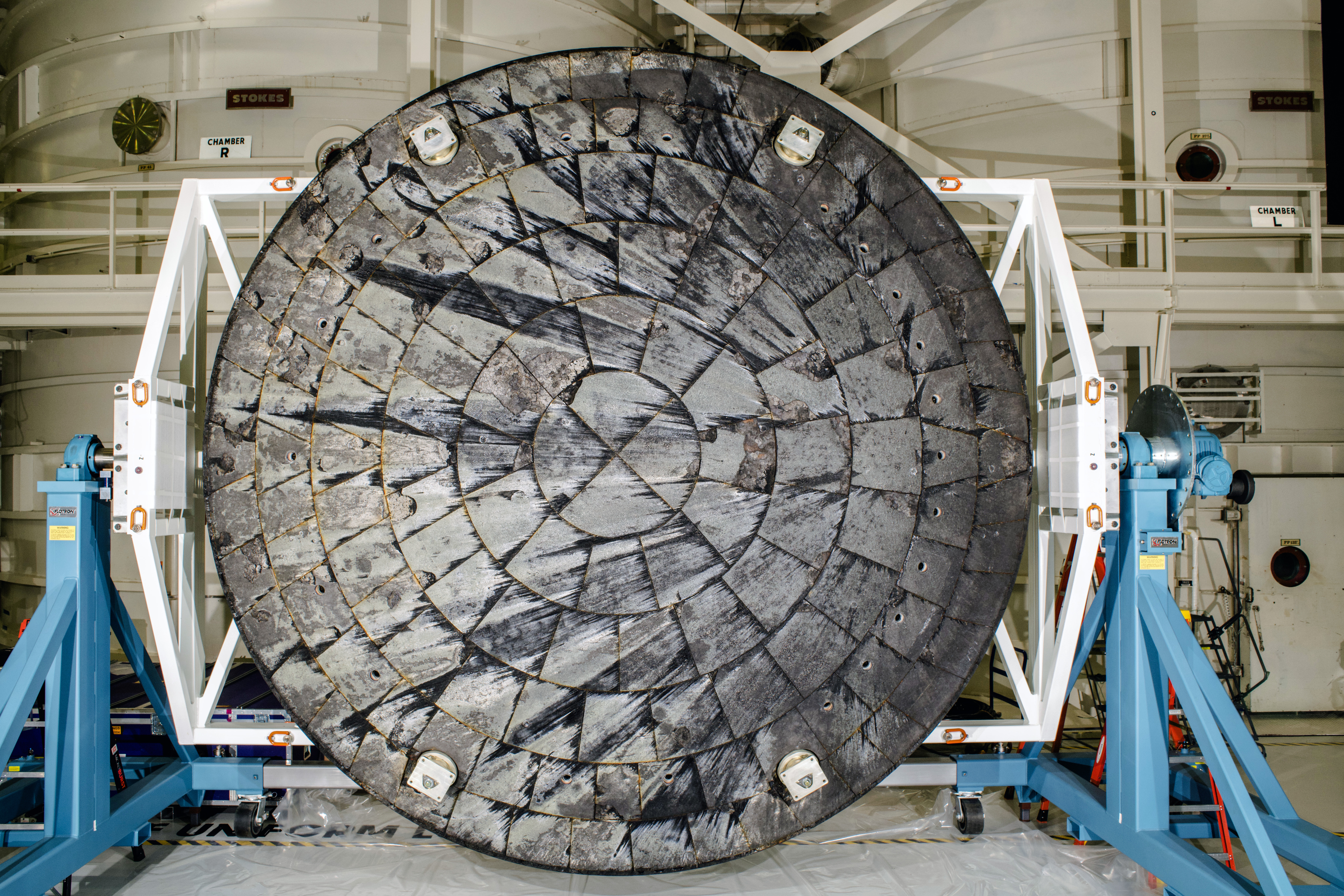
Some scorching was expected as the Artemis I Orion capsule plummeted to Earth, reaching temperatures of around 5,000 degrees Fahrenheit (2,800 degrees Celsius).
But when the unmanned Orion capsule finally flew off the coast of Mexico on December 11, 2022, completing the hottest and fastest reentry ever, NASA quickly realized that chunks of the heat shield’s material were missing, causing more damage than expected.
“When the Artemis I capsule returned to Earth, it was able to safely transit through the atmosphere, but the damage and impact to the heat shield was more severe than predicted by the models,” Macaulay said.
So, considering this “loss of char”, the shield did not fail, but it also did not pass with flying colors. In May 2024, NASA’s Office of Inspector General released a report on NASA’s Artemis II readiness. Live Science’s sister site Space.com reported that the report found that the heat shield was worn in “unexpected ways” in more than 100 locations. The recommendation at the time was that NASA determine the root cause of the problem before Artemis II launches.
But NASA was already working on Artemis II’s heat shield. Engineers at NASA Kennedy Space Center installed a heat shield on the Artemis II Orion spacecraft in July 2023, long before NASA finished investigating the Artemis I heat shield issue. NASA had postponed the Artemis II mission in part due to understanding problems with the heat shield, but the space agency couldn’t stop working on Artemis II.
In December 2024, NASA announced that it had postponed Artemis II’s launch to 2026 and had finally identified the root cause of charring losses in the Artemis I heat shield. Essentially, the Abcoat material, which is essential to a successful heat shield, could not “breathe.”
“While engineers determined that Orion was returning from an unmanned mission around the moon, gases generated within the ablative outer material of the heat shield…could not vent and dissipate as expected,” a NASA spokesperson said in a statement at the time. “This increased pressure and caused cracks to form, causing some of the charred material to separate in several places.”
Fine-tuning reentry
Part of the problem turned out to be the mission’s unprecedented re-entry.
For Artemis I, NASA performed a “skip” reentry in which Orion bounced back through Earth’s atmosphere. The capsule bounced around like a stone on a lake, sank into the upper atmosphere, then jumped back out and re-entered the atmosphere. This strategy extended Orion’s flight range from the time it entered the atmosphere until it splashed into the Pacific Ocean, NASA said. The idea is to fly the spacecraft closer to the United States and improve landing accuracy. Skip entry was also expected to make re-entry smoother for astronauts.
As part of the heat shield study, NASA recreated Artemis I’s entry orbit environment at NASA’s Ames Research Center in California. Investigators found that thermal energy was building up within Avcoat during soaking. This caused pockets of gas to build up within the Avcoat faster than it could disperse, creating pressure spikes and destroying some of the material.
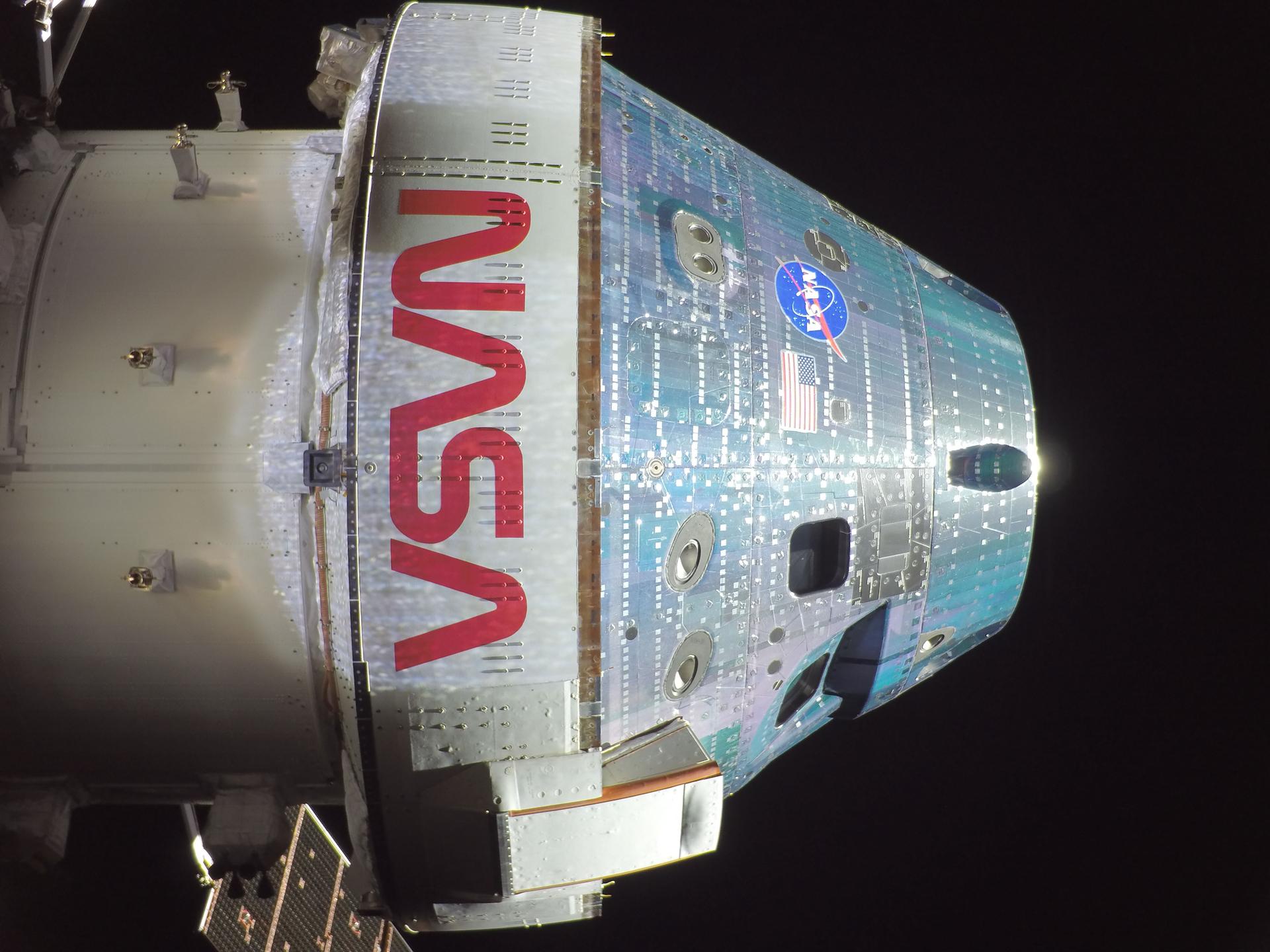
NASA had attempted to recreate Skip reentry on the ground prior to Artemis I, but the agency tested it at temperatures higher than what Orion ultimately experienced. In fact, the heat shield’s thermal performance exceeded NASA’s expectations, but the problem was the temperature drop.
“While the heating was less intense than that seen during Artemis 1’s actual atmospheric reentry, it did slow the carbonization process while still producing gas within the carbonization layer,” a NASA spokesperson said. “The gas pressure increased and the avcoat cracked, releasing some of the charred layer.”
NASA found that in areas where Avcoat was permeable, there was no cracking or char loss in the heat shield. These parts of the heat shield were allowed to vent so pressure did not build up.
This is not ideal news for Artemis II, which uses an even less transparent heat shield. (About 6% of the Artemis I heat shield was transparent, but there were no areas of the Artemis II heat shield that were transparent, CNN reported.) NASA made that change before the Artemis I test flight.
Why is NASA so confident?
After extensive testing and independent reviews, NASA concluded that the problem had been identified and that changes to the reentry strategy would reduce the risk. Artemis II’s atmospheric reentry will not recreate the thermal environment that NASA attributes to Artemis I’s thermal shielding problems.
Ars Technica reported that in January 2026, Isaacman met with outside experts, including NASA thermal insulation engineers, the chair of an independent review team, and senior human spaceflight officials, to gain further confidence.
The meeting included an analysis of what would happen if a large portion of the heat shield were to completely fail. Engineers concluded that Orion’s thick composite base, which includes a titanium framework, could keep the crew safe even if the outer Avcoat block were completely stripped away.
Danny Olivas, a former NASA astronaut and member of the NASA Advisory Board, was one of the experts who attended the meeting and came away satisfied with the work NASA is doing on this issue.
“NASA had a very difficult problem to solve, and I’m happy to share that its team did a great job of addressing the problem,” Olivas wrote in a post on LinkedIn after the meeting. “While hindsight is always a 20-50 decision, this initiative further reinforced my appreciation of NASA’s commitment to crew safety and health.”
But not everyone is confident in NASA’s decision. Charles Camarda, a former NASA astronaut and thermal barrier research engineer who has publicly criticized NASA, also attended the meeting and continued to voice his opposition to the mission. In a response on LinkedIn, Camarda said NASA did not do its due diligence in defining and fixing the problem.
Camarda told CNN earlier this year that he had been trying for months to get NASA leadership to heed his warnings. He is among a group of former NASA employees who believe the crew should never have been on board Artemis II.
“The reason this is so critical is that if the heat shield is peeling off or big chunks are coming off, even if the vehicle isn’t destroyed, it’s in the early stages of failure right now,” Dan Lasky, an expert on advanced entry systems and insulation who has worked for NASA for more than 30 years, told CNN. “It feels like being on the edge of a cliff on a foggy day.”
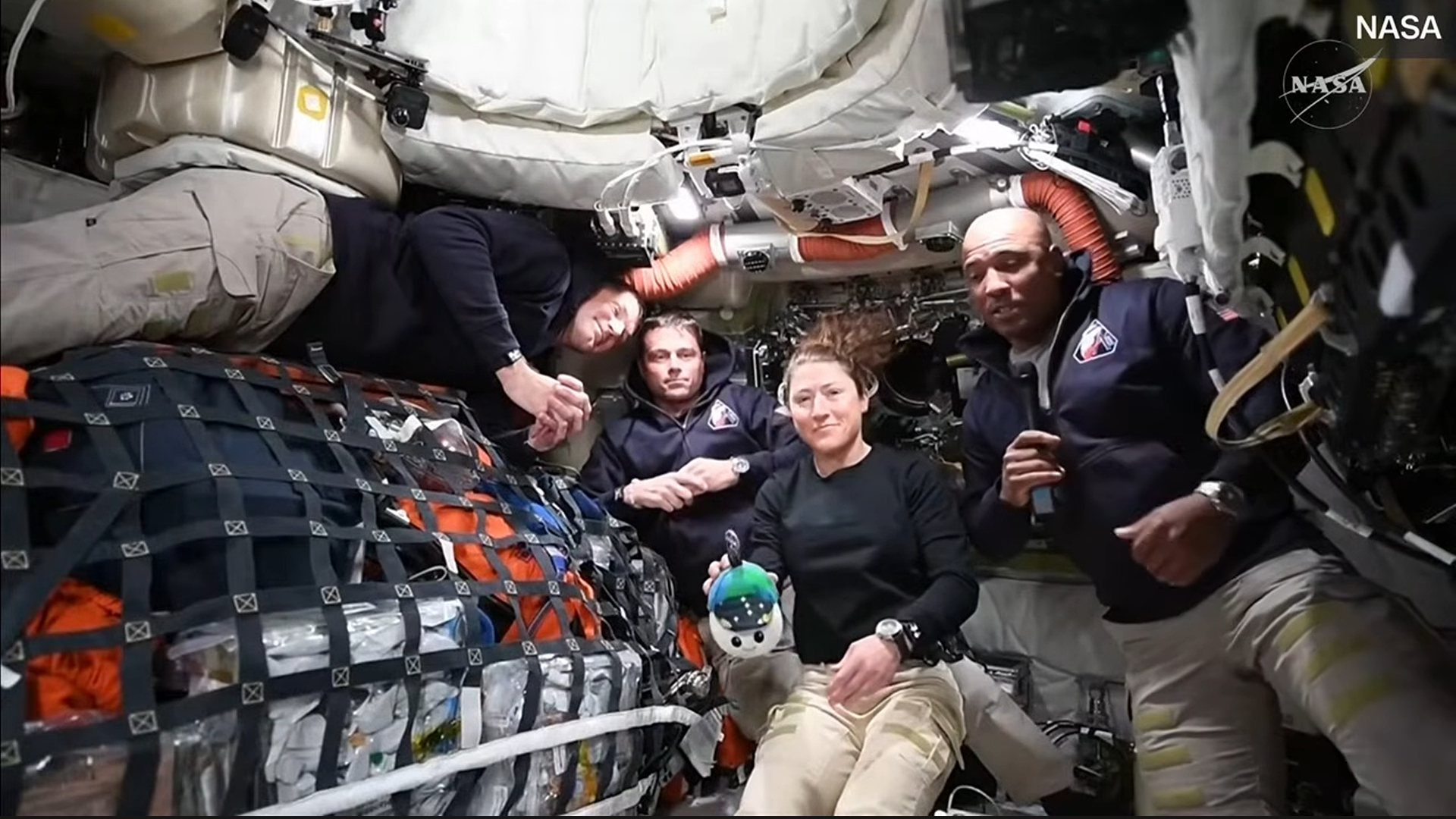
Artemis II has four astronauts flying: Reed Wiseman, Victor Glover, Christina Koch, and Jeremy Hansen. Although some experts have concerns about the astronauts, the crew is expressing confidence in the heat shield, Aerospace America reported in July 2025.
“If we stick with the new atmospheric entry path that NASA is planning, this heat shield will be safe to fly,” Wiseman said.
Mr. Macaulay, a self-described “nervous aviator,” has no intention of risking his life on the Artemis II heat shield. But he noted there are many reasons to be confident ahead of Friday’s reentry, including that humans would have been safe aboard Artemis I and that Artemis II’s mission has been successful so far.
“From a technical standpoint, this was an extraordinary success,” Macaulay said. “I think that’s a reason to be confident about re-entry, because it looks like there’s good reason to expect the trajectory to be completely nominally, completely as designed. And hopefully that will give us the best possible ride through re-entry. I think there’s really good reason to be confident about this.”
Source link
