

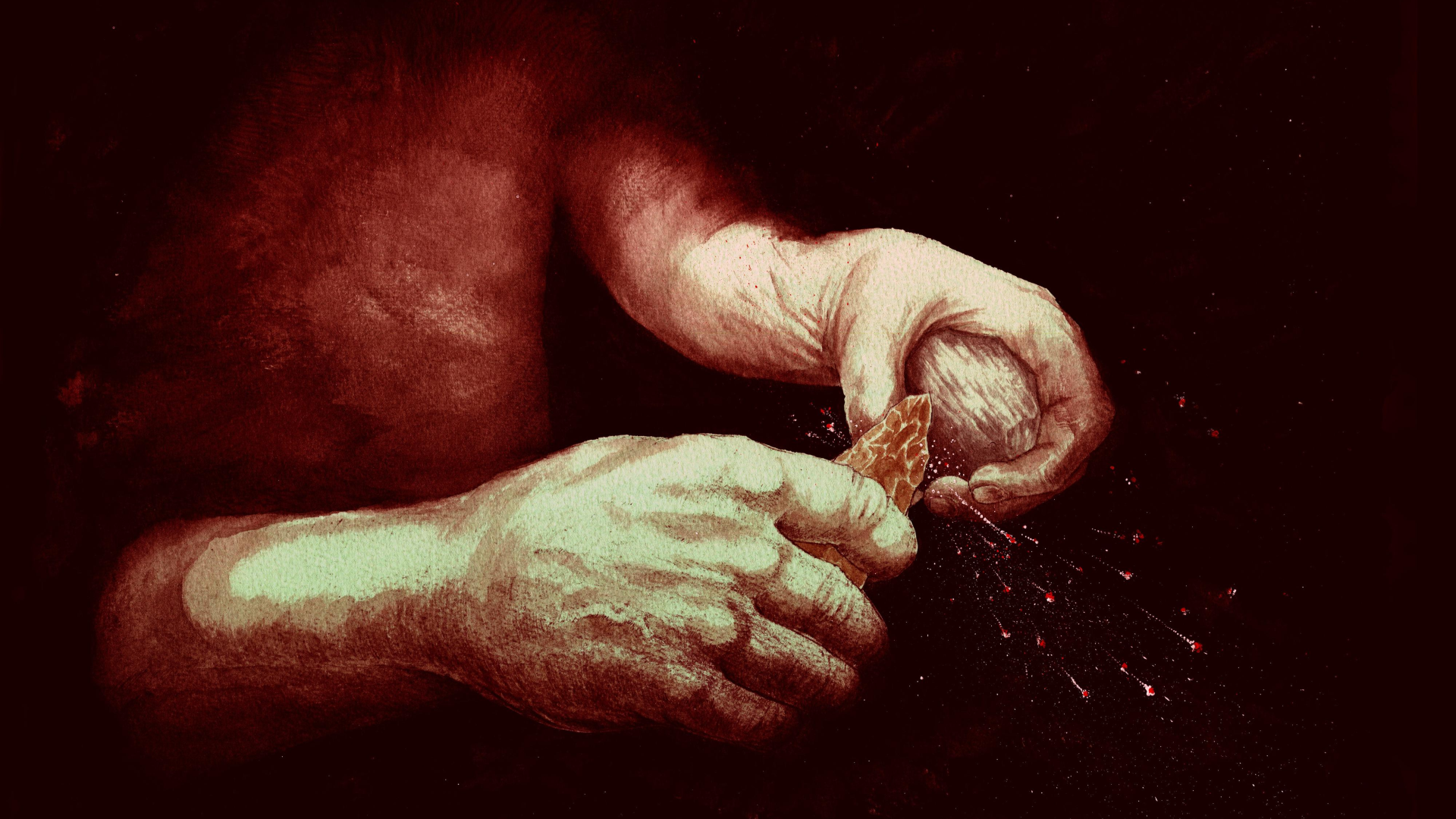
Neanderthals were the world’s first innovators in fire technology, a small body of evidence from Britain suggests. Fragments of pyrite found at a more than 400,000-year-old site in Suffolk, eastern England, push back on archaeologists’ evidence of controlled fire-starting and suggest that significant human brain development began much earlier than previously thought.
“We are a species that has used fire to really shape the world around us,” study co-author Rob Davies, a paleolithic archaeologist at the British Museum, said at a press conference on Tuesday, December 9. Davis said that “the ability to make fire would have been very important” in human evolution, “accelerating evolutionary trends” such as developing larger brains, maintaining larger social groups and improving language skills.
Since 2013, Davis and his colleagues have been excavating a site in England called Burnham, where they have unearthed 400,000-year-old stone tools, burnt deposits, and charcoal. In a study published in the journal Nature on Wednesday (December 10), researchers revealed that the site contains the world’s oldest direct evidence of fire-making, and that the technology was likely pioneered by Neanderthals.
you may like
big turning point
Burnham was first recognized as a Paleolithic human site in the early 1900s due to the presence of stone tools. However, recent excavations have uncovered evidence that an ancient human population lived in the area more than 415,000 years ago, when Burnham was a small seasonal watering hole in a woodland depression.
Archaeologists found a concentration of heat-shattered hatchets and a zone of reddened clay in one corner of the site. Through a series of scientific analyses, the researchers discovered that the reddened clay had been repeatedly locally fired, suggesting that the area may have been an ancient hearth.
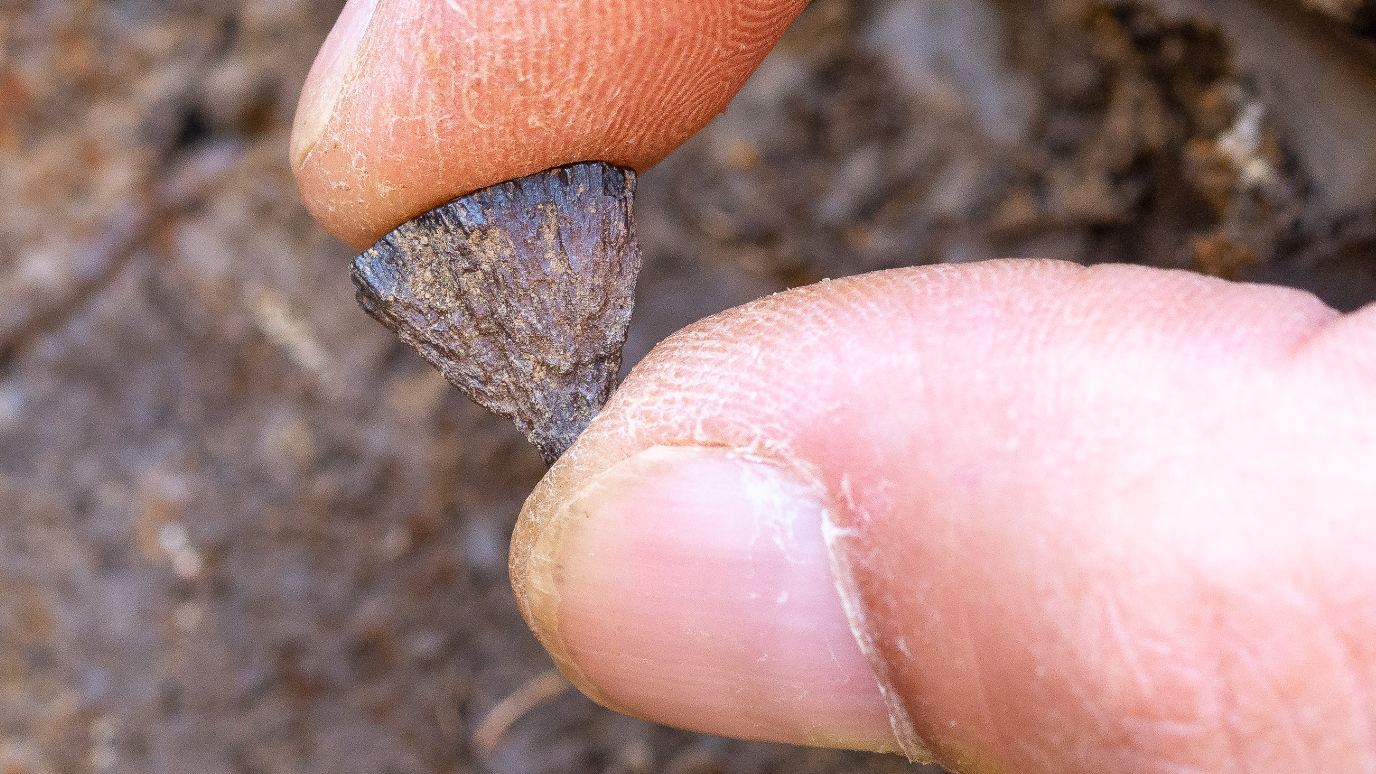
“The big turning point came with the discovery of iron pyrite,” study co-author Nick Ashton, curator of the Paleolithic collection at the British Museum, said at a press conference.
Pyrite, also known as fool’s gold, is a natural mineral that produces sparks when applied to flint. Although pyrite is found in many places around the world, it is extremely rare in the Burnham area, meaning someone brought it to the site specifically, perhaps for the purpose of starting fires, the researchers said in the study.
use of fire by humans
Because of the importance of controlled fire, paleoanthropologists have long debated the timing of this invention.
“Fire has many clear benefits, from cooking, protection from predators, technological uses in creating new types of artifacts, to its ability to bring people together,” April Nowell, a paleolithic archaeologist at the University of Victoria in Canada who was not involved in the study, told Live Science via email. “To understand the emotional resonance of a campfire, we need only recall our own childhood gatherings around a campfire.”
Researchers believe that early humans first used wildfires to cook food. This was an important step in human evolution, Davis said, because cooking expanded the range of foods available and made them easier to digest, thereby providing more nutrients for larger brain growth.
you may like
However, evidence for intentional early fire techniques is limited and often ambiguous, the researchers noted in the study.
For example, scientists unearthed reddened deposits at Koobi Fora in Kenya that are about 1.5 million years old. The researchers suggested that the main hominin at the site, Homo erectus, had a significantly larger brain, so this could suggest early use of fire. And at two sites in Israel dating back about 800,000 years, burnt animal bones and stone tools suggest that the human ancestors who lived there may have controlled fire.
Then, about 400,000 years ago, fire technology exploded. Archaeologists found evidence of fire in cave sites in France, Portugal, Spain, Ukraine and Britain, and then found evidence of even more widespread use in Europe, Africa and the Levant by 200,000 years ago.
However, Ashton argued that these previous examples do not show conclusive geochemical evidence for the same type of fire occurrence as was discovered at Burnham. He called the team’s careful analysis of the Burnham deposit and identification of pyrite “the most exciting discovery of my 40-year career.”

Neanderthals are “perfect humans”
However, Burnham’s bones have since disintegrated, and no “smoker” made of butchered and roasted animal bones has been found to prove that the site was used for cooking.
This also means there are no skeletal remains of the fire-starters themselves at Burnham, although study co-author Chris Stringer, a palaeoanthropologist at the National History Museum in London, speculates about their identities.
Stringer said at a press conference that “we believe the fires at Burnham were started by early Neanderthals,” based on a nearby site called Swanscombe, where the skull of a Neanderthal contemporary with Burnham was discovered.
Experts have known for about a decade that some Neanderthals could start fire, but evidence dates back only 50,000 years. Burnham’s findings push the date back a further 350,000 years, suggesting that Neanderthals were much smarter than many believe.
Neanderthals were “fully human,” Stringer said. “They have complex behaviors, they adapt to new environments, and their brains are as big as ours. They are highly evolved humans.”
Professor Nowell said the findings ignited a larger debate about Neanderthal control of fire and its social and cultural uses.
“There’s a lot of debate right now about whether all Neanderthals started fires, or just some Neanderthals at certain times and places,” Nowell said. The new study is “another important data point in understanding Neanderthal pyrotechnic capabilities, including all of their cognitive, social and technological implications.”
Who started the fire first?
If researchers are right that Neanderthals started fire from flint and pyrite in Britain more than 400,000 years ago, that raises further questions, Nowell said.
“Despite the obvious benefits, questions remain about the nature of early fire use. When did fire use become a normal part of the human behavioral repertoire? Did early humans rely on the opportunistic use of wildfires and lightning strikes? Was fire rediscovered many times?” Nowell said.
Homo sapiens’ ancestors lived in Africa 400,000 years ago, but it is unlikely that they interacted with early Neanderthals half a world away.
“We don’t know if Homo sapiens at that time had the ability to start fire,” Stringer said. This is because, to date, there is no clear evidence that fire was controlled before Burnham.
This means that Neanderthals may have invented a way to create and control fire somewhere on the European continent, allowing our human cousins to move further north into England, using fire to keep warm and light their way.
“It’s plausible that the fires were more contained in Europe and spread to Africa,” Ashton said. “We need to keep an open mind.”
Neanderthal quiz: How much do you know about our closest relatives?
Source link
