
Close Menu
  • Home
  • Identity
  • Inventions
  • Future
  • Science
  • Startups
  • Spanish
What's Hot

‘Wasn’t built right from the start’ — Musk’s xAI starts all over again

AI mental illness lawyer warns of risk of mass casualties

Digg lays off staff and closes app as company reorganizes

Facebook X (Twitter) Instagram
  • Home
  • About Us
  • Advertise with Us
  • Contact Us
  • DMCA
  • Privacy Policy
  • Terms & Conditions
  • User-Submitted Posts
Facebook X (Twitter) Instagram
Fyself News
  • Home
  • Identity
  • Inventions
  • Future
  • Science
  • Startups
  • Spanish
Fyself News
Home » This week’s science news: World’s oldest rock art, giant freshwater reservoir discovered off East Coast, and biggest solar radiation storm in decades
Science

This week’s science news: World’s oldest rock art, giant freshwater reservoir discovered off East Coast, and biggest solar radiation storm in decades

userBy userJanuary 24, 2026No Comments6 Mins Read
Share Facebook Twitter Pinterest Telegram LinkedIn Tumblr Email Copy Link
Follow Us
Google News Flipboard
Share
Facebook Twitter LinkedIn Pinterest Email Copy Link

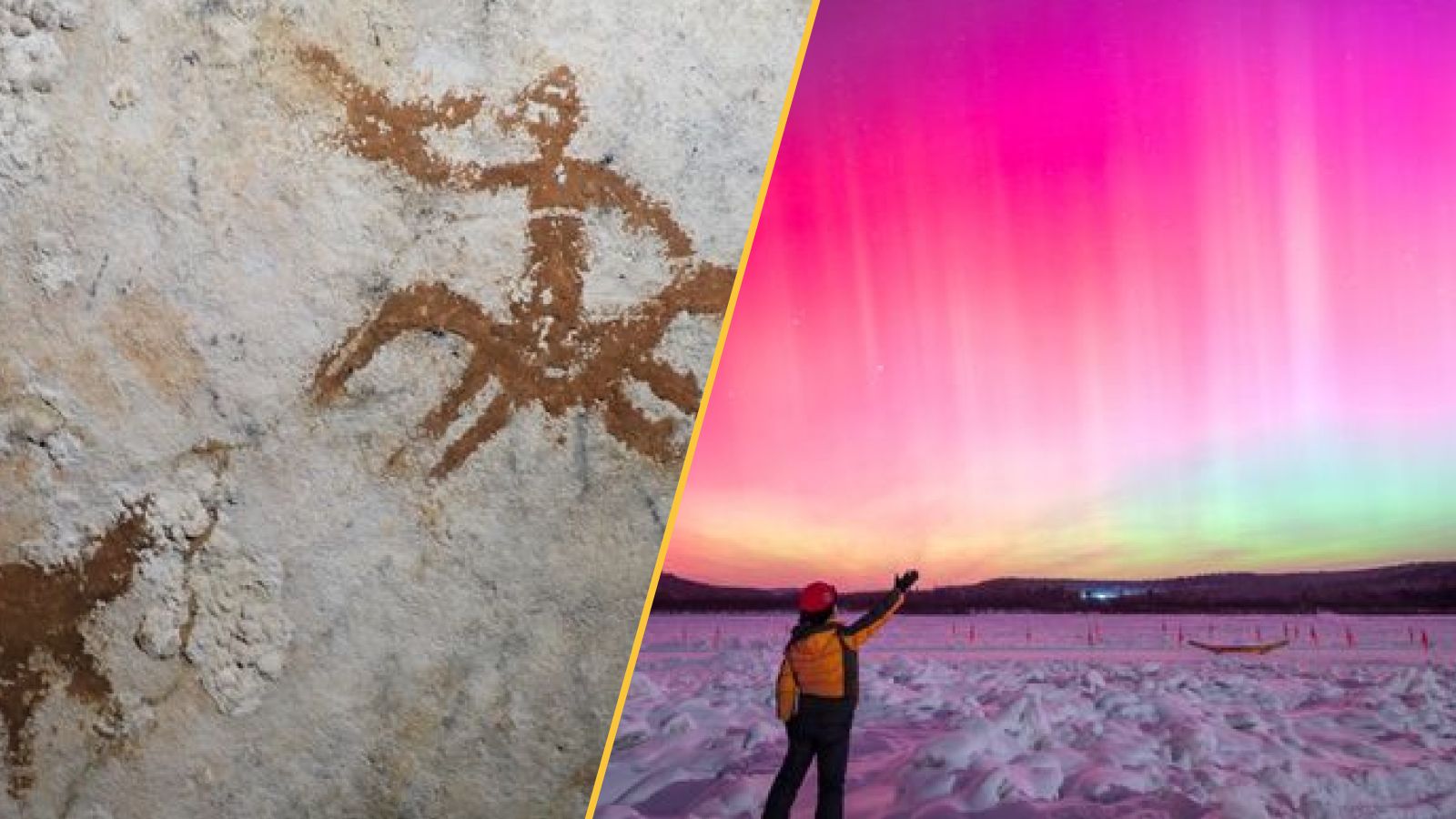
This week’s science news was full of discoveries that were thought to have been lost to time. In particular, the world’s oldest known rock art was discovered in Indonesia.

A nearly 70,000-year-old human handprint discovered in a Sulawesi cave fills a major gap in scientists’ understanding of human migration across the islands of Southeast Asia and into Australia, likely left behind by the ancestors of Australia’s indigenous people.

And ancient Homo sapiens weren’t the only species discovered this week on daring and unexpected journeys. The 2.6-million-year-old jaw fossil of an extinct human relative, Paranthropus (or “Nutcracker Man”), has been discovered hundreds of miles further north than previously thought.

Jumping ahead to a little more recent history, researchers uncovered tombs, shrines, burial sites and shipwrecks this week. These discoveries included a 2,400-year-old Temple of Hercules discovered outside the walls of ancient Rome. A 1,400-year-old Anglo-Saxon ‘sand burial site’ is unearthed during the construction of a British power station. Medieval ‘supership’ wreck discovered off the coast of Denmark. And the earliest evidence of the bacterium that causes syphilis suggests that the disease originated in the Americas.

Huge freshwater reservoir under the sea off the east coast

Research ship on the sea at sunset.

A huge reservoir beneath the East Coast could one day be developed. (Image credit: Anton Petrus/Getty Images)

This week, an expedition off the coast of Massachusetts confirmed the existence of a massive underwater reservoir that could supply a city the size of New York City with fresh water for about 800 years.

This freshwater reservoir, which stretches from the coast of New Jersey to as far north as Maine, was probably formed during the last ice age 20,000 years ago, when rainwater was trapped underground before sea levels rose.

More definitive results on when and how the reservoir formed, along with its bacterial and mineral content, are expected soon. The scientists who discovered this information say it could prove extremely important to people who want to use it in the future.

Get the world’s most fascinating discoveries delivered straight to your inbox.

Discover more of Earth’s stories

— An arctic blast probably won’t cause trees to explode in the cold — but here’s what would happen if they did.

– Californians continue to use far less water than their suppliers estimate, but what does this mean for the state?

–‘The scientific cost will be severe’: President Trump’s takeover of Greenland will jeopardize climate research

life’s little mysteries

A photo of a person's face staring cross-eyed at a small yellow butterfly perched on the tip of their nose.

You can’t see the nose unless you focus on it, but it’s not because it’s out of sight. (Image source: Getty Images)

It’s a truism that we often miss what’s under our noses, but what about our noses themselves? Why do we ignore the fleshy prow atop our faces and go through life consciously just looking at them? The answer is not because they are out of our sight, but because of a clever neuro-visual sleight of hand that may be the key to our survival.

—If you enjoyed this, sign up for the Life’s Little Mysteries newsletter

The biggest solar radiation storm in decades

Photo of a person standing in front of the pink aurora borealis in China

This week, a record geomagnetic storm blanketed the night sky with aurora borealis. (Image credit: Chi Shiyong/VCG, Getty Images)

The most powerful solar radiation storm on Earth in more than two decades struck on Monday (January 19), spreading a curtain of aurora borealis across the night sky from Southern California to Arizona to New Mexico.

Some publications reported that this storm was the largest geomagnetic storm since 2003, but that was a bit of an exaggeration. The 2024 Mother’s Day Storm was even more powerful. But this storm was one of the most powerful solar radiation storms on record, meaning the amount of radiation dumped on Earth was unusual.

Discover more stories of the universe

— ‘It’s like watching a cosmic volcano erupt’: Scientists witness monster black hole ‘reborn’ after 100 million years

– New images suggest an ocean the size of the North Pole once covered half of Mars

—’Dawn Goddess’: James Webb Telescope Spies One of the Oldest Supernovae in the Early Universe

Also featured in this week’s science news

—If dark matter and “ghost particles” can interact, scientists may be close to “fundamental breakthroughs in cosmology and particle physics.”

—Coyote makes emergency landing on Alcatraz Island after unprecedentedly dangerous swim

—Diagnostic Dilemma: A woman experienced delusions of communicating with her dead brother after a late-night chatbot session.

–Research confirms that humans, not glaciers, brought stones to Stonehenge

science spotlight

Yellow hexagons alternate with hexagons featuring images of space and black holes.

We thought we knew how black holes grow. The James Webb Space Telescope changed that. (Image credit: Adapted by Matt Smith/Future, Lukas J. Furtak, Adi Zitrin, Adèle Plat et al., NASA, ESA, CSA, Ivo Labbe (Swinburne), Rachel Bezanson (University of Pittsburgh)) Image processing: Alyssa Pagan (STScI), NASA, ESA, CSA, Joseph Olmsted (STScI), NASA, ESA, CSA, STScI, P. van Dokkum (Yale University), NASA/CXC/SAO/Ákos Bogdán, Image processing: NASA/CXC/SAO/L. Arcand, NASA, ESA, CSA, Simon Lilly (ETH Zurich), Daichi Kashino (Nagoya University), Jorryt Matthee (ETH Zurich), Christina Ailers (MIT), Rob Simcoe (MIT), Rongmon Bordoloi (NCSU), Ruari Mackenzie (ETH Zurich) Image processing: Alyssa Pagan (STScI), Ruari Mackenzie (ETH Zurich);

Not so long ago, astronomers thought they knew the story of how giant supermassive black holes form. They believed that this happens in the same way that regular black holes are born, by collapsing from large stars and slowly merging until they grow to billions of times the mass of the Sun.

But the James Webb Space Telescope appears to have upended that story by discovering a massive black hole in the early days of our universe that would not have had time to grow by merging and devouring matter.

So how did these behemoths get so big? Live Science explored all of the explanations and their revolutionary potential in this fascinating Science Spotlight.

something for the weekend

If you’re looking for something a little longer to read over the weekend, here are some of the analyzes, crosswords, and opinion pieces published this week.

—Lab mice that “touch grass” have less anxiety — highlighting a big problem in rodent research [Analysis]

— Live Science Crossword Puzzle #26: Nothing can travel faster than this — Horizontal 12 [Crossword]

— Indigenous TikTok star ‘Bush Legend’ is actually generated by AI, leading to accusations of ‘digital blackface’ [Opinion]

science is in motion
Video footage of a plasma plume erupting from the sun

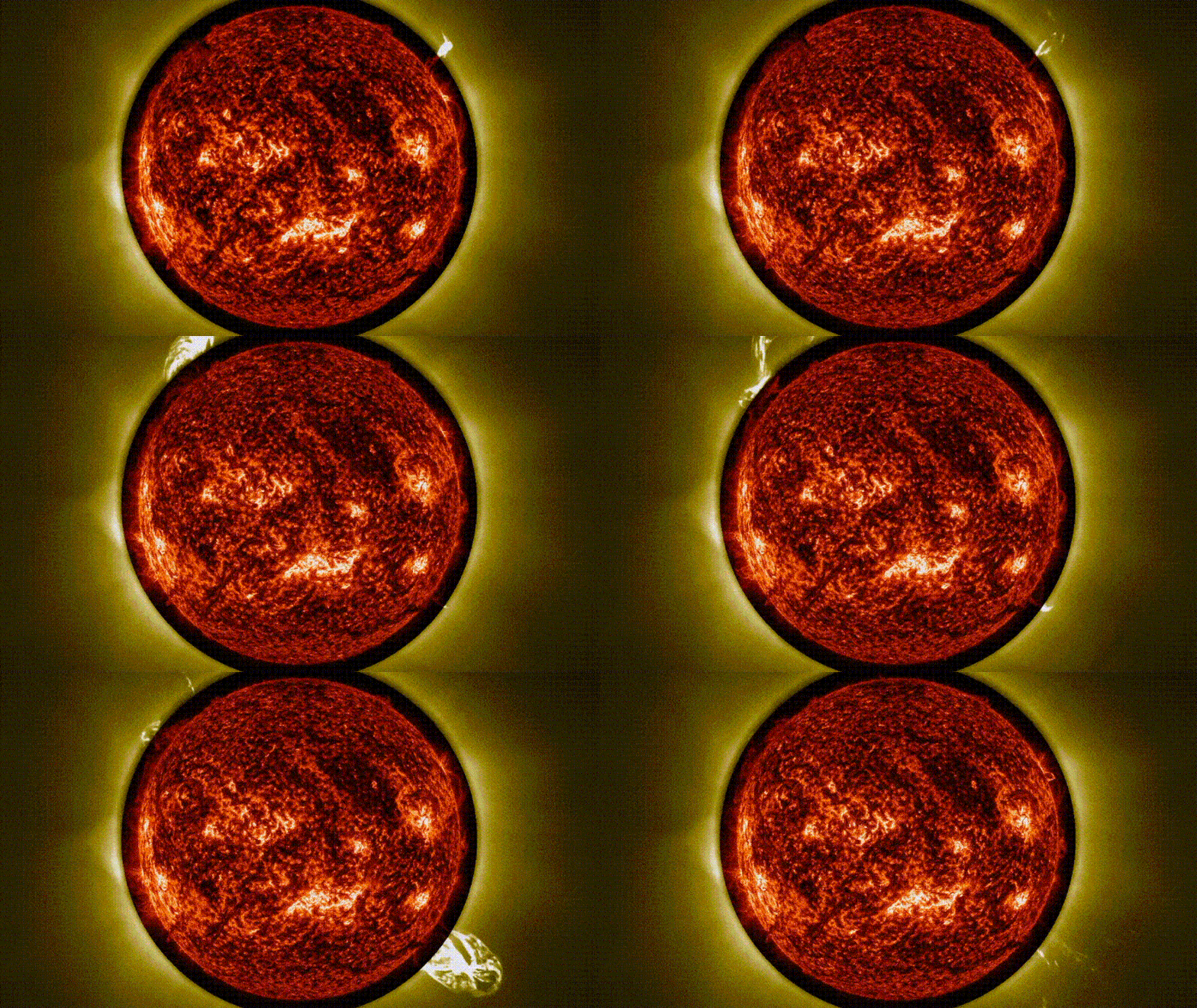
Dracula’s Chibito could give astronomers insight into how planets first form. (Image credit: ESA/Proba-3/ASPIICS, NASA/SDO/AIA)

This week, amazing time-lapse footage of the Sun was released that may help solve one of the most enduring mysteries about our home star.

The footage, taken by the European Space Agency’s Proba-3 mission, shows three major plumes of plasma erupting from the sun’s surface. By studying it further, astronomers hope to learn why the sun’s faint atmosphere, or corona, is hundreds of times hotter than its surface.

A deeper understanding of the warp and weft of the Sun’s magnetic field lines could help researchers more accurately predict when magnetic field lines will break and cause solar flares, some of which can have devastating effects on Earth.

Follow Live Science on social media

Want more science news? Follow our Live Science WhatsApp channel to keep up with the latest discoveries. It’s the best way to get expert reporting on the go, but even if you don’t use WhatsApp, you can use Facebook, X (formerly Twitter), Flipboard, Instagram, TikTok, Bluesky, and LinkedIn.


Source link

#Biotechnology #ClimateScience #Health #Science #ScientificAdvances #ScientificResearch
Follow on Google News Follow on Flipboard
Share. Facebook Twitter Pinterest LinkedIn Tumblr Email Copy Link
Previous ArticleMulti-stage phishing campaign targeting Russia with Amnesia RAT and ransomware
Next Article Research shows that AI can spontaneously develop a “personality” with minimal stimulation. What does that mean for our usage?
user
  • Website

Related Posts

Children wearing bronze ‘warrior’ belts discovered in 2,500-year-old cemetery in Italy

March 12, 2026

Congo Basin’s ‘blackwater’ lakes and rivers are now releasing ancient carbon into the atmosphere

March 12, 2026

Scientists use ‘negative light’ to send secret messages hidden in heat

March 12, 2026
Add A Comment
Leave A Reply Cancel Reply

Latest Posts

‘Wasn’t built right from the start’ — Musk’s xAI starts all over again

AI mental illness lawyer warns of risk of mass casualties

Digg lays off staff and closes app as company reorganizes

Founded by father-son duo, Nyne provides AI agents with the human context they lack

Trending Posts

Subscribe to News

Subscribe to our newsletter and never miss our latest news

Please enable JavaScript in your browser to complete this form.
Loading

Welcome to Fyself News, your go-to platform for the latest in tech, startups, inventions, sustainability, and fintech! We are a passionate team of enthusiasts committed to bringing you timely, insightful, and accurate information on the most pressing developments across these industries. Whether you’re an entrepreneur, investor, or just someone curious about the future of technology and innovation, Fyself News has something for you.

Castilla-La Mancha Ignites Innovation: fiveclmsummit Redefines Tech Future

Local Power, Health Innovation: Alcolea de Calatrava Boosts FiveCLM PoC with Community Engagement

The Future of Digital Twins in Healthcare: From Virtual Replicas to Personalized Medical Models

Human Digital Twins: The Next Tech Frontier Set to Transform Healthcare and Beyond

Facebook X (Twitter) Instagram Pinterest YouTube
  • Home
  • About Us
  • Advertise with Us
  • Contact Us
  • DMCA
  • Privacy Policy
  • Terms & Conditions
  • User-Submitted Posts
© 2026 news.fyself. Designed by by fyself.

Type above and press Enter to search. Press Esc to cancel.