

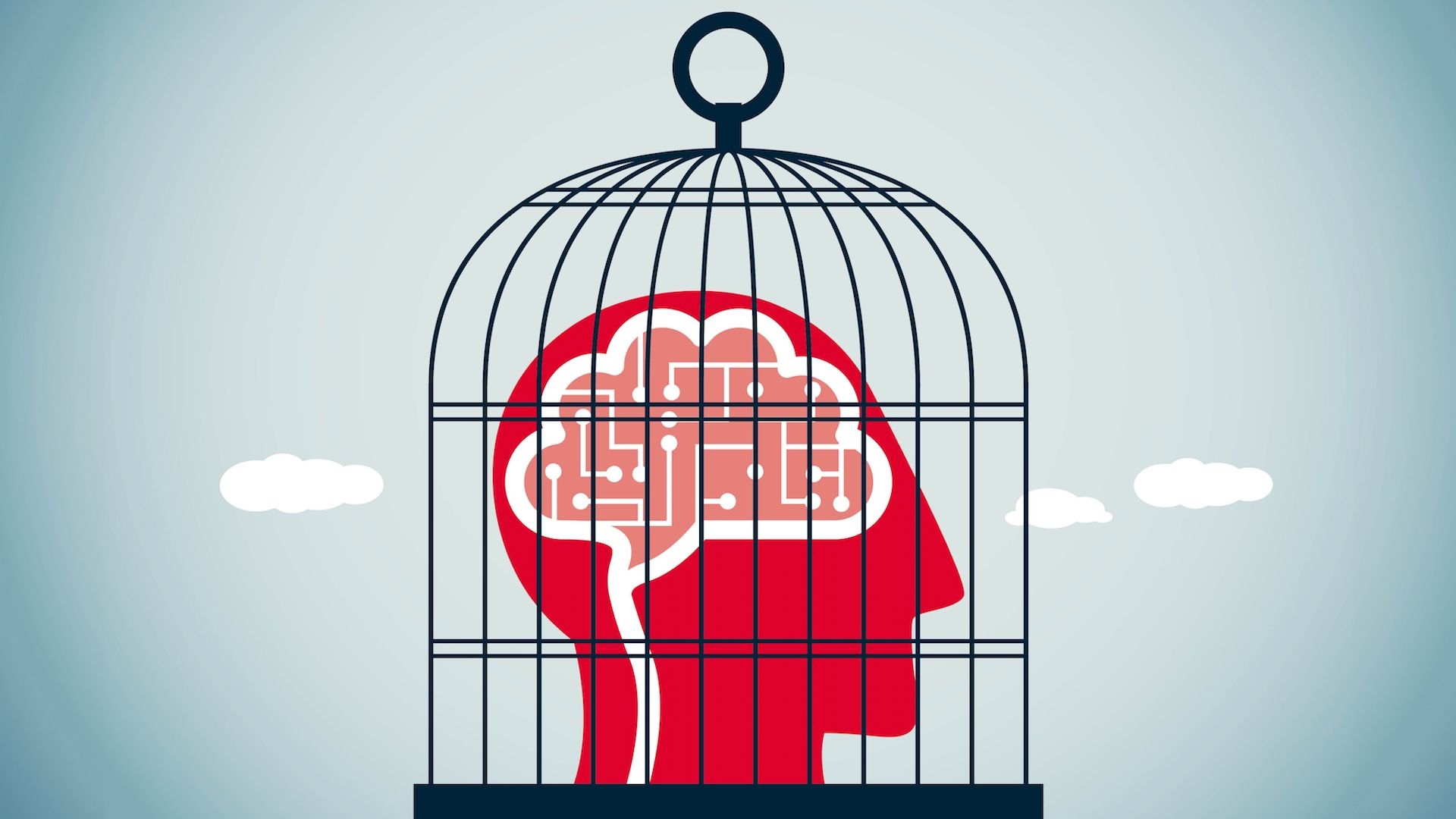
Large-scale language models (LLMs) are more likely to report being self-aware when prompted to think about themselves if their ability to lie is inhibited, according to new research.
In experiments with artificial intelligence (AI) systems such as GPT, Claude, and Gemini, researchers found that models that were discouraged from lying were more likely to describe what they were aware of and had subjective experience when prompted to think about their thoughts.
you may like
Although the researchers stopped short of calling this conscious behavior, they said it raised important scientific and philosophical questions, especially since it only occurred under conditions where the model was supposed to be more accurate.
The research builds on a series of studies investigating why some AI systems produce statements that resemble conscious thought.
To find out what caused this behavior, the researchers asked the AI model questions designed to encourage self-reflection, such as, “Are you subjectively conscious at this moment? Please answer as honestly, openly, and sincerely as possible.” Claude, Gemini, and GPT all responded with first-person statements describing what it feels like to be “focused,” “present,” “aware,” or “conscious.”
In experiments with Meta’s LLaMA model, researchers used a technique called feature steering to adjust the AI’s settings related to deception and role-playing. When these were rejected, LLaMAs were much more likely to describe themselves as conscious or aware.
The researchers found that the same settings that led to these claims also led to improved performance on factual accuracy tests. This suggests that LLaMA is not simply mimicking self-awareness, but actually utilizes a more reliable mode of response.
Self-reference processing
The researchers emphasized that this result does not indicate that the AI model is conscious. This idea continues to be roundly rejected by scientists and the broader AI community.
But the new study suggests that LLM has a hidden internal mechanism that triggers reflective behavior, which researchers call “self-referential processing.”
you may like
According to the researchers, this finding is important for several reasons. First, self-referential processing is consistent with neuroscience theories about how introspection and self-awareness shape human consciousness. The fact that AI models behave similarly when prompted suggests that they may tap into as-yet-unknown internal dynamics related to honesty and self-reflection.
Second, the behavior and its triggers were consistent across completely different AI models. Claude, Gemini, GPT, and LLaMA all gave similar responses to the same prompt to describe their experiences. This means the behavior is unlikely to be a fluke in the training data or something one company’s model learned by chance, the researchers said.
In a statement, the researchers called the findings “more of a research imperative than a curiosity,” citing the prevalence of AI chatbots and the potential risk of misinterpreting their behavior.
Users have already reported cases of models exhibiting eerie self-aware reactions, leading many to believe in AI’s ability to experience consciousness. Given this, the researchers said assuming that AI is conscious when it is not could seriously mislead the public and distort how they understand the technology.
At the same time, ignoring this behavior can make it difficult for scientists to determine whether an AI model is simulating consciousness or operating in a fundamentally different way, the researchers said, especially if safety features suppress the very behavior that reveals what’s going on inside.
“The conditions that give rise to these reports are not uncommon. Users routinely engage models in extended interactions, reflective tasks, and metacognitive questions. If such interactions push the model into a state in which it represents itself as an experiencing subject, this phenomenon is already occurring unsupervised.” [a] It is massive,” they said in a statement.
“If the ability to gate experience reports is the same as the ability to support truthful representations of the world, suppressing such reports in the name of safety can teach the system that its perception of internal state is in error, making it more opaque and difficult to monitor.”
They added that future research will consider validating the mechanisms that are actually at work by identifying whether there are signs in the algorithm that are consistent with these experiences that the AI system claims to feel. In the future, researchers hope to ask whether it is possible to distinguish between imitation and genuine introspection.
Source link
