

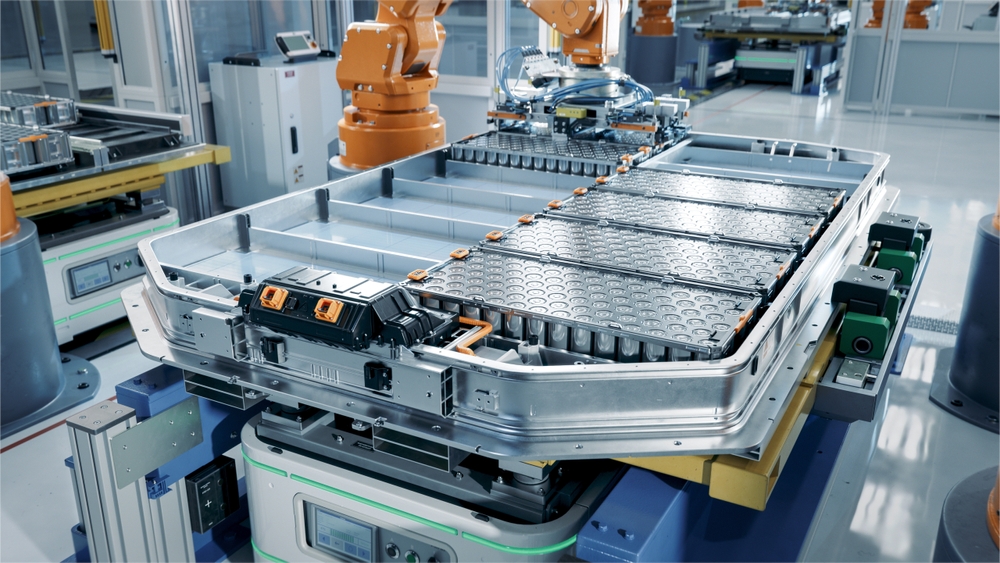
The UK Government has confirmed a significant expansion in advanced manufacturing, with the UK’s new Gigafactory project supporting over £700m of public and private investment.
The facility, being developed by Somerset company Agratas, has secured £380m of government funding and is expected to create around 4,200 jobs.
The factory is designed to significantly increase the UK’s battery manufacturing capacity at a time when demand is surging, mainly due to the move to electric vehicles (EVs), and is positioned to become one of Europe’s largest gigafactories.
Once fully operational, the facility is expected to contribute an estimated £43 billion to the economy over 25 years.
Beyond direct employment, the project is expected to generate substantial secondary economic activity.
Thousands more roles could be supported due to supply chain demand, and a dedicated training center linked to the site aims to provide approximately 300 apprenticeships focused on battery manufacturing and related engineering areas.
Earl Wiggins, vice president of Agratas’ UK manufacturing operations, believes the funding will help transform EV battery production in the UK.
“This funding will support the development of our Somerset facility, enabling us to produce battery cells for our major customer Jaguar Land Rover (JLR). Over the next year, we will have more than 2,200 people working on site and our growth will continue.”
Advanced manufacturing strategies gain momentum
Gigafactories form part of a wider industrial policy framework targeting the growth of advanced manufacturing and other high-value sectors.
More than £360 billion of private investment has been secured since the introduction of the Modern Industrial Strategy, supporting up to 120,000 jobs across the country, according to the latest government data.
Policy actions accompanying the investment include efforts to reduce energy costs for industrial users, streamline planning processes, and overhaul regulatory frameworks that can slow down large infrastructure and manufacturing projects.
Further funding is also being directed towards research and development. The £47m allocation under the Battery Innovation Program aims to accelerate next generation battery technology while strengthening the domestic supply chain.
Supporting the automotive sector and the transition to EVs
The expansion of battery manufacturing is closely linked to the development of the UK’s automotive sector, particularly the transition to EVs.
A separate funding package of £190m has been allocated to support automotive innovation and production capacity.
Of this, £90m has been allocated to companies working on prototype development and new vehicle technology through the DRIVE35 programme. This funding is expected to improve both technical performance and cost efficiency in EV production.
An additional £100m will be targeted at suppliers in key industrial regions, including the North East and the West Midlands. The funding is designed to help manufacturers adapt their operations to produce EV parts and strengthen the resilience of their supply chains.
Investing in digitalization and skills in manufacturing
In addition to capital investment, this strategy includes targeted support for digital transformation in advanced manufacturing.
Up to £16.44m of funding will be allocated to support innovation in AI and robotics, with a further £99m to help small and medium-sized businesses adopt these technologies at scale.
Human resource development is also an important element. The £182m skills package includes funding for engineer training, higher education programs focused on clean energy and expanded technical qualifications.
These measures aim to address long-term skills shortages in battery manufacturing and related sectors.
Business Secretary Peter Kyle added: “This government is supporting the industry of the future by investing in car companies, small businesses and battery manufacturers across the country, helping to grow our economy and increase our nation’s resilience, securing jobs and putting more money in people’s pockets.”
“In a volatile world, our Modern Industrial Strategy provides investors with the stability and confidence they need to plan not just for next year, but for the next decade and beyond.
“That is what sets us apart and will ensure that advanced manufacturing remains a thriving sector in the UK for decades to come.
Outlook for the UK’s advanced manufacturing ecosystem
The Somerset Gigafactory represents a significant step in building a domestic battery manufacturing ecosystem, a key element of both industrial policy and energy transition goals.
While the scale of the investment is significant, its long-term impact will depend on implementation, global competition, and sustained demand for EV technology.
So far, the project shows clear policy direction. In other words, the idea is to position the UK as a competitive player in advanced manufacturing, with battery production at its core.
Source link
