

The UK’s space industry is set for accelerated growth, innovation and security resilience over the next decade after the UK Government confirmed a £1.7bn funding package for the European Space Agency (ESA) programme.
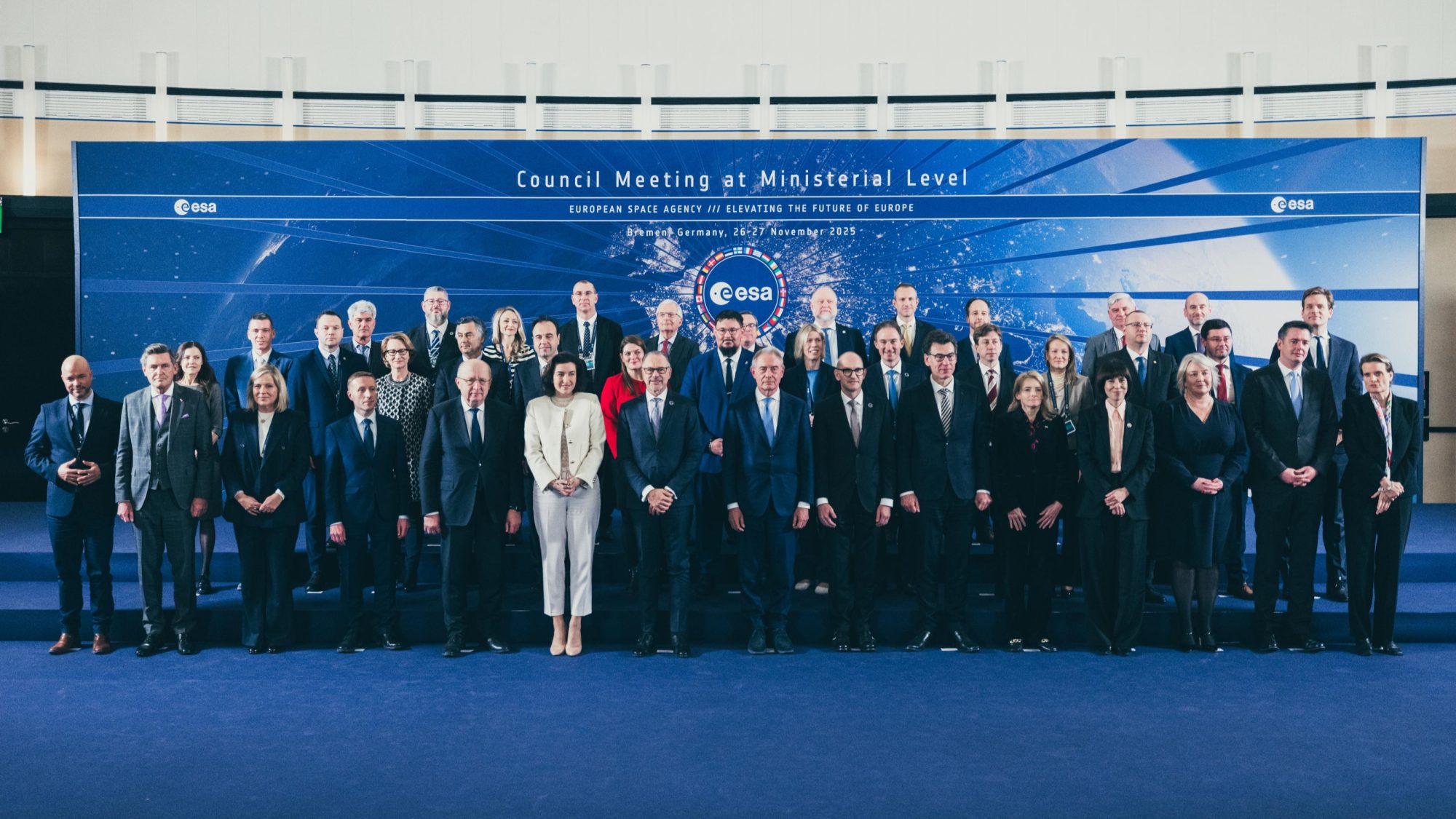
The agreement was finalized at the ESA Ministerial Council Meeting (CM25) in Bremen and is one of the UK’s most significant strategic investments in space to date.
Commenting on the funding, UK Space Secretary Liz Lloyd CBE said: “Our space sector is a key driver of our economic growth and national security, as well as supporting our allies in Europe and beyond.
“Following the negotiations in Bremen, we secured support for priority ESA programs that will support thousands of jobs, improved resilience and cutting-edge science and technology across the UK, at a time that remains challenging for economies across Europe.”
A long-term commitment to growth and security
The latest package brings the UK’s total funding to the ESA initiative to £2.8bn over the next 10 years, from 2025/26 to 2034/35.
Additional commitments are expected at the next ESA Board meeting in 2028, indicating a continuation of the long-term strategy.
This funding is designed to create maximum value for taxpayers, while securing the UK’s role in a rapidly expanding global market.
It is estimated that every £1 invested in ESA delivers a direct economic benefit of £7.49, helping to sustain thousands of highly skilled jobs and stimulating innovation across industry and academia.
Strengthening UK access to space
A distinguishing element of the new program is a record £162m investment in launch capacity, including support for the European Launcher Challenge.
The goal is to open the European launch market to more private providers, reduce costs, improve resilience and ensure satellite access to critical services such as communications, navigation and weather forecasting.
The UK government says strengthening its launch capabilities is now a national security priority. By working with NATO members and European allies, the UK aims to ensure reliable and independent access to space in an increasingly unpredictable global situation.
Supporting core scientific missions
Two high-profile missions led or strongly supported by the UK space industry received new momentum at the Bremen conference.
Vigil: Protect Earth from solar storms
The UK-led Vigil mission, which aims to monitor destructive solar activity, has secured £131m of new funding.
In partnership with the United States and with support from European collaborators, Vigil will track space weather from a unique vantage point in front of Earth.
Extreme solar storms can damage power grids, aviation systems, and satellite networks.
The mission highlights the growing importance of protecting critical infrastructure, as solar activity has recently led to the sighting of the Northern Lights across the UK.
Rosalind Franklin Mars rover moves toward launch in 2028
Britain’s major contribution to planetary exploration, the Rosalind Franklin Mars rover, has also received new support.
Built in the UK and at the heart of Europe’s first Mars rover mission, its 2028 launch date is now closer to reality. The rover aims to search for signs of ancient life beneath the surface of Mars and keep the UK at the forefront of global space science.
The UK space industry will also maintain its commitment to the lunar lander Argonaut following a new deal signed with a British company to supply engines and propulsion systems.
Drive innovation and commercialization
To accelerate emerging technologies, the Government has allocated £261m to high-growth programs such as commercialization, advanced research in telecommunications systems and the General Technical Assistance Programme.
One of the most innovative initiatives is support for device-direct satellite systems that can connect to standard mobile phones, increasing resilience in emergencies and providing connectivity in remote areas.
A further £57 million will improve the UK’s capabilities in position, navigation and timing (PNT) systems, which are essential for transport, defence, financial transactions and smart infrastructure.
Investing in science and earth observation
The UK confirmed £511m of spending in ESA’s core science budget, ensuring UK researchers remain at the heart of ground-breaking astrophysics and planetary missions.
In addition, a £120m ministerial commitment to Earth Observation will enable new mission research and strengthen the UK’s ability to use climate and environmental data.
Including previous commitments, the UK will invest around £350m in the ESA Earth Observation Program over the next four years.
Rapidly expanding space field
The UK space industry already supports 55,000 jobs, with a further 81,000 roles across the supply chain and generates an annual income of £18.9 billion.
Satellite-based services support an estimated 18% of the UK’s GDP, highlighting the deep integration of space technology across the national infrastructure.
This new ESA package forms a core part of a wider government investment of £2.8 billion in national civil space priorities through the UK Space Agency, announced earlier this year.
Together these measures will pave the way for a stronger, more competitive and safer space future for the UK.
Source link
