
VidCon 2026: How creators are launching their own products without relying on brand deals
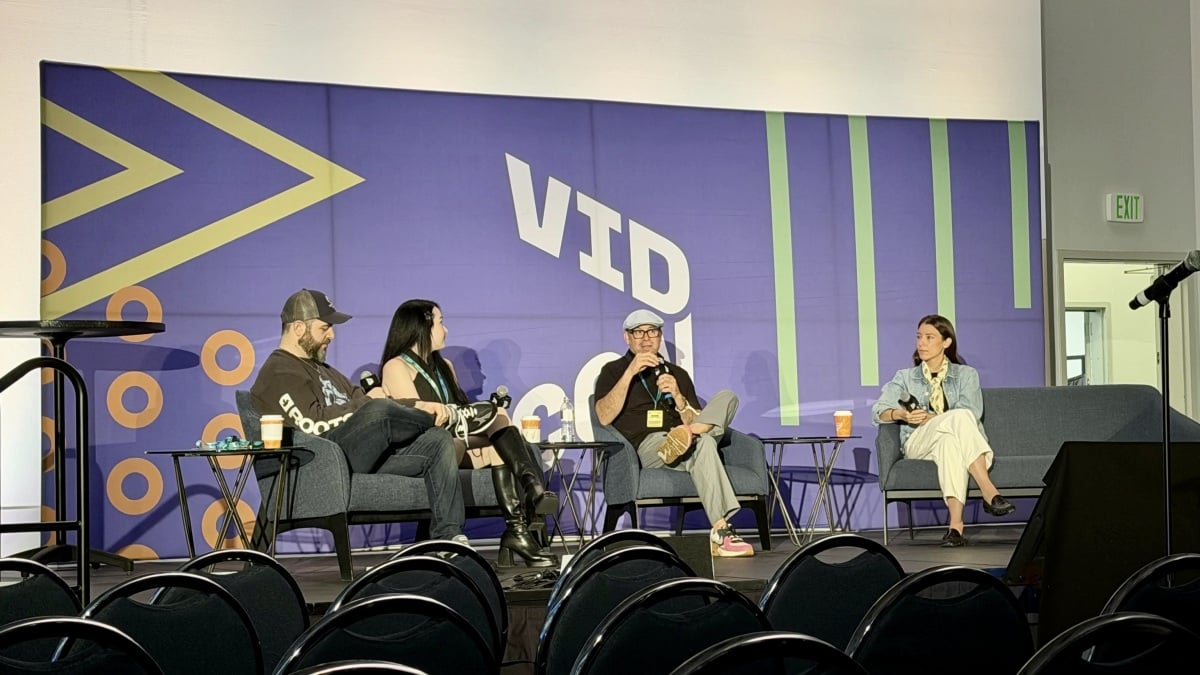
In 2026, fans increasingly understand that content creators are small businesses, not just influencers.
More and more creators are taking the role a step further and launching businesses with their own product lines, from clothing lines to candy bars. Creators and industry leaders discussed this shift at VidCon 2026 Thursday’s discussion, “Product vs. Content: Why the Smartest Creator Businesses are Shifting Their Center of Gravity.”
An advantage of creators launching their own products is that they become less dependent on brand deals with companies that don’t understand their audiences as intimately, said moderator Yak Gartmenian. Gartmenian is the creator innovation leader at influencer marketing company Influential.
VidCon 2026: The Internet’s Biggest Weekend Live Updates
“One of the biggest challenges, and I think every creator has experienced this, is getting a brand that says, ‘Okay, here are the dos and don’ts,’ and then, after reading 12 pages of dos and don’ts, says, ‘This is exactly what I want you to do,’” Gartmenian said. “‘Write this, do this, do this, do this.'”
When creators engage in poor branding and copying, the consequences are clear. “Viewers look at it and say, ‘That’s not at all what I expected,'” Gartmenian says. “And it makes the brand look bad, the creators are dissatisfied, and the viewers are dissatisfied.”
With that in mind, the panelists discussed the do’s, don’ts, and adjusted expectations needed when launching a product.
Just because sales are low at launch doesn’t mean it’s a failure.
Amy Roberts is the creative director and host of Style Theory, a YouTube channel with 2.77 million subscribers, and the business development manager for Team Theorist. She talked about what to expect from sales during the first product launch.
“When you think about sales and how much the top of the top of the top creators sell, a lot of people think, ‘I have to sell a million dollars with my first product.’ And the reality is, you might sell 10,000 units and that’s a success,” she said.
Roberts went on to explain that success is not just about achieving more realistic expectations, but also about understanding customer data and using it to inform the next product release.
“It’s about setting goals that you know you can achieve, seeing what worked and what didn’t, and setting the next goal.”
Having an audience is not the same as having a customer base
“From a creative standpoint, we realized that our audience and followers are not necessarily the same as our customers, and we thought differently,” Gartmenian said.
Mashable Trend Report
Jordan Gold, a professional musician and co-founder of Magic Puzzle Company, added that a vocal audience doesn’t necessarily translate to a vocal consumer base.
“Most of the good customers are just quiet,” he said.
This week is VidCon 2026. Here are seven things to look out for.
That said, creators don’t necessarily have to incur costs to obtain data from viewers or potential customers.
“You should also try collaboration,” says Megan Lightcap, partner at Slow Ventures. “Brands pay for everything. Creators have the best focus groups in the world, for example, and can immediately tell what people are buying and what they aren’t buying. And if it doesn’t work, the onus is on the brand.”
the product is just a new business field
Lightcap talked about how creators can feel overwhelmed after starting a business and struggle to know how best to allocate their time between content creation, product development, and customer service. Her solution? Reimagine how content and products can coexist.
“More than that [creators] “If you can really think about this as different areas of business within a large company, it at least reduces the mental burden of, ‘I’m ignoring this, I need to focus on that, or vice versa,'” she said.
representative, representative, representative
Creators can get used to doing everything themselves. For many, that’s how they built their first content creation business.
“Understanding where you don’t need to spend your time is the hardest skill for most creators to learn, but it’s one of the most important, especially if you want to grow your business,” says Roberts.
Where AI fits in
Gartmenian also touched on AI, noting that it’s part of every company’s considerations these days. All panelists spoke about its usefulness in understanding customer data.
When Gold launched Magic Puzzle Company’s Kickstarter in 2020, he said his company gained more than 63,000 backers in one month, with many sending emails. He said if he and his staff spent an entire work week just answering emails, it would take at least a year.
“Now you can take all of that and have a little chatbot that says, ‘Here are the emails I received this week. This is what most people are saying,'” he said.
Can AI level the playing field for working-class content creators?
Roberts reiterated the benefits of using AI for data, but specifically pointed out that Team Theorist does not use AI for creative work.
“We don’t specifically use it to create something that didn’t exist before. We work with all different artists and work with a whole team of people to create something really cool,” she said. “But when it comes to data mining, even our team, which is data miners, can use it as a tool to help us process things faster and understand things faster.”
Lightcap noted that speed could make a big difference.
“I think one of the things that surprises creators when they embark on this journey is how much time it all takes and how much money it costs, right? Because they’re dependent on other people. They have to, you know, have their own flow and stuff like that. With AI, in a sense… that pressure valve is released a little bit,” Lightcap said.
Mashable is reporting live from VidCon 2026 in Anaheim. Follow our coverage of creator interviews, panel highlights, the biggest moments from the convention floor, and more.
Source link

